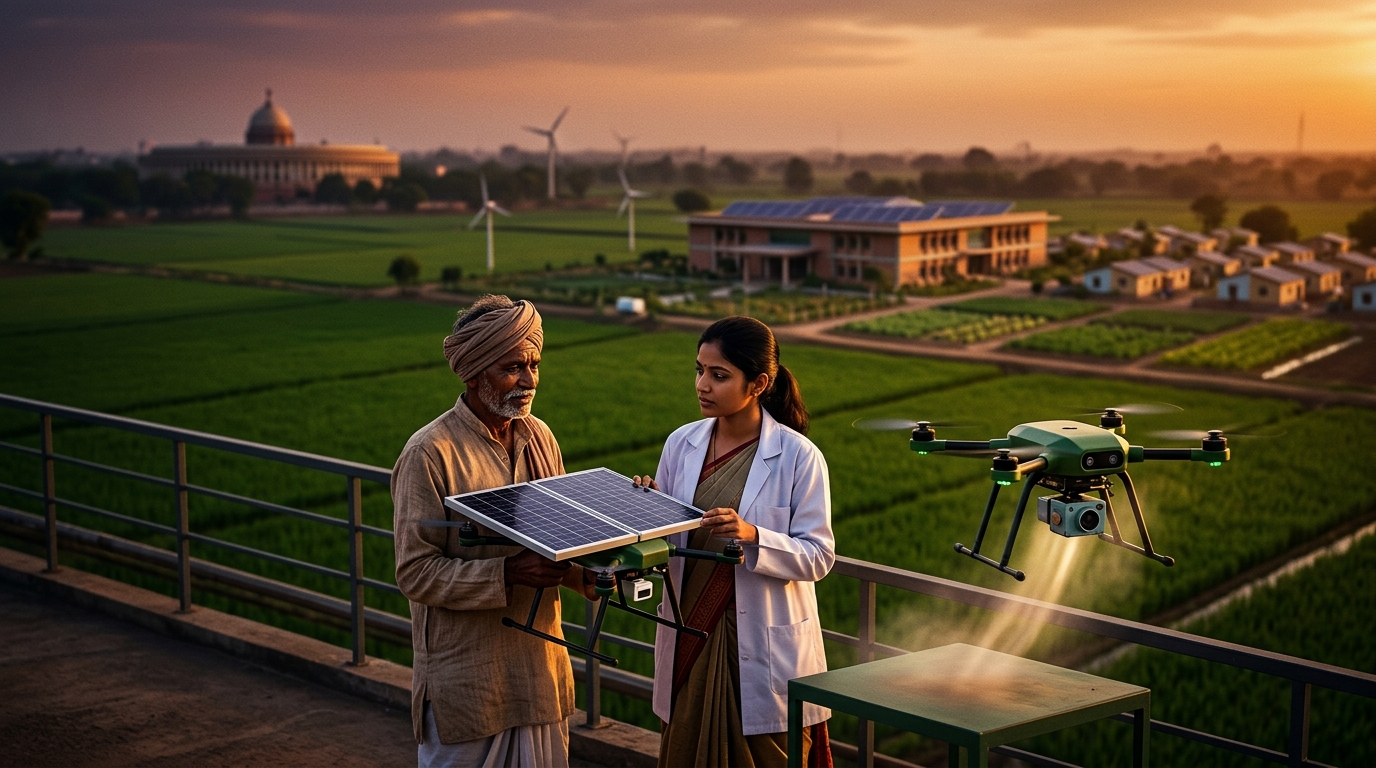
National Innovation and Rural Livelihood Schemes under DST, CSIR & DBT
The Government, via the DST, CSIR and DBT, have instituted a range of programmes aimed at strengthening the R&D ecosystem, fostering entrepreneurship and delivering science‑based livelihoods, especially for disadvantaged sections and remote regions.
Key Developments
- PRAYAS (PRAYAS) offers prototyping grants, seed funding and acceleration support through a network of TBIs.
- Establishment of iTBIs to promote inclusive entrepreneurship in Tier‑2/3 cities.
- Support to SEED programmes such as SYST, TIDE, STW, SUNIL and STI Hubs for livelihood generation.
- National Innovation Foundation (NIF) facilitates IP protection and diffusion of sustainable innovations.
- CSIR’s rural outreach project “Creating livelihood opportunities in rural areas through CSIR technologies using UBA‑VIBHA Network” trained ~3,400 participants across states.
- DBT’s Biotech‑KISAN and BIRAC schemes support biotech start‑ups, incubation centres and technology transfer.
- CSIR‑CIMAP & CSIR‑IIIM’s aromatic‑crop project in Bundelkhand (2017‑2021) benefitted >8,000 farmers, cultivated 2,000 acres and created 10+ enterprises.
- CSIR‑NIScPR’s Kisan Sabha App connects farmers, transporters and mandis digitally; 236 farmers from Madhya Pradesh have registered.
Important Facts
- iTBIs are located in Tier‑2/3 cities to ensure geographic diversity and support for women, persons with disabilities and marginalized communities.
- PRAYAS provides prototyping grants at the ideation stage and seed funding for rapid scaling.
- SEED schemes target SC/ST, Divyangjan, elderly, EWS and women, delivering location‑specific S&T solutions.
- Biotech‑KISAN focuses on region‑specific biotech demonstrations for farmers.
- Over 3,400 participants attended CSIR‑UBA‑VIBHA technology showcases; 2,000 acres of aromatic crops were cultivated under the Bundelkhand project.
Exam Relevance
Understanding these schemes is crucial for GS‑3 (Science & Technology, Economy) and GS‑4 (Ethics & Integrity) as they illustrate how the state translates scientific research into inclusive growth, addresses regional disparities, and promotes innovation ecosystems. Questions may probe the role of DST, CSIR and DBT in fostering start‑ups, the impact of iTBIs on women and marginalized entrepreneurs, or the contribution of biotech programmes to agricultural productivity.
Way Forward
- Expand iTBIs to more underserved districts and strengthen linkages with local universities.
- Enhance monitoring and impact assessment of SEED and Biotech‑KISAN to quantify livelihood outcomes.
- Promote public‑private partnerships for scaling successful grassroots innovations identified by NIF.
- Integrate digital platforms like the Kisan Sabha App with existing agri‑marketing networks for wider farmer outreach.
- Encourage cross‑ministerial coordination among DST, CSIR, DBT and ministries of Rural Development and Agriculture for synergistic rural innovation.