Loading page, please wait…
Adverse Effects of Lithium Mining - UPSC Environment And Ecology
What is Adverse Effects of Lithium Mining in UPSC Environment And Ecology?
Adverse Effects of Lithium Mining is a key topic under Environment And Ecology for UPSC Civil Services Examination. Key points include: Lithium mining, crucial for green tech, causes significant environmental harm.. Chile's Atacama salt flat is sinking 1-2 cm/year due to lithium brine extraction.. Extraction depletes aquifers faster than natural recharge, leading to land subsidence.. Understanding this topic is essential for both UPSC Prelims and Mains preparation.
Why is Adverse Effects of Lithium Mining important for UPSC exam?
Adverse Effects of Lithium Mining is a Medium-level topic in UPSC Environment And Ecology. It is tested in both Prelims (factual MCQs) and Mains (analytical answer writing). Previous year UPSC questions have frequently covered aspects of Adverse Effects of Lithium Mining, making it essential for comprehensive IAS preparation.
How to prepare Adverse Effects of Lithium Mining for UPSC?
To prepare Adverse Effects of Lithium Mining for UPSC: (1) Study the comprehensive notes covering all key concepts on Vaidra. (2) Practice previous year questions on this topic. (3) Connect it with current affairs using daily updates. (4) Revise using key takeaways and mind maps available for Environment And Ecology. (5) Write practice answers linking Adverse Effects of Lithium Mining to related GS Paper topics.
Key takeaways of Adverse Effects of Lithium Mining for UPSC
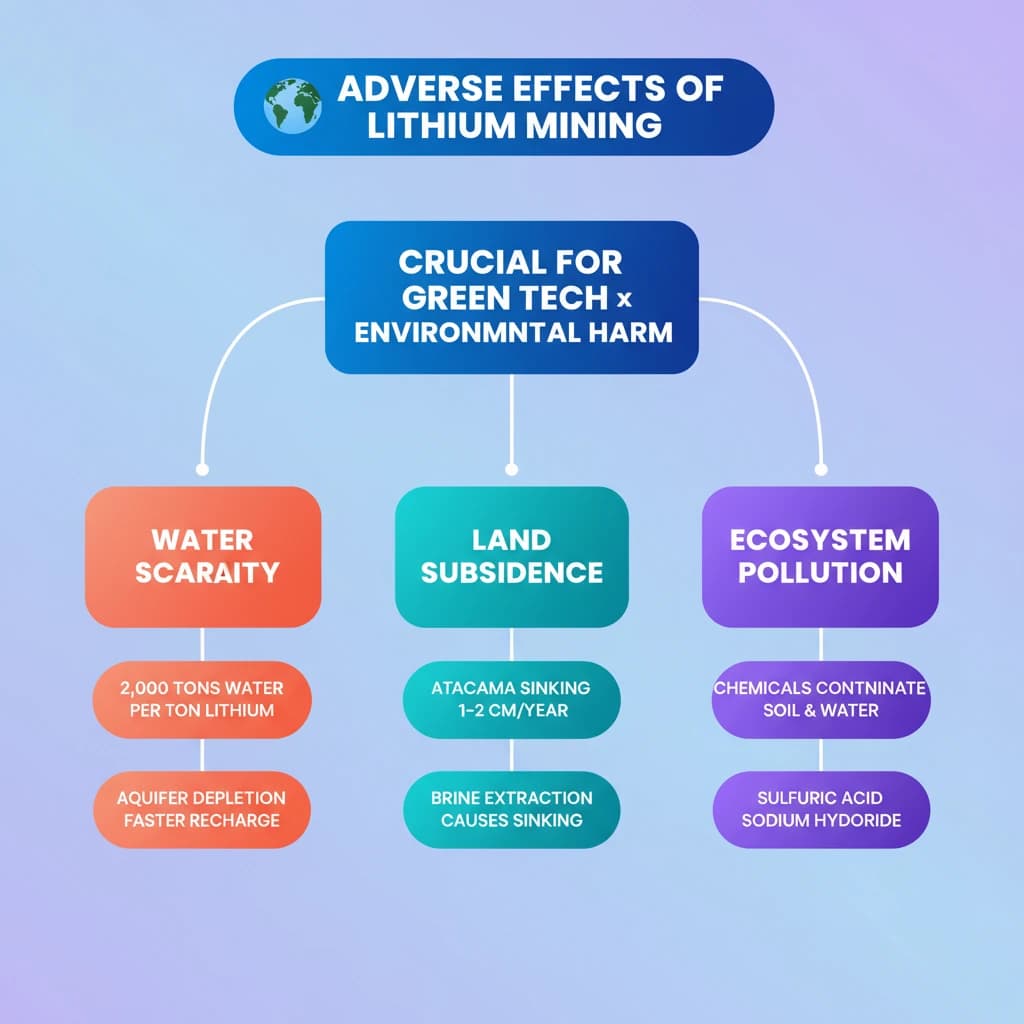
- Lithium mining, crucial for green tech, causes significant environmental harm.
- Chile's Atacama salt flat is sinking 1-2 cm/year due to lithium brine extraction.
- Extraction depletes aquifers faster than natural recharge, leading to land subsidence.
- Process consumes massive fresh water (2,000 tons per ton of lithium), exacerbating scarcity.
- Chemicals like sulfuric acid and sodium hydroxide contaminate soil and water, harming ecosystems.
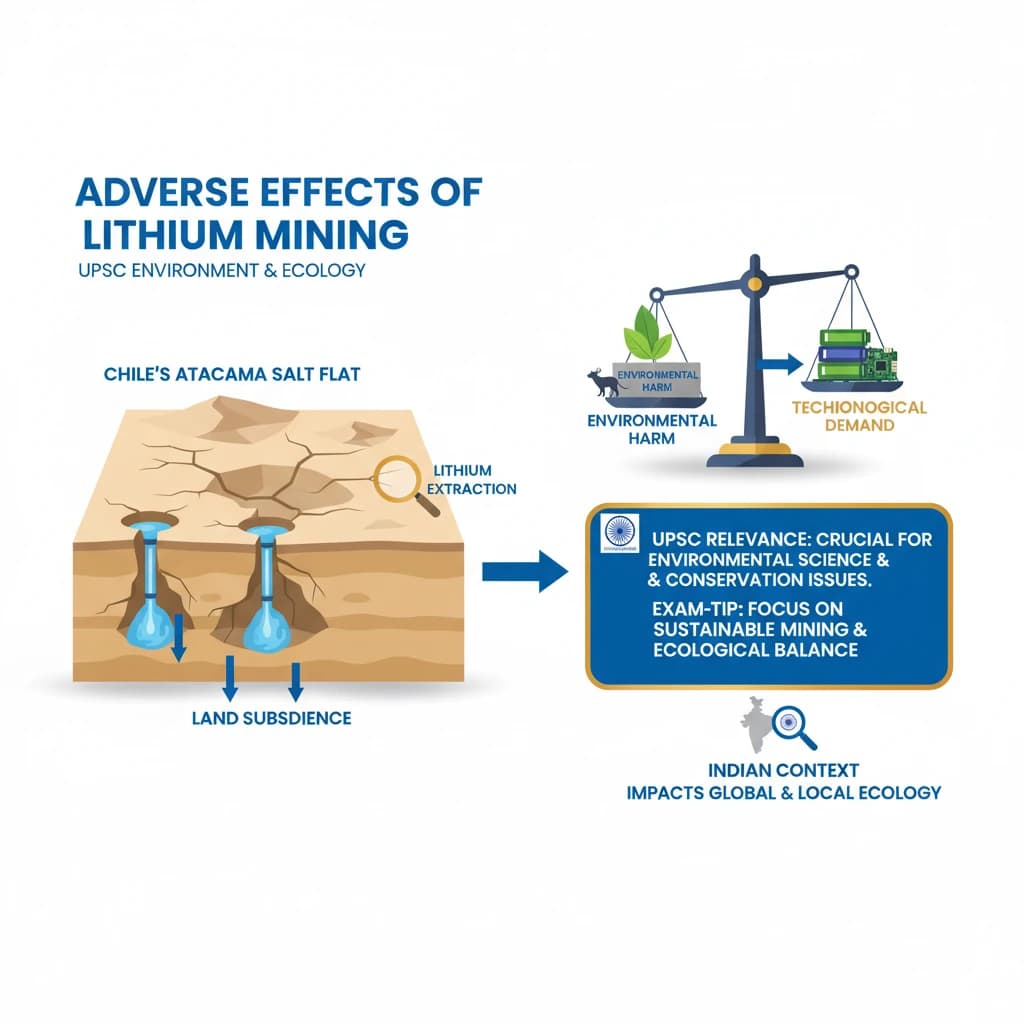
Adverse Effects of Lithium Mining
Medium⏱️ 6 min read
environment and ecology
📖 Introduction
Introduction to Lithium Mining Impacts
Recent studies have brought to light significant environmental concerns associated with lithium mining, particularly in ecologically sensitive regions. A new study highlights that land subsidence is actively occurring in Chile's Atacama salt flat due to intensive lithium extraction activities.
UPSC Relevance: This topic is crucial for GS Paper 3 (Environment & Ecology), covering environmental degradation, pollution, and conservation. It can also be linked to resource management and sustainable development.
Key Findings of the Study
The study reveals a concerning rate of geological change in the Atacama salt flat. This vital ecosystem is experiencing a measurable decline in elevation.
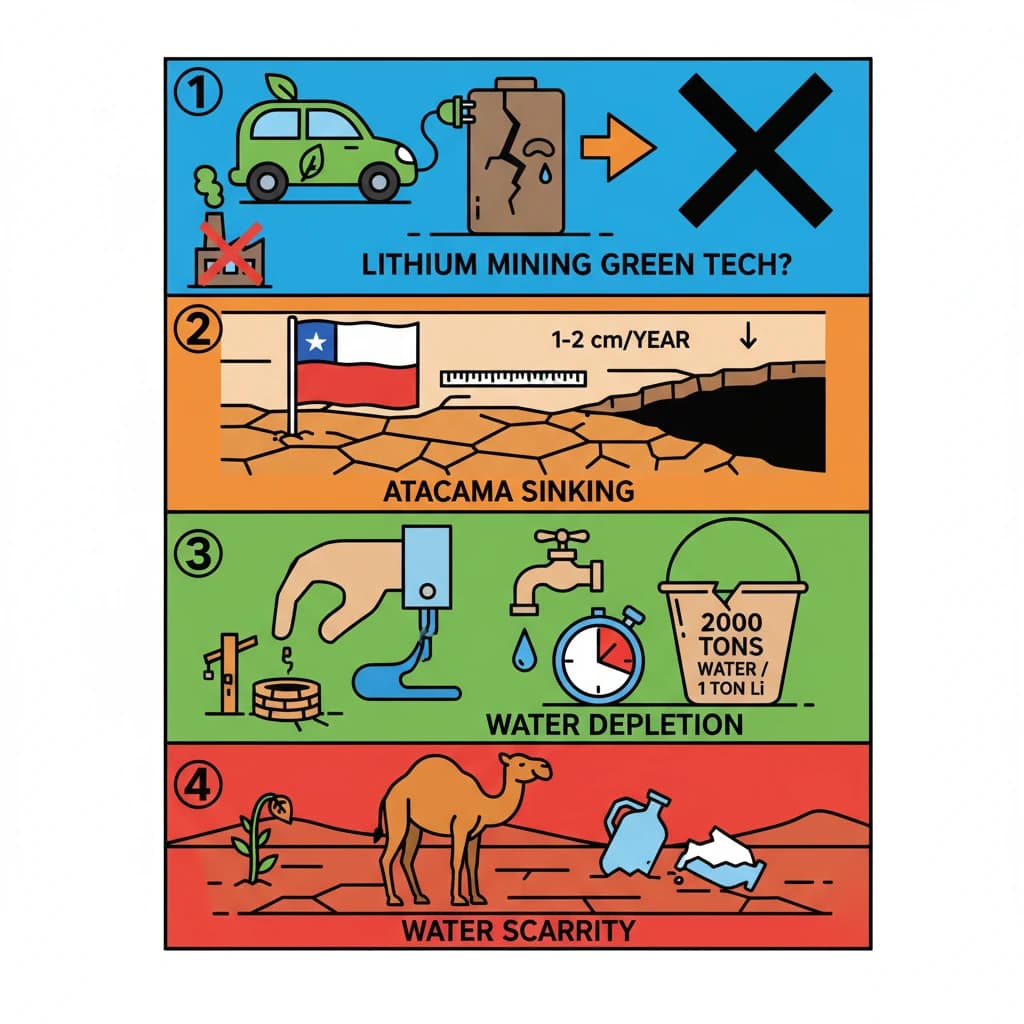
Rate of Sinking: The Atacama salt flat in Chile is sinking at an alarming rate of 1 to 2 centimetres per year.
This subsidence is directly attributed to the process of lithium brine extraction. This method involves pumping vast quantities of salt-rich water from underground.
The underlying cause is the unsustainable rate of extraction. Lithium-rich brine is being removed significantly faster than the natural recharge rate of the underground aquifers, leading to the observed geological depression.
Environmental Impacts of Lithium Mining
Lithium mining, while essential for modern technologies, carries substantial environmental costs, primarily impacting water resources and soil integrity.
- Massive Water Usage: The extraction process is incredibly water-intensive. Producing just one ton of lithium requires an estimated 2,000 tons of fresh water.
- Exacerbated Water Scarcity: In arid regions like the Atacama Desert, this massive water consumption severely intensifies existing water scarcity. This impacts both the delicate local ecosystems and the livelihoods of indigenous local communities.
- Chemical Contamination: The methods used in lithium extraction involve various harsh chemicals. Substances such as sulfuric acid and sodium hydroxide are commonly employed.
- Ecosystem Harm: These chemicals pose a significant threat, leading to the contamination of both soil and water bodies. Such pollution can severely harm sensitive ecosystems and endanger various plant and animal species.
💡 Key Takeaways
- •Lithium mining, crucial for green tech, causes significant environmental harm.
- •Chile's Atacama salt flat is sinking 1-2 cm/year due to lithium brine extraction.
- •Extraction depletes aquifers faster than natural recharge, leading to land subsidence.
- •Process consumes massive fresh water (2,000 tons per ton of lithium), exacerbating scarcity.
- •Chemicals like sulfuric acid and sodium hydroxide contaminate soil and water, harming ecosystems.
🧠 Memory Techniques
95% Verified Content
📚 Reference Sources
•Study on land subsidence in Chile's Atacama salt flat (as cited by Drishti IAS)