Loading page, please wait…
Amrit Dharohar Capacity Building Scheme - UPSC Environment And Ecology
What is Amrit Dharohar Capacity Building Scheme in UPSC Environment And Ecology?
Amrit Dharohar Capacity Building Scheme is a key topic under Environment And Ecology for UPSC Civil Services Examination. Key points include: Amrit Dharohar Capacity Building Scheme launched in June 2023.. Joint initiative by Ministry of Tourism and MoEFCC.. Aims to revolutionize tourism at ecologically sensitive wetlands, especially Ramsar sites.. Understanding this topic is essential for both UPSC Prelims and Mains preparation.
Why is Amrit Dharohar Capacity Building Scheme important for UPSC exam?
Amrit Dharohar Capacity Building Scheme is a Medium-level topic in UPSC Environment And Ecology. It is tested in both Prelims (factual MCQs) and Mains (analytical answer writing). Previous year UPSC questions have frequently covered aspects of Amrit Dharohar Capacity Building Scheme, making it essential for comprehensive IAS preparation.
How to prepare Amrit Dharohar Capacity Building Scheme for UPSC?
To prepare Amrit Dharohar Capacity Building Scheme for UPSC: (1) Study the comprehensive notes covering all key concepts on Vaidra. (2) Practice previous year questions on this topic. (3) Connect it with current affairs using daily updates. (4) Revise using key takeaways and mind maps available for Environment And Ecology. (5) Write practice answers linking Amrit Dharohar Capacity Building Scheme to related GS Paper topics.
Key takeaways of Amrit Dharohar Capacity Building Scheme for UPSC
- Amrit Dharohar Capacity Building Scheme launched in June 2023.
- Joint initiative by Ministry of Tourism and MoEFCC.
- Aims to revolutionize tourism at ecologically sensitive wetlands, especially Ramsar sites.
- Focuses on sustainable tourism practices and livelihood generation for local communities.
- Examples include Chilika Lake (Odisha) and Sultanpur Bird Sanctuary (Haryana).
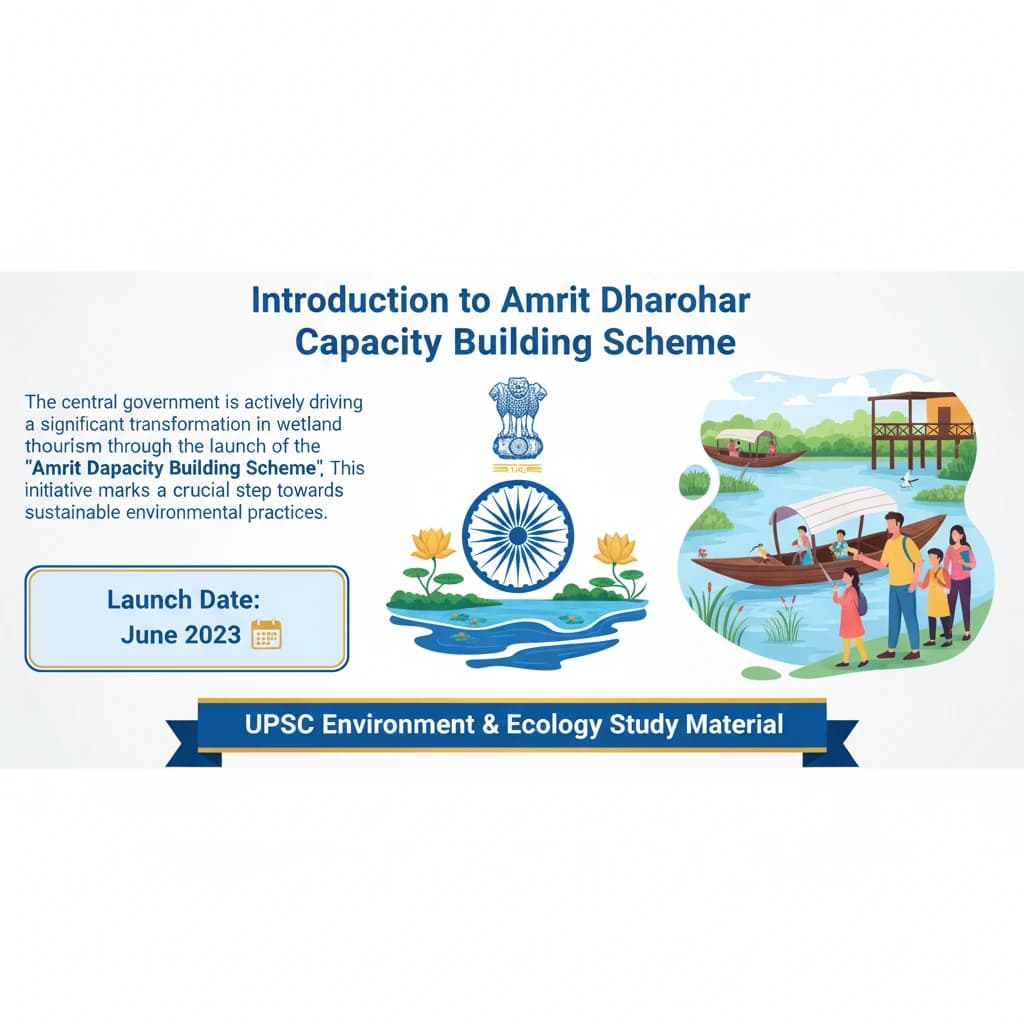
Amrit Dharohar Capacity Building Scheme
Medium⏱️ 3 min read
environment and ecology
📖 Introduction
Introduction to Amrit Dharohar Capacity Building Scheme
The central government is actively driving a significant transformation in wetland tourism through the launch of the ‘Amrit Dharohar Capacity Building Scheme’. This initiative marks a crucial step towards sustainable environmental practices.
Launch Date: The scheme was officially launched in June 2023.
Core Objective and Focus Areas
The primary goal of this scheme is to revolutionize tourism practices within ecologically sensitive wetlands. It specifically targets Ramsar sites, which are wetlands of international importance.
Key Focus: To enhance the capacity for sustainable tourism and livelihood generation at India's Ramsar sites.
Collaborating Ministries
The ‘Amrit Dharohar Capacity Building Scheme’ is a joint venture, demonstrating inter-ministerial cooperation for environmental conservation and promotion.
This scheme is a collaborative effort between the Ministry of Tourism and the Ministry of Environment, Forest, and Climate Change (MoEFCC).
Targeted Ramsar Sites
The scheme will focus on various prominent Ramsar sites across India. Notable examples include Odisha’s Chilika Lake and Haryana’s Sultanpur Bird Sanctuary, highlighting the diverse geographical reach.
UPSC Insight: Understanding the specific ministries involved and the target areas (Ramsar sites) is crucial for both Prelims (factual questions) and Mains (policy analysis).
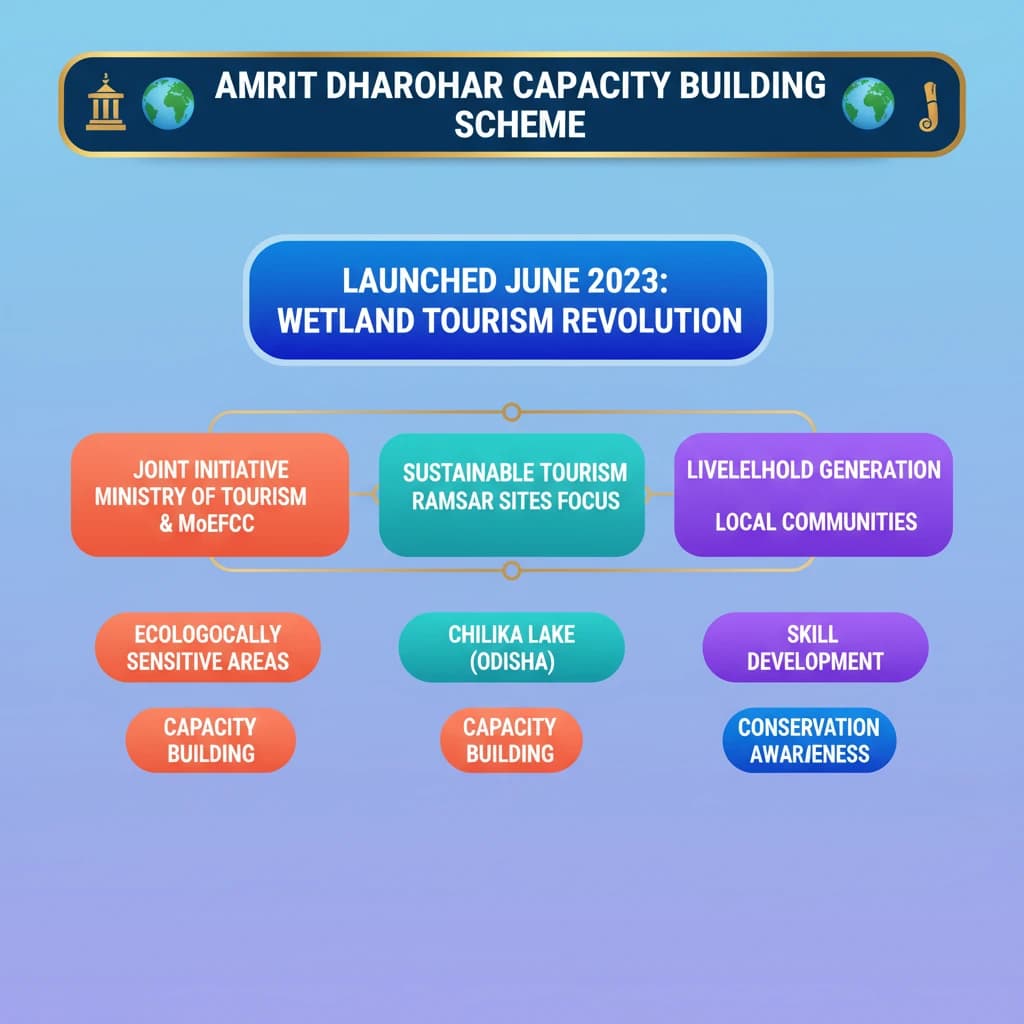
💡 Key Takeaways
- •Amrit Dharohar Capacity Building Scheme launched in June 2023.
- •Joint initiative by Ministry of Tourism and MoEFCC.
- •Aims to revolutionize tourism at ecologically sensitive wetlands, especially Ramsar sites.
- •Focuses on sustainable tourism practices and livelihood generation for local communities.
- •Examples include Chilika Lake (Odisha) and Sultanpur Bird Sanctuary (Haryana).
🧠 Memory Techniques
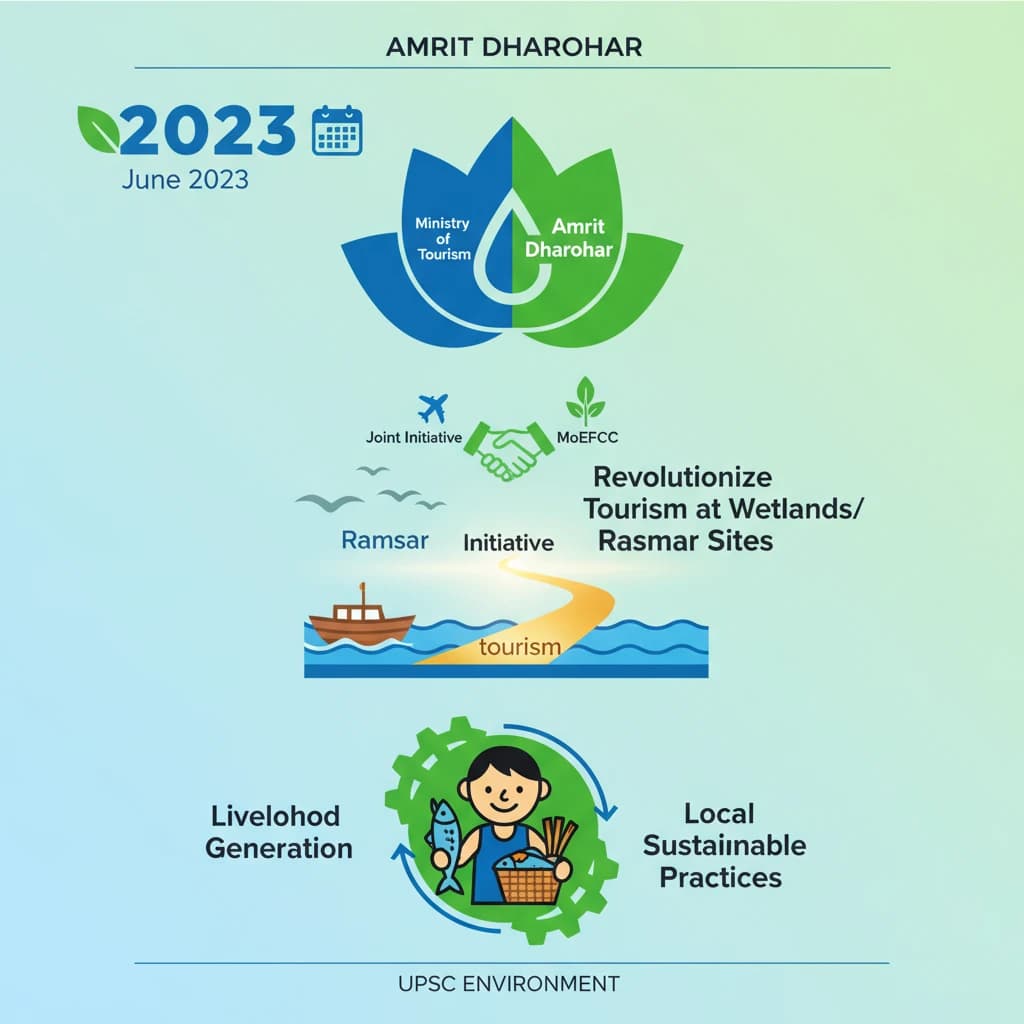
95% Verified Content
📚 Reference Sources
•Ministry of Environment, Forest and Climate Change (MoEFCC) official releases
•Ministry of Tourism official releases
•Ramsar Convention website