Loading page, please wait…
Captive-bred Wolves into the Wild in Gujarat - UPSC Environment And Ecology
What is Captive-bred Wolves into the Wild in Gujarat in UPSC Environment And Ecology?
Captive-bred Wolves into the Wild in Gujarat is a key topic under Environment And Ecology for UPSC Civil Services Examination. Key points include: Gujarat's project is the first captive-bred wolf reintroduction outside the US.. Aims to restock dwindling Indian wolf populations and enhance genetic diversity.. Combines ex-situ (captive breeding) and in-situ (reintroduction) conservation methods.. Understanding this topic is essential for both UPSC Prelims and Mains preparation.
Why is Captive-bred Wolves into the Wild in Gujarat important for UPSC exam?
Captive-bred Wolves into the Wild in Gujarat is a Medium-level topic in UPSC Environment And Ecology. It is tested in both Prelims (factual MCQs) and Mains (analytical answer writing). Previous year UPSC questions have frequently covered aspects of Captive-bred Wolves into the Wild in Gujarat, making it essential for comprehensive IAS preparation.
How to prepare Captive-bred Wolves into the Wild in Gujarat for UPSC?
To prepare Captive-bred Wolves into the Wild in Gujarat for UPSC: (1) Study the comprehensive notes covering all key concepts on Vaidra. (2) Practice previous year questions on this topic. (3) Connect it with current affairs using daily updates. (4) Revise using key takeaways and mind maps available for Environment And Ecology. (5) Write practice answers linking Captive-bred Wolves into the Wild in Gujarat to related GS Paper topics.
Key takeaways of Captive-bred Wolves into the Wild in Gujarat for UPSC
- Gujarat's project is the first captive-bred wolf reintroduction outside the US.
- Aims to restock dwindling Indian wolf populations and enhance genetic diversity.
- Combines ex-situ (captive breeding) and in-situ (reintroduction) conservation methods.
- Highlights proactive species management beyond mere protection.
- Serves as a model for future endangered species recovery programs in India.
Captive-bred Wolves into the Wild in Gujarat
Medium⏱️ 7 min read
environment and ecology
📖 Introduction
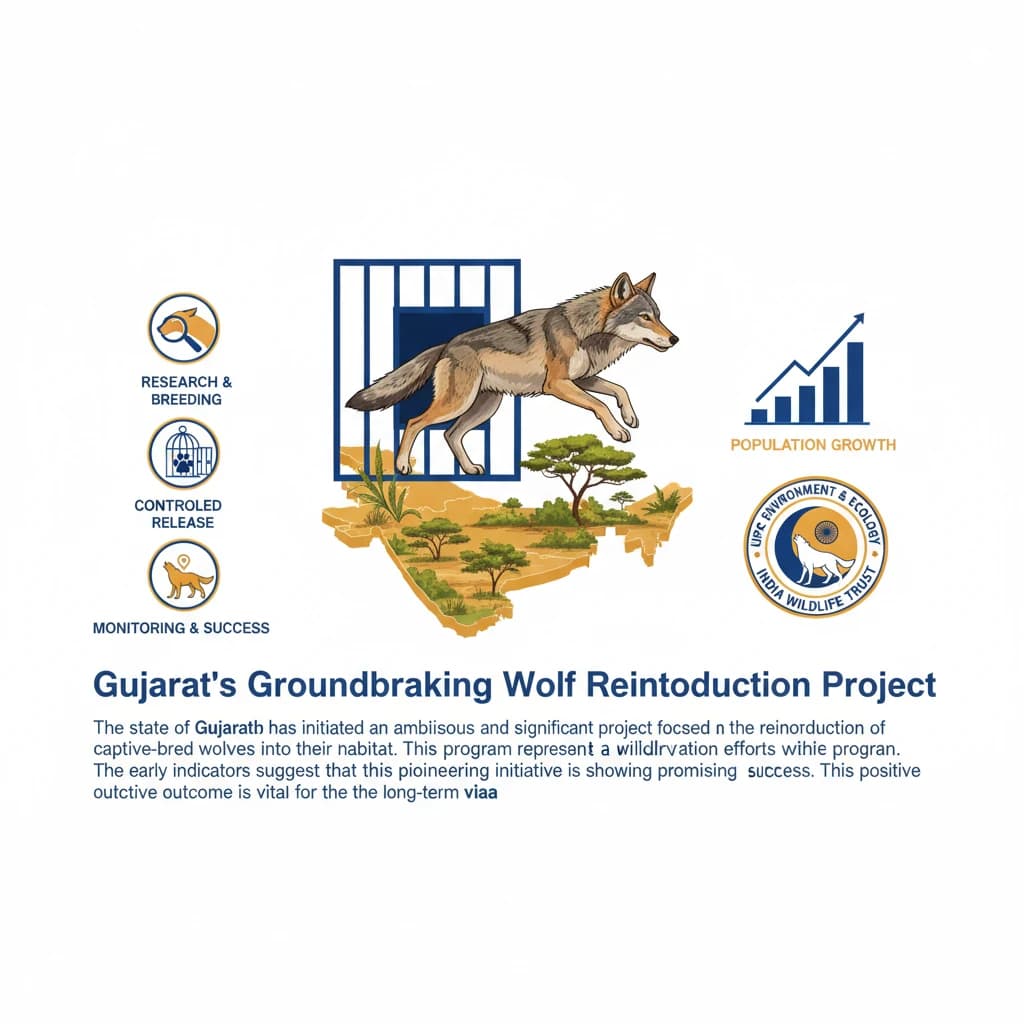
Gujarat's Groundbreaking Wolf Reintroduction Project
The state of Gujarat has initiated an ambitious and significant project focused on the reintroduction of captive-bred wolves into their natural habitat. This program represents a crucial step in wildlife conservation efforts within the region.
The early indicators suggest that this pioneering initiative is showing promising signs of success. This positive outcome is vital for the long-term viability of wolf populations in the wild.
This project in Gujarat is particularly noteworthy as it is the first of its kind outside the United States. It sets a global precedent for similar conservation endeavors, highlighting India's commitment to biodiversity.
The primary objective of this program is to restock wolf populations that may have dwindled or become locally extinct. By releasing captive-bred individuals, the project aims to bolster genetic diversity and ecological balance.
UPSC Relevance: This initiative is a prime example for GS Paper 3 (Environment & Ecology), specifically under topics like biodiversity conservation, species reintroduction programs, and wildlife management strategies. Understanding its implications is crucial.
💡 Key Takeaways
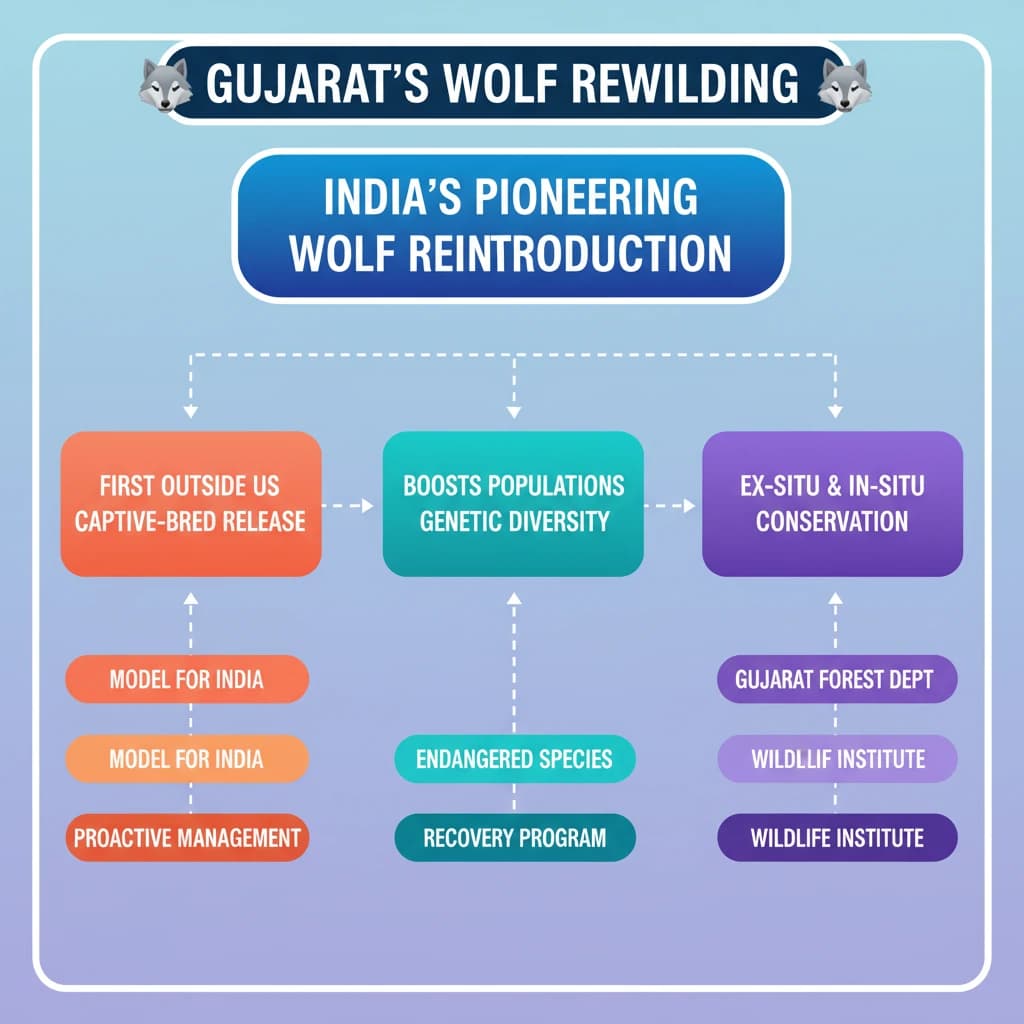
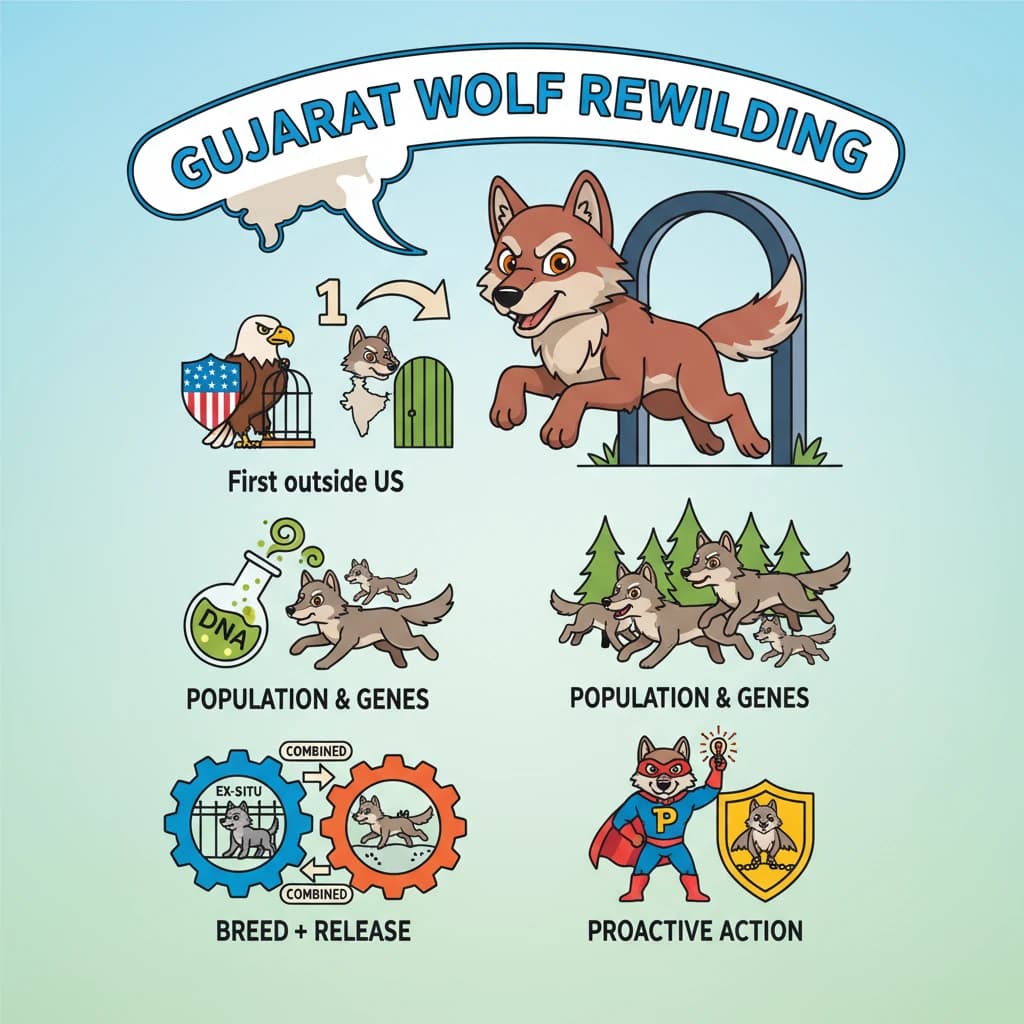
- •Gujarat's project is the first captive-bred wolf reintroduction outside the US.
- •Aims to restock dwindling Indian wolf populations and enhance genetic diversity.
- •Combines ex-situ (captive breeding) and in-situ (reintroduction) conservation methods.
- •Highlights proactive species management beyond mere protection.
- •Serves as a model for future endangered species recovery programs in India.
🧠 Memory Techniques
95% Verified Content
📚 Reference Sources
•General Environmental Studies and Wildlife Conservation Literature
•Reports on Indian Wolf Conservation