Loading page, please wait…
Lodha Tribe: PVTG in Odisha, Culture, and Socio-Economic Profile - UPSC Environment And Ecology
What is Lodha Tribe: PVTG in Odisha, Culture, and Socio-Economic Profile in UPSC Environment And Ecology?
Lodha Tribe: PVTG in Odisha, Culture, and Socio-Economic Profile is a key topic under Environment And Ecology for UPSC Civil Services Examination. Key points include: The Lodha Tribe is a Particularly Vulnerable Tribal Group (PVTG) in Odisha.. They reside in Mayurbhanj and Keonjhar districts, with a population of around 5,000.. PVTGs are a sub-category of Scheduled Tribes requiring focused support due to extreme vulnerability.. Understanding this topic is essential for both UPSC Prelims and Mains preparation.
Why is Lodha Tribe: PVTG in Odisha, Culture, and Socio-Economic Profile important for UPSC exam?
Lodha Tribe: PVTG in Odisha, Culture, and Socio-Economic Profile is a Easy-level topic in UPSC Environment And Ecology. It is tested in both Prelims (factual MCQs) and Mains (analytical answer writing). Previous year UPSC questions have frequently covered aspects of Lodha Tribe: PVTG in Odisha, Culture, and Socio-Economic Profile, making it essential for comprehensive IAS preparation.
How to prepare Lodha Tribe: PVTG in Odisha, Culture, and Socio-Economic Profile for UPSC?
To prepare Lodha Tribe: PVTG in Odisha, Culture, and Socio-Economic Profile for UPSC: (1) Study the comprehensive notes covering all key concepts on Vaidra. (2) Practice previous year questions on this topic. (3) Connect it with current affairs using daily updates. (4) Revise using key takeaways and mind maps available for Environment And Ecology. (5) Write practice answers linking Lodha Tribe: PVTG in Odisha, Culture, and Socio-Economic Profile to related GS Paper topics.
Key takeaways of Lodha Tribe: PVTG in Odisha, Culture, and Socio-Economic Profile for UPSC
- The Lodha Tribe is a Particularly Vulnerable Tribal Group (PVTG) in Odisha.
- They reside in Mayurbhanj and Keonjhar districts, with a population of around 5,000.
- PVTGs are a sub-category of Scheduled Tribes requiring focused support due to extreme vulnerability.
- Historically, the Lodha Tribe was classified under the British Criminal Tribes Act, deriving their name from 'Lubdhaka' (trapper).
- Their traditional occupation was hunter-gathering; now they engage in agriculture, labor, and small businesses.
- Odisha has the highest number of PVTGs (13) in India.
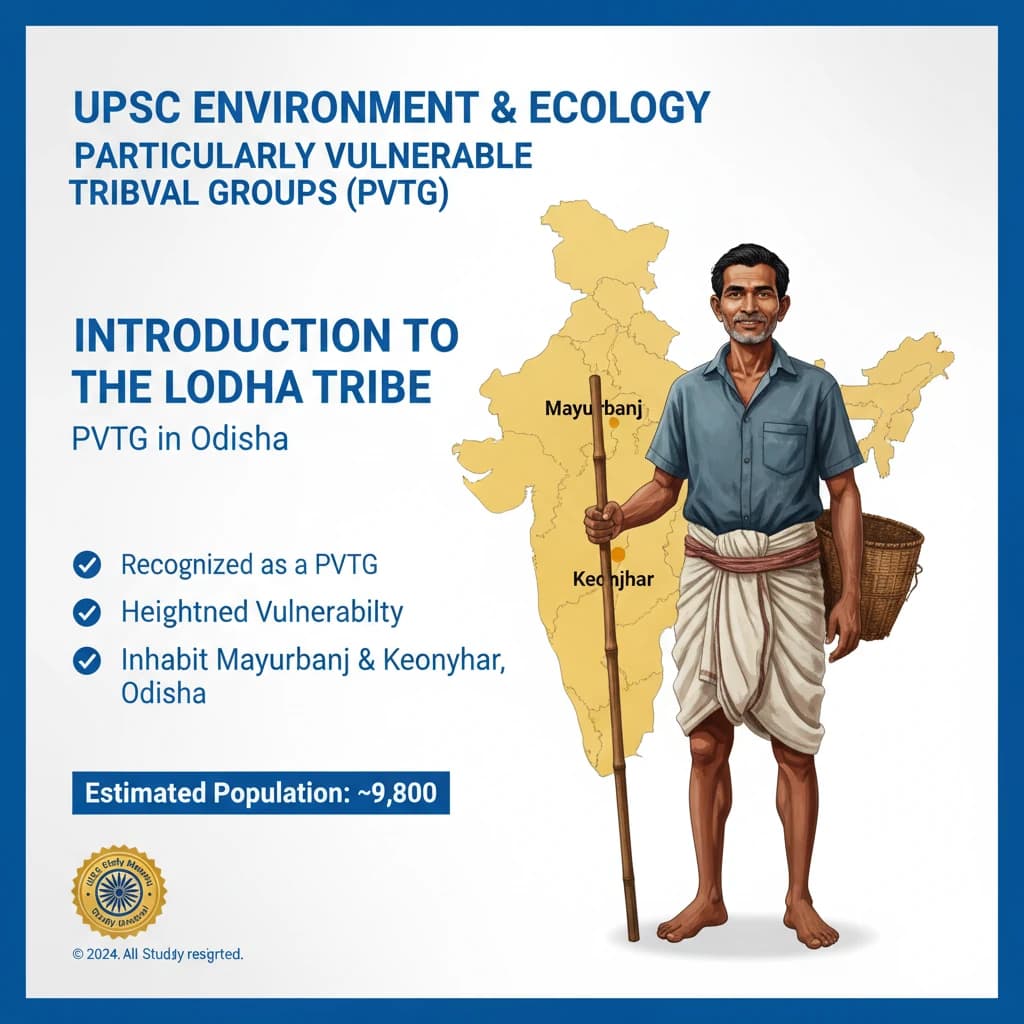
Lodha Tribe: PVTG in Odisha, Culture, and Socio-Economic Profile
Easy⏱️ 7 min read
environment and ecology
📖 Introduction
Introduction to the Lodha Tribe
The Lodha Tribe is recognized as a Particularly Vulnerable Tribal Group (PVTG) in India. This classification highlights their heightened vulnerability compared to the general Scheduled Tribe (ST) population.
They primarily inhabit the districts of Mayurbhanj and Keonjhar in Odisha. Their population is relatively small, estimated to be around 5,000 individuals.
📍 Location: Mayurbhanj and Keonjhar districts, Odisha
👥 Population: Approximately 5,000
🏷️ Status: Particularly Vulnerable Tribal Group (PVTG)
Understanding Particularly Vulnerable Tribal Groups (PVTGs)
A PVTG is a sub-category within the broader Scheduled Tribes (ST) framework. These groups are identified based on specific criteria indicating greater vulnerability, such as declining or stagnant population, low literacy levels, pre-agricultural technology, and a subsistence economy.
The classification of a tribal group as a PVTG is crucial. It enables the government to focus efforts on improving their living conditions and providing targeted support through specific welfare programs and developmental initiatives.
Purpose of PVTG Classification: To identify and provide focused, targeted support for the most vulnerable tribal communities, ensuring their socio-economic development and cultural preservation.
PVTG Statistics in India:
- Total PVTGs in India: 75
- State with maximum PVTGs: Odisha (13)
- Second highest PVTGs: Andhra Pradesh (12)
Key Characteristics of the Lodha Tribe
The Lodha Tribe possesses distinct cultural and historical characteristics that define their identity and way of life. Understanding these aspects is vital for appreciating their unique challenges and heritage.
Language and Communication
Members of the Lodha Tribe primarily communicate using Kudmali, which is their traditional language. Many also speak Odia, the official language of Odisha, facilitating interaction with the broader state population.
🗣️ Languages Spoken: Kudmali, Odia
Historical Origin and Naming
Historically, the Lodha Tribe was classified under the discriminatory Criminal Tribes Act by the British colonial administration. This act stigmatized many indigenous communities, leading to significant social and economic marginalization.
Their name, Lodha, is believed to be derived from the Sanskrit word Lubdhaka, which means 'trapper'. This origin reflects their traditional occupations and close relationship with forest resources.
📜 Historical Classification: Under the Criminal Tribes Act (British Era)
🌳 Name Origin: From Lubdhaka (trapper)
Traditional and Current Occupations
Traditionally, the Lodha Tribe were hunter-gatherers and collectors of forest produce. Their livelihood was intrinsically linked to the forest ecosystem, providing them with food, shelter, and resources.
In contemporary times, their occupational patterns have diversified. Many Lodha individuals are now engaged in agriculture, working as laborers, practicing rope making, and operating small businesses to sustain themselves.
🏹 Traditional Occupation: Hunter-gatherers, forest-produce collectors
👨🌾 Current Occupation: Agriculture, labor, rope making, small businesses
Dietary Habits
The traditional diet of the Lodha Tribe includes fish and tortoise. These food sources reflect their historical dependence on local aquatic and terrestrial environments for sustenance.
🍲 Diet: Fish, tortoise
UPSC Insight: Questions on PVTGs often appear in GS Paper I (Society), GS Paper II (Social Justice, Government Policies), and GS Paper III (Environment, Sustainable Development). Knowing specific examples like the Lodha Tribe helps in enriching answers on tribal welfare and conservation.
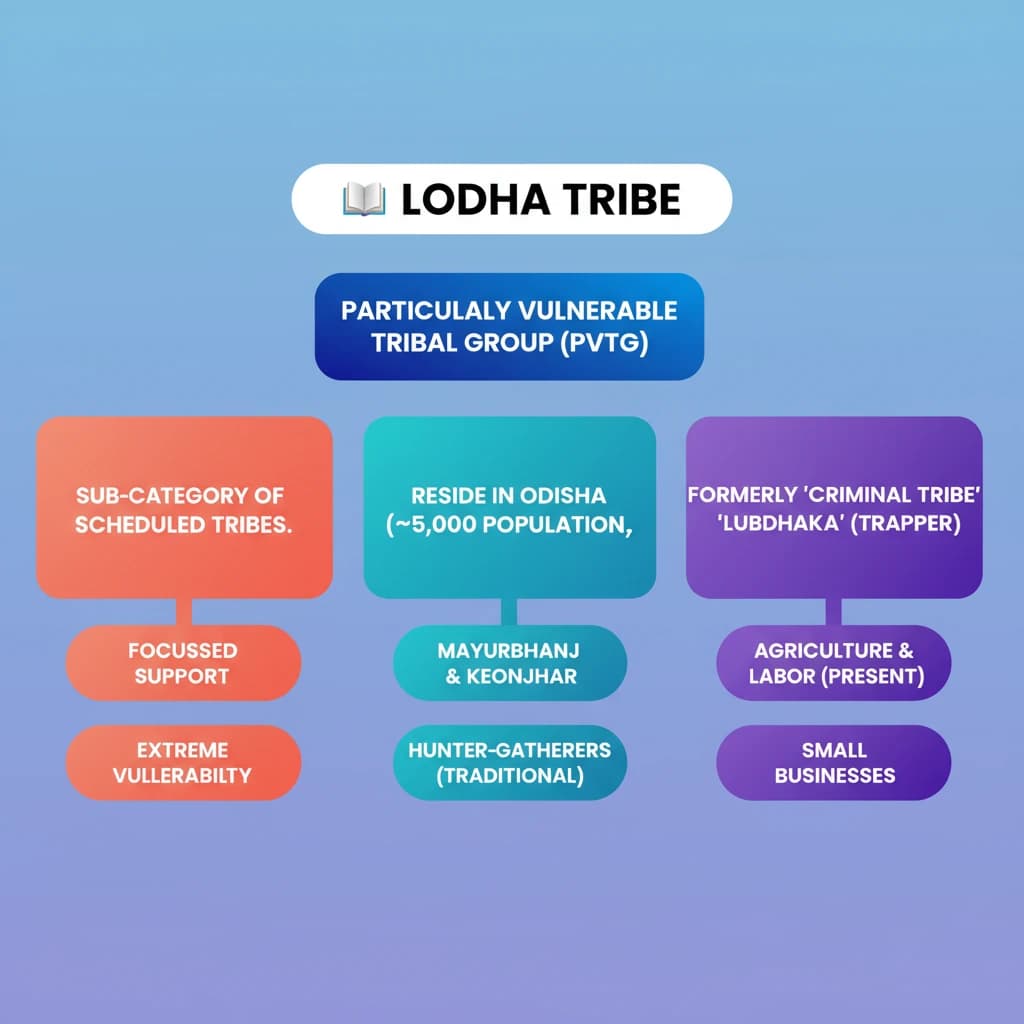
💡 Key Takeaways
- •The Lodha Tribe is a Particularly Vulnerable Tribal Group (PVTG) in Odisha.
- •They reside in Mayurbhanj and Keonjhar districts, with a population of around 5,000.
- •PVTGs are a sub-category of Scheduled Tribes requiring focused support due to extreme vulnerability.
- •Historically, the Lodha Tribe was classified under the British Criminal Tribes Act, deriving their name from 'Lubdhaka' (trapper).
- •Their traditional occupation was hunter-gathering; now they engage in agriculture, labor, and small businesses.
- •Odisha has the highest number of PVTGs (13) in India.
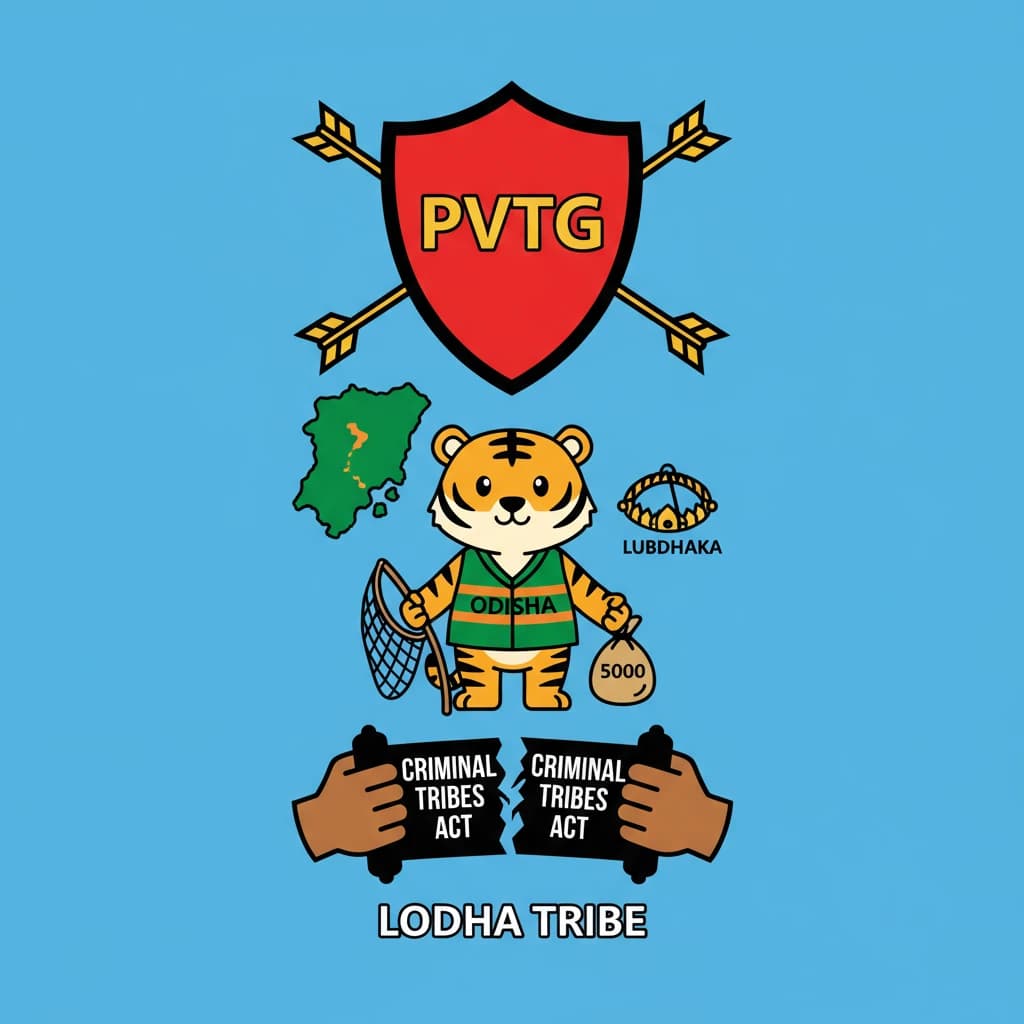
🧠 Memory Techniques
95% Verified Content