Loading page, please wait…
What is Sustainable Agriculture? - UPSC Environment And Ecology
What is What is Sustainable Agriculture? in UPSC Environment And Ecology?
What is Sustainable Agriculture? is a key topic under Environment And Ecology for UPSC Civil Services Examination. Key points include: Sustainable Agriculture is a holistic approach balancing current food needs with future resource preservation.. Its three core pillars are environmental stewardship, economic profitability, and social equity.. Practices like crop rotation, organic farming, and CSA are integral to its implementation.. Understanding this topic is essential for both UPSC Prelims and Mains preparation.
Why is What is Sustainable Agriculture? important for UPSC exam?
What is Sustainable Agriculture? is a Medium-level topic in UPSC Environment And Ecology. It is tested in both Prelims (factual MCQs) and Mains (analytical answer writing). Previous year UPSC questions have frequently covered aspects of What is Sustainable Agriculture?, making it essential for comprehensive IAS preparation.
How to prepare What is Sustainable Agriculture? for UPSC?
To prepare What is Sustainable Agriculture? for UPSC: (1) Study the comprehensive notes covering all key concepts on Vaidra. (2) Practice previous year questions on this topic. (3) Connect it with current affairs using daily updates. (4) Revise using key takeaways and mind maps available for Environment And Ecology. (5) Write practice answers linking What is Sustainable Agriculture? to related GS Paper topics.
Key takeaways of What is Sustainable Agriculture? for UPSC
- Sustainable Agriculture is a holistic approach balancing current food needs with future resource preservation.
- Its three core pillars are environmental stewardship, economic profitability, and social equity.
- Practices like crop rotation, organic farming, and CSA are integral to its implementation.
- It is vital for climate change mitigation, food security, and enhancing farmer livelihoods.
- The concept has evolved from traditional practices, gaining urgency due to modern agricultural impacts.
What is Sustainable Agriculture?
Medium⏱️ 8 min read
environment and ecology
📖 Introduction
Understanding Sustainable Agriculture
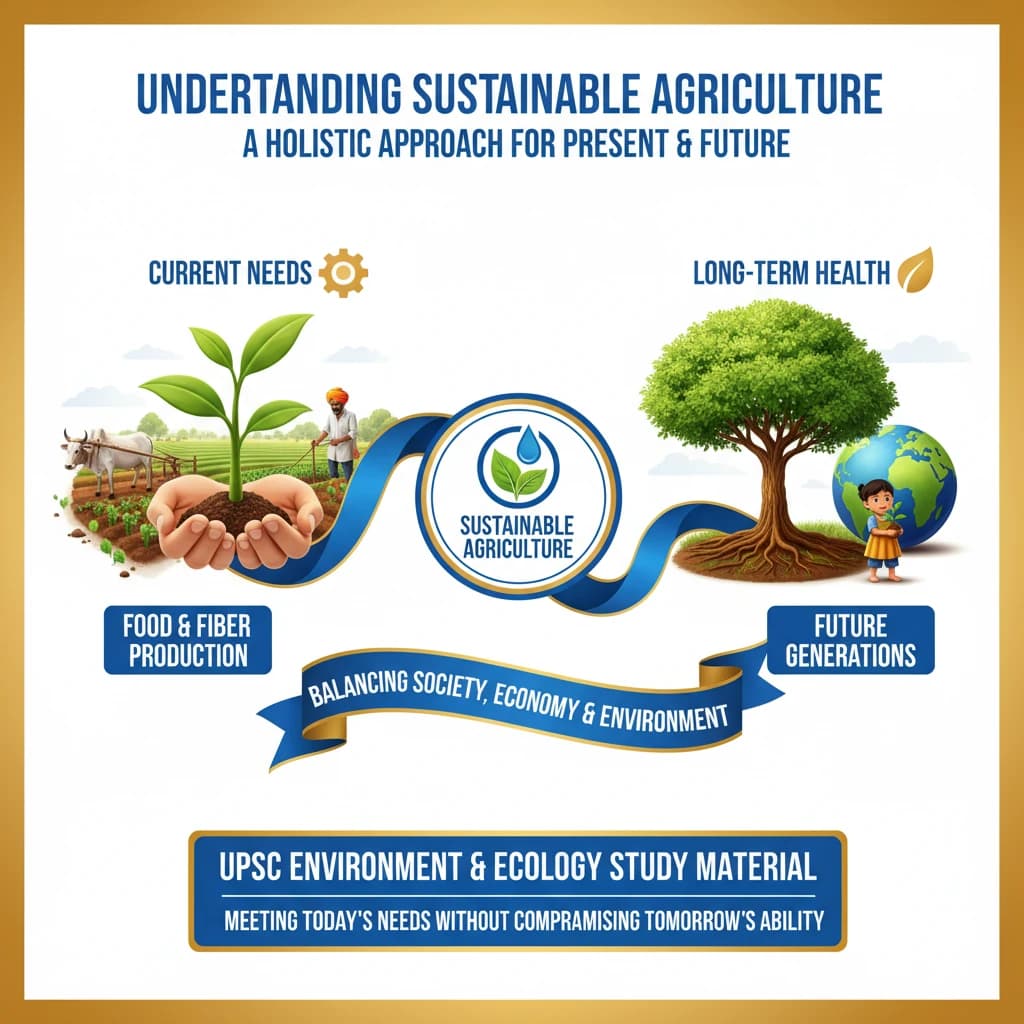
Sustainable agriculture is a comprehensive and holistic approach to farming and food production. It seeks to balance the immediate demands of society with the long-term health of agricultural systems and the environment.
The primary goal is to meet the current needs for food and fiber without compromising the ability of future generations to meet their own needs. This involves careful management of natural resources.
Core Principles and Practices
This approach integrates various practices and principles that ensure the viability of farming. It moves beyond conventional farming to incorporate ecological, social, and economic considerations.
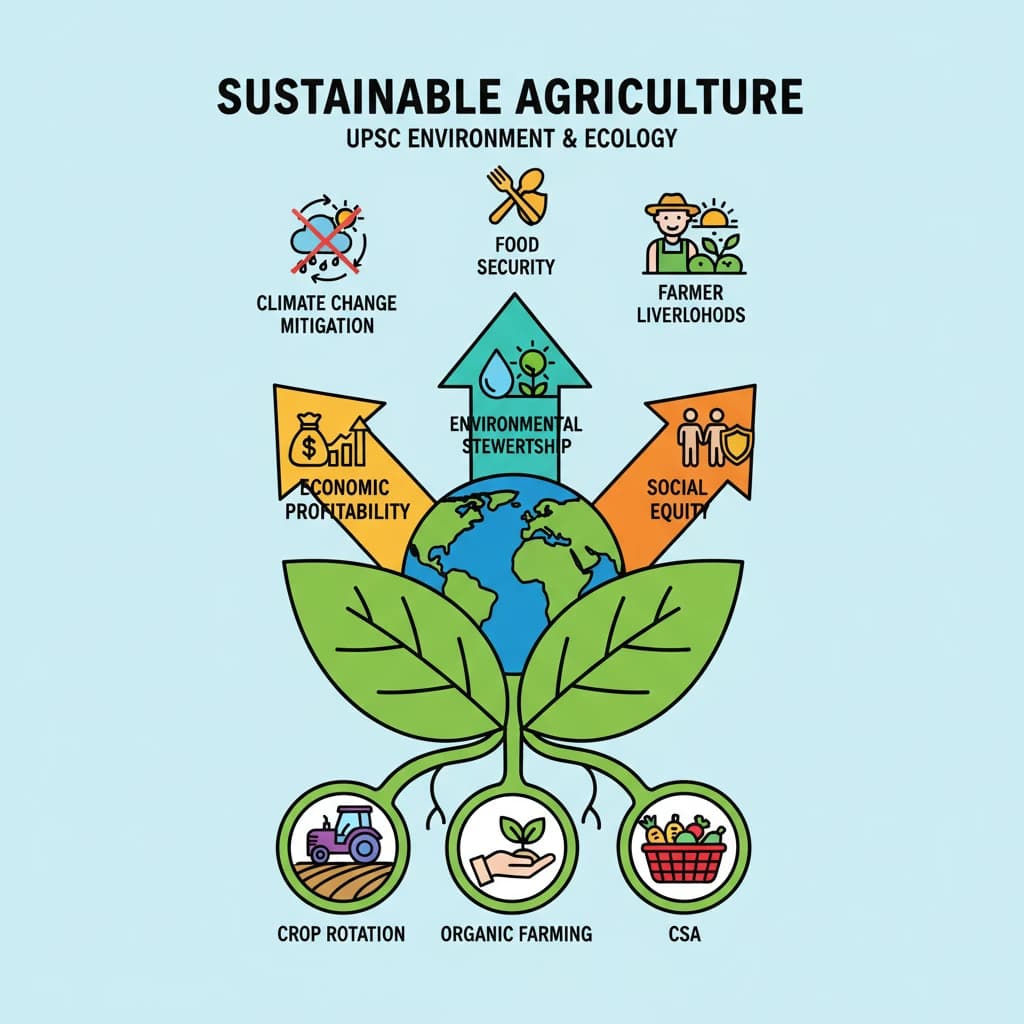
- Crop Switching: Implementing diverse crop rotations to improve soil health and reduce pest pressure.
- Organic Farming: Avoiding synthetic fertilizers, pesticides, and genetically modified organisms (GMOs) to promote ecological balance.
- Community Supported Agriculture (CSA): Fostering direct relationships between farmers and consumers, enhancing local food systems.
Pillars of Sustainability
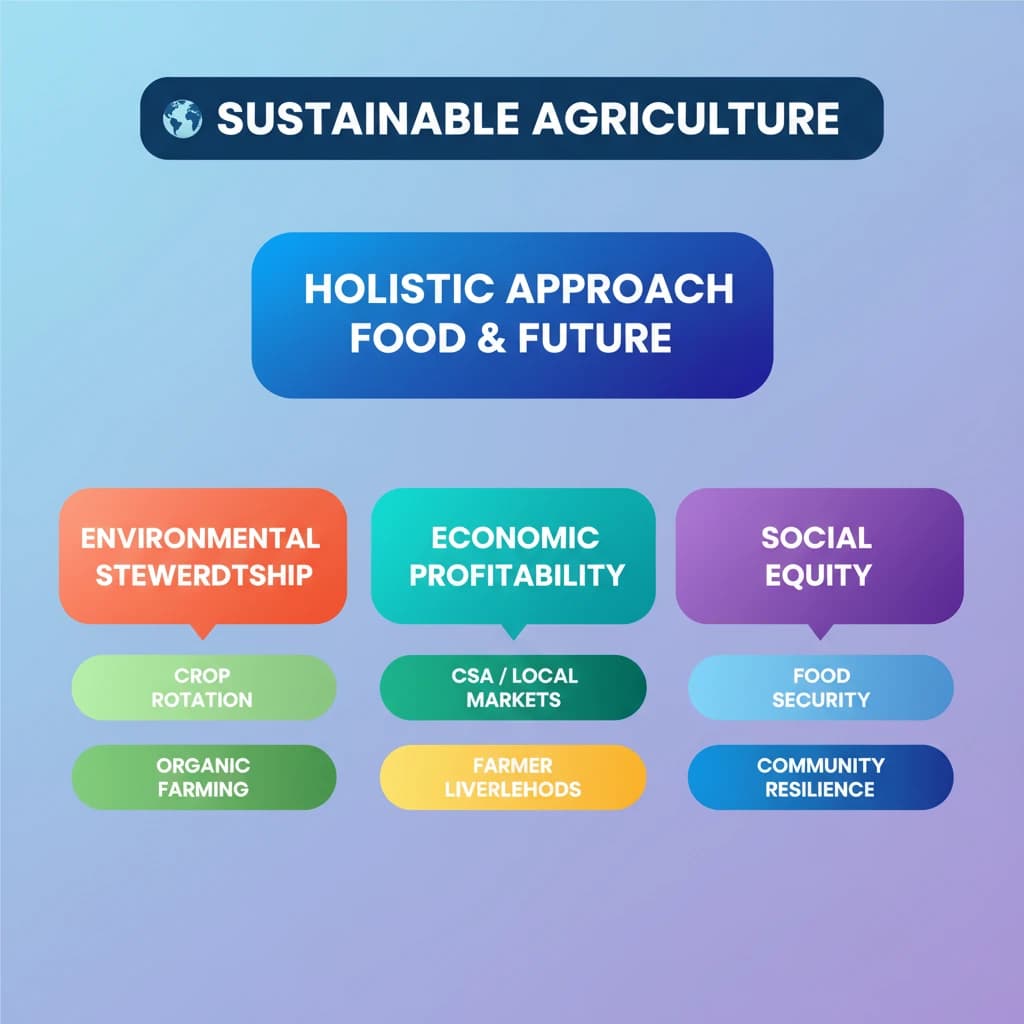
Sustainable agriculture is built upon three interconnected pillars, ensuring a balanced and resilient food system.
- Environmental Stewardship: Protecting and enhancing natural resources, including soil, water, air, and biodiversity.
- Economic Profitability: Ensuring that farming remains financially viable for farmers, providing a stable livelihood.
- Social Equity: Promoting fair labor practices, access to healthy food, and community well-being.
For UPSC, remember that Sustainable Agriculture is not just about environmental protection; it equally emphasizes economic viability for farmers and social justice within the food system. This holistic perspective is crucial for Mains answers.
💡 Key Takeaways
- •Sustainable Agriculture is a holistic approach balancing current food needs with future resource preservation.
- •Its three core pillars are environmental stewardship, economic profitability, and social equity.
- •Practices like crop rotation, organic farming, and CSA are integral to its implementation.
- •It is vital for climate change mitigation, food security, and enhancing farmer livelihoods.
- •The concept has evolved from traditional practices, gaining urgency due to modern agricultural impacts.
🧠 Memory Techniques
95% Verified Content
📚 Reference Sources
•FAO reports on Sustainable Agriculture
•Ministry of Agriculture & Farmers Welfare, Government of India documents