Loading page, please wait…
Who were the Chalukyas? - UPSC History
What is Who were the Chalukyas? in UPSC History?
Who were the Chalukyas? is a key topic under History for UPSC Civil Services Examination. Key points include: Chalukyas ruled parts of South and Central India from 6th to 12th century AD.. Their kingdom was centered on the fertile Raichur Doab, between Krishna and Tungabhadra rivers.. Three main branches: Badami (Vatapi), Eastern (Vengi), and Western (Kalyani) Chalukyas.. Understanding this topic is essential for both UPSC Prelims and Mains preparation.
Why is Who were the Chalukyas? important for UPSC exam?
Who were the Chalukyas? is a Medium-level topic in UPSC History. It is tested in both Prelims (factual MCQs) and Mains (analytical answer writing). Previous year UPSC questions have frequently covered aspects of Who were the Chalukyas?, making it essential for comprehensive IAS preparation.
How to prepare Who were the Chalukyas? for UPSC?
To prepare Who were the Chalukyas? for UPSC: (1) Study the comprehensive notes covering all key concepts on Vaidra. (2) Practice previous year questions on this topic. (3) Connect it with current affairs using daily updates. (4) Revise using key takeaways and mind maps available for History. (5) Write practice answers linking Who were the Chalukyas? to related GS Paper topics.
Key takeaways of Who were the Chalukyas? for UPSC
- Chalukyas ruled parts of South and Central India from 6th to 12th century AD.
- Their kingdom was centered on the fertile Raichur Doab, between Krishna and Tungabhadra rivers.
- Three main branches: Badami (Vatapi), Eastern (Vengi), and Western (Kalyani) Chalukyas.
- Badami Chalukyas (mid-6th century) were the earliest, with Pulakesin II as their greatest ruler.
- Eastern Chalukyas emerged in eastern Deccan after Pulakesin II's death, ruling till 11th century.
- Western Chalukyas, descendants of Badami, rose in late 10th century from Kalyani, reviving Chalukya power.
Who were the Chalukyas?
Medium⏱️ 6 min read
history
📖 Introduction
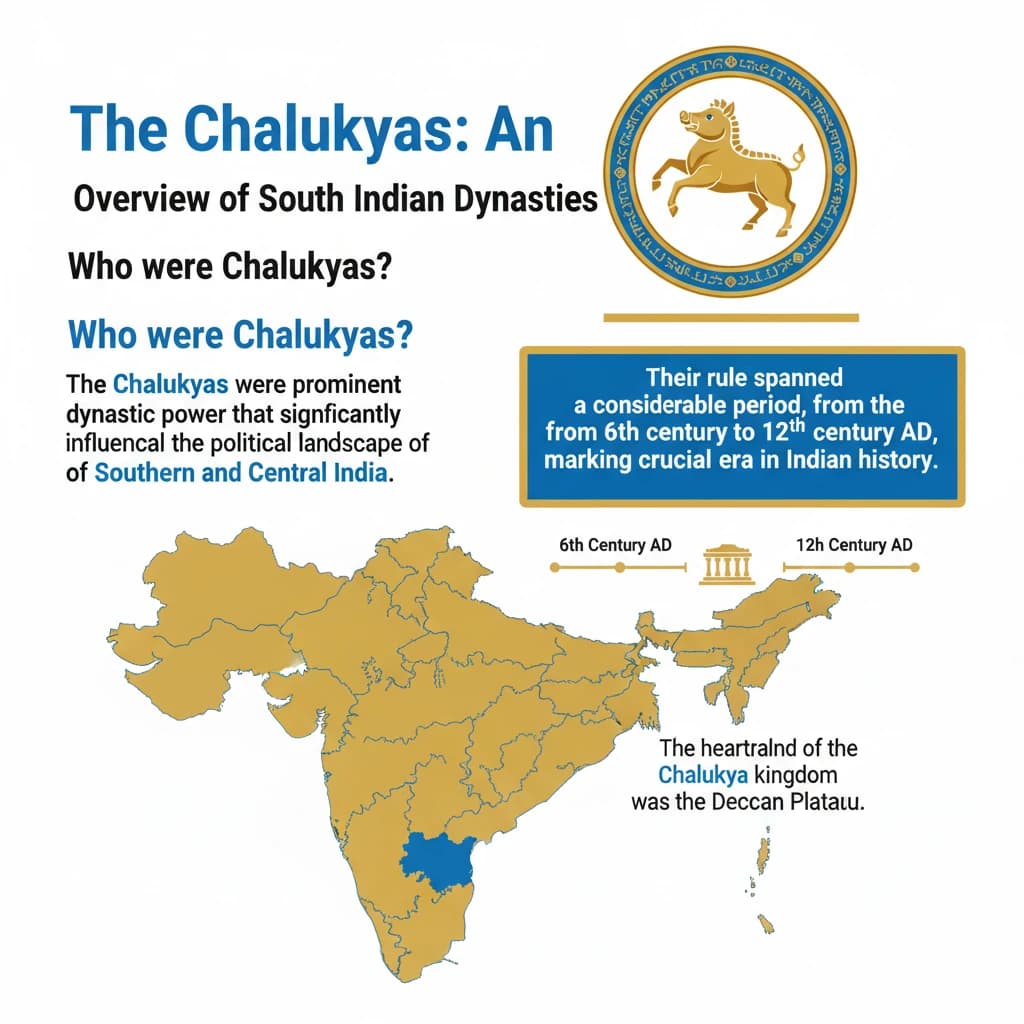
The Chalukyas: An Overview of South Indian Dynasties
The Chalukyas were a prominent dynastic power that significantly influenced the political landscape of Southern and Central India.
Their rule spanned a considerable period, from the 6th century to the 12th century AD, marking a crucial era in Indian history.
The heartland of the Chalukya kingdom was strategically located around the Raichur Doab.
This fertile region lies between the mighty rivers Krishna and Tungabhadra, offering both agricultural wealth and strategic control over trade routes.
Three Distinct Chalukya Dynasties
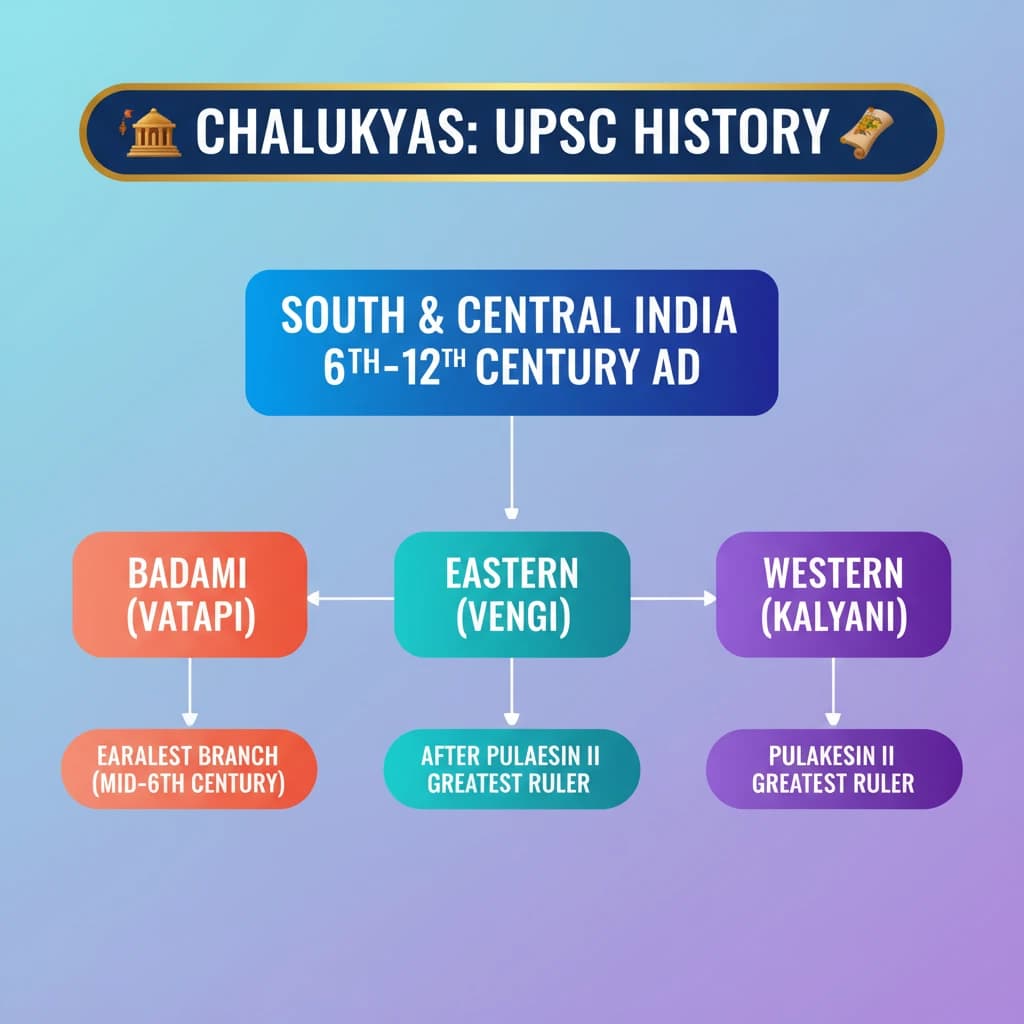
Historically, the Chalukya lineage is categorized into three distinct but related dynasties, each emerging and ruling from different centers and periods.
- Badami Chalukyas: The earliest and foundational branch.
- Eastern Chalukyas: Emerged in the eastern Deccan.
- Western Chalukyas: Descendants who re-established power from Kalyani.
The Badami Chalukyas (Vatapi Chalukyas)
The Badami Chalukyas represent the earliest and foundational branch of this powerful dynasty.
Their capital was established at Badami, also known as Vatapi, situated in the modern-day state of Karnataka.
Their reign commenced in the mid-6th century AD, establishing a strong presence in the Deccan region.
The power of the Badami Chalukyas began to wane following the demise of their most illustrious ruler, Pulakesin II, in 642 AD.
The Eastern Chalukyas of Vengi
Following the decline of the Badami Chalukyas, particularly after the death of Pulakesin II, a new branch emerged in the eastern parts of the Deccan.
This dynasty, known as the Eastern Chalukyas, established its capital at Vengi and continued to rule until the 11th century AD.
They maintained their distinct identity and influence in the eastern coastal regions for several centuries.
The Western Chalukyas of Kalyani
The Western Chalukyas are considered direct descendants of the original Badami Chalukyas, re-establishing Chalukya dominance after a period of fragmentation.
They rose to prominence in the late 10th century AD, making Kalyani their capital, from where they exerted significant influence over the Deccan.
This branch is also sometimes referred to as the Later Chalukyas or Kalyani Chalukyas.
💡 Key Takeaways
- •Chalukyas ruled parts of South and Central India from 6th to 12th century AD.
- •Their kingdom was centered on the fertile Raichur Doab, between Krishna and Tungabhadra rivers.
- •Three main branches: Badami (Vatapi), Eastern (Vengi), and Western (Kalyani) Chalukyas.
- •Badami Chalukyas (mid-6th century) were the earliest, with Pulakesin II as their greatest ruler.
- •Eastern Chalukyas emerged in eastern Deccan after Pulakesin II's death, ruling till 11th century.
- •Western Chalukyas, descendants of Badami, rose in late 10th century from Kalyani, reviving Chalukya power.
🧠 Memory Techniques
95% Verified Content
📚 Reference Sources
•NCERT History Textbooks (Class XI/XII)
•Standard reference books on Ancient Indian History (e.g., Upinder Singh, Romila Thapar)