Loading page, please wait…
Nepal’s Currency Featured Kalapani Region - UPSC International Relations
What is Nepal’s Currency Featured Kalapani Region in UPSC International Relations?
Nepal’s Currency Featured Kalapani Region is a key topic under International Relations for UPSC Civil Services Examination. Key points include: Nepal announced printing new Rs 100 currency notes featuring a map with Kalapani, Lipulekh, and Limpiyadhura.. These territories are disputed between India and Nepal, with India administering them.. India termed Nepal's move as "artificial enhancement" and "untenable.". Understanding this topic is essential for both UPSC Prelims and Mains preparation.
Why is Nepal’s Currency Featured Kalapani Region important for UPSC exam?
Nepal’s Currency Featured Kalapani Region is a Medium-level topic in UPSC International Relations. It is tested in both Prelims (factual MCQs) and Mains (analytical answer writing). Previous year UPSC questions have frequently covered aspects of Nepal’s Currency Featured Kalapani Region, making it essential for comprehensive IAS preparation.
How to prepare Nepal’s Currency Featured Kalapani Region for UPSC?
To prepare Nepal’s Currency Featured Kalapani Region for UPSC: (1) Study the comprehensive notes covering all key concepts on Vaidra. (2) Practice previous year questions on this topic. (3) Connect it with current affairs using daily updates. (4) Revise using key takeaways and mind maps available for International Relations. (5) Write practice answers linking Nepal’s Currency Featured Kalapani Region to related GS Paper topics.
Key takeaways of Nepal’s Currency Featured Kalapani Region for UPSC
- Nepal announced printing new Rs 100 currency notes featuring a map with Kalapani, Lipulekh, and Limpiyadhura.
- These territories are disputed between India and Nepal, with India administering them.
- India termed Nepal's move as "artificial enhancement" and "untenable."
- India's External Affairs Minister stated it would not change the ground reality.
- The incident highlights ongoing border disputes and diplomatic sensitivities in India-Nepal relations.
- It underscores the use of cartography as a tool for asserting territorial claims.
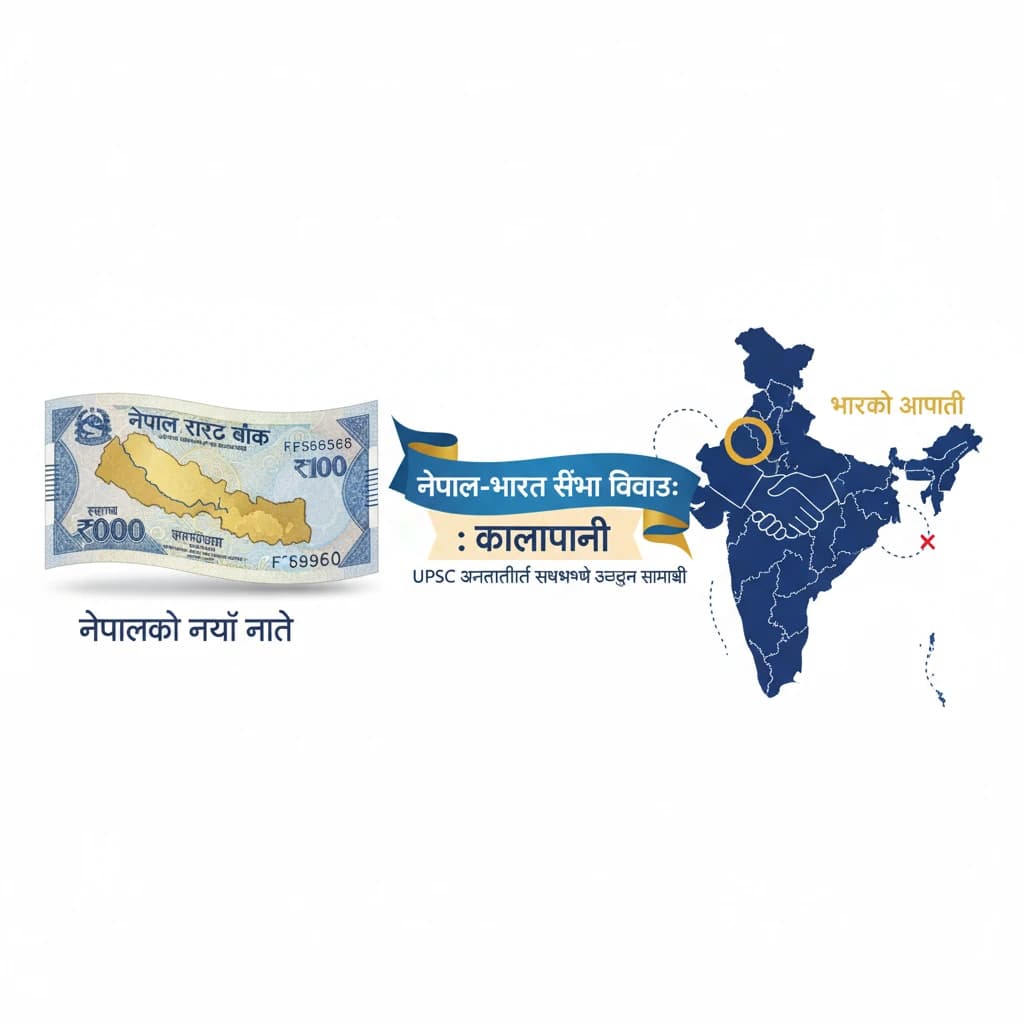
Nepal’s Currency Featured Kalapani Region
Medium⏱️ 7 min read
international relations
📖 Introduction
Introduction: Nepal's New Currency Note Initiative
Recently, Nepal announced its decision to print a new Rs 100 currency note. This announcement has drawn significant attention and a sharp response from India due to a specific feature on the note.
The new currency note is set to feature a map of Nepal that includes territories currently under India's administration. This move is seen as a diplomatic assertion of territorial claims.
The Contentious Territories: Kalapani, Lipulekh, and Limpiyadhura
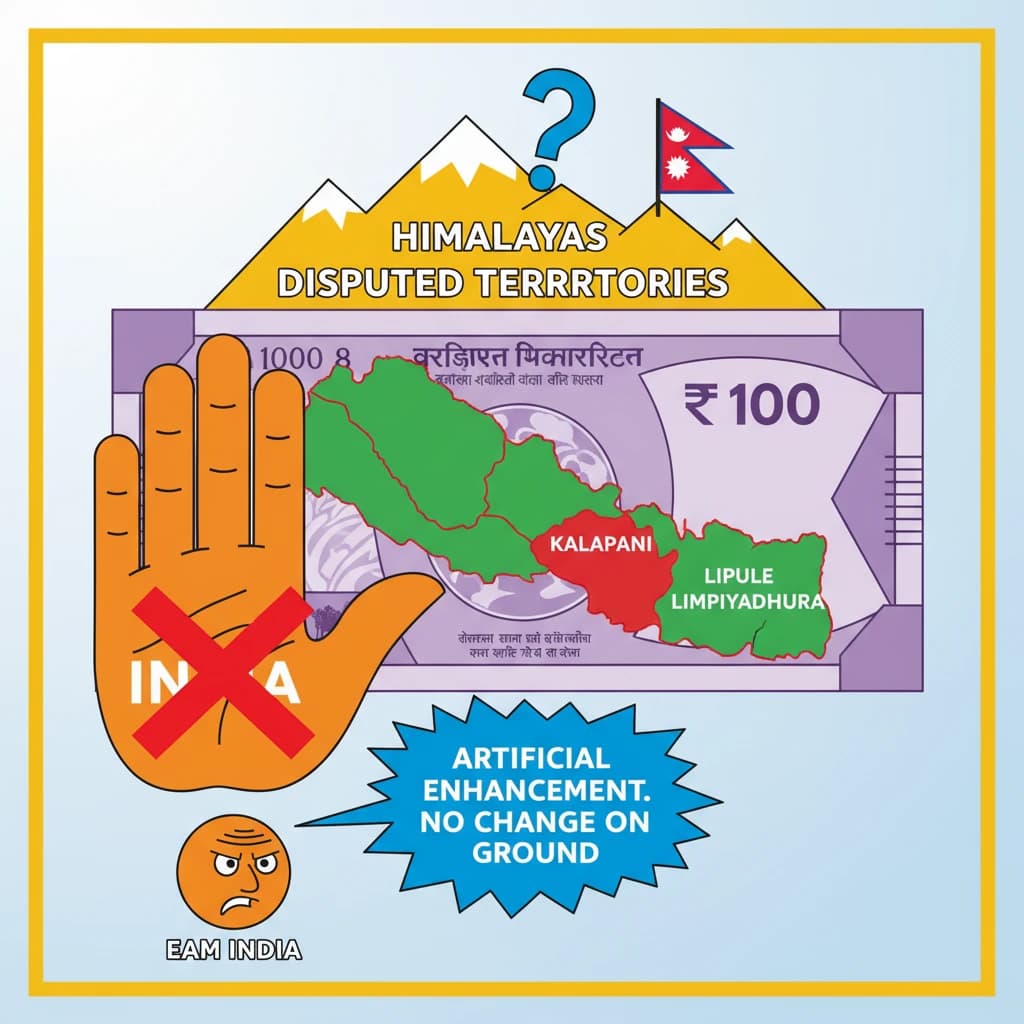
The map on Nepal's new Rs 100 note specifically depicts the regions of Lipulekh, Limpiyadhura, and Kalapani as part of Nepalese territory. These three areas are central to a long-standing border dispute between India and Nepal.
Key Disputed Areas:
- Kalapani: A strategically important area located at the tri-junction of India, Nepal, and China.
- Lipulekh: A high-altitude Himalayan pass, crucial for trade and pilgrimage, including the Kailash Mansarovar Yatra.
- Limpiyadhura: Located to the west of the Kali River, considered by Nepal as the origin of the river, thus extending its claim further west.
India's Official Response and Stance
India responded unequivocally to Nepal's decision. The Indian External Affairs Minister termed Nepal's action as an "artificial enhancement" and "untenable".
India's Position: New Delhi maintains that such cartographic changes by Nepal will not alter the existing situation or the ground reality. India considers these territories as integral parts of its own sovereign land.
UPSC Insight: This incident highlights the complexities of India's 'Neighbourhood First' policy and the challenges in managing border disputes with immediate neighbours. It's crucial for understanding bilateral relations in GS Paper 2.
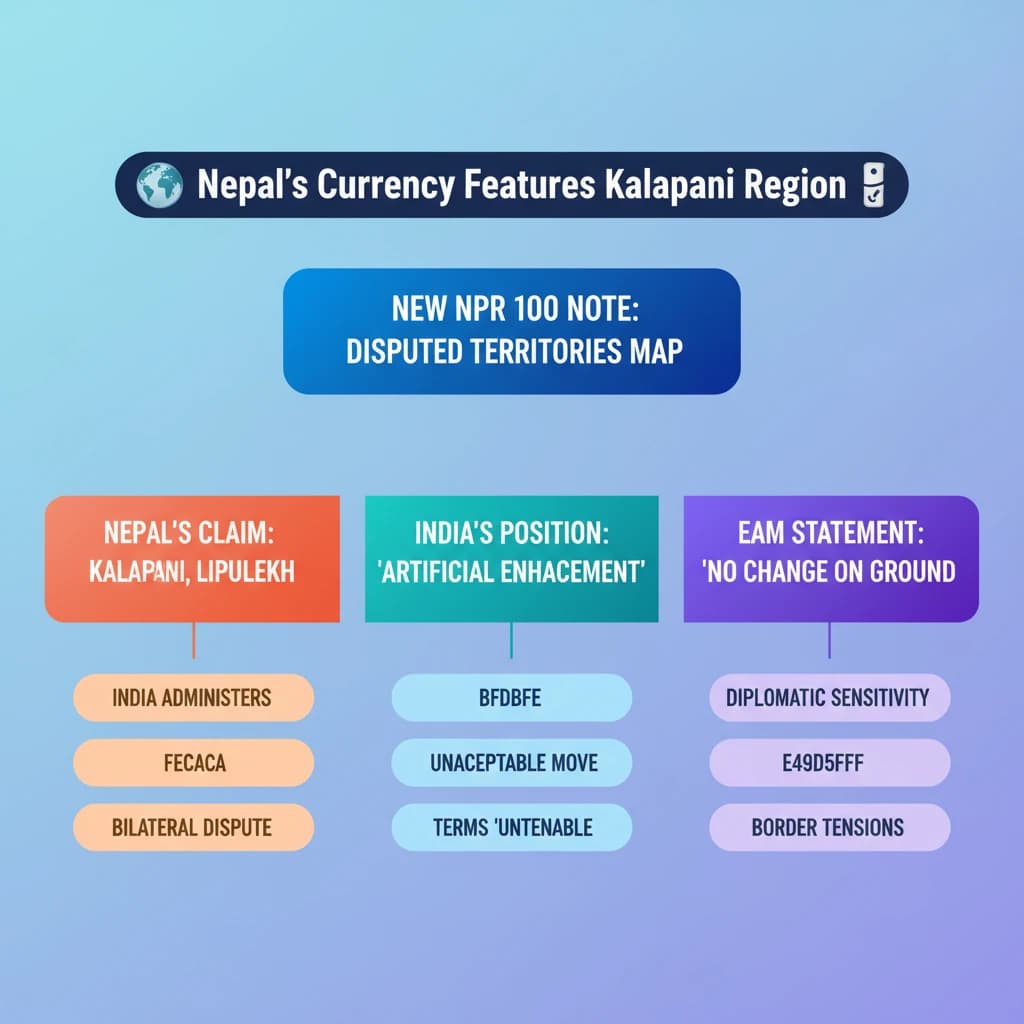
💡 Key Takeaways
- •Nepal announced printing new Rs 100 currency notes featuring a map with Kalapani, Lipulekh, and Limpiyadhura.
- •These territories are disputed between India and Nepal, with India administering them.
- •India termed Nepal's move as "artificial enhancement" and "untenable."
- •India's External Affairs Minister stated it would not change the ground reality.
- •The incident highlights ongoing border disputes and diplomatic sensitivities in India-Nepal relations.
- •It underscores the use of cartography as a tool for asserting territorial claims.
🧠 Memory Techniques
98% Verified Content
📚 Reference Sources
•Ministry of External Affairs, Government of India (Official Statements)
•The Hindu (News Archives)
•Indian Express (News Archives)
•Nepali Times (News Archives)