Loading page, please wait…
IT Rules, 2021: Due Diligence for Significant Intermediaries - UPSC Polity And Governance
What is IT Rules, 2021: Due Diligence for Significant Intermediaries in UPSC Polity And Governance?
IT Rules, 2021: Due Diligence for Significant Intermediaries is a key topic under Polity And Governance for UPSC Civil Services Examination. Key points include: Significant Intermediaries (over 5M users) face enhanced due diligence under IT Rules, 2021.. Mandatory appointment of Chief Compliance Officer and Grievance Officer.. Monthly compliance reports detailing complaints and actions taken.. Understanding this topic is essential for both UPSC Prelims and Mains preparation.
Why is IT Rules, 2021: Due Diligence for Significant Intermediaries important for UPSC exam?
IT Rules, 2021: Due Diligence for Significant Intermediaries is a Medium-level topic in UPSC Polity And Governance. It is tested in both Prelims (factual MCQs) and Mains (analytical answer writing). Previous year UPSC questions have frequently covered aspects of IT Rules, 2021: Due Diligence for Significant Intermediaries, making it essential for comprehensive IAS preparation.
How to prepare IT Rules, 2021: Due Diligence for Significant Intermediaries for UPSC?
To prepare IT Rules, 2021: Due Diligence for Significant Intermediaries for UPSC: (1) Study the comprehensive notes covering all key concepts on Vaidra. (2) Practice previous year questions on this topic. (3) Connect it with current affairs using daily updates. (4) Revise using key takeaways and mind maps available for Polity And Governance. (5) Write practice answers linking IT Rules, 2021: Due Diligence for Significant Intermediaries to related GS Paper topics.
Key takeaways of IT Rules, 2021: Due Diligence for Significant Intermediaries for UPSC
- Significant Intermediaries (over 5M users) face enhanced due diligence under IT Rules, 2021.
- Mandatory appointment of Chief Compliance Officer and Grievance Officer.
- Monthly compliance reports detailing complaints and actions taken.
- Grievances must be acknowledged within 24 hours, resolved within 15 days (72 hours for sensitive content).
- Code of Ethics for online news/content publishers to ensure sovereignty and legal compliance.
- Online gaming intermediaries require detailed policies and self-regulatory body verification for real-money games.
IT Rules, 2021: Due Diligence for Significant Intermediaries
Medium⏱️ 8 min read
polity and governance
📖 Introduction
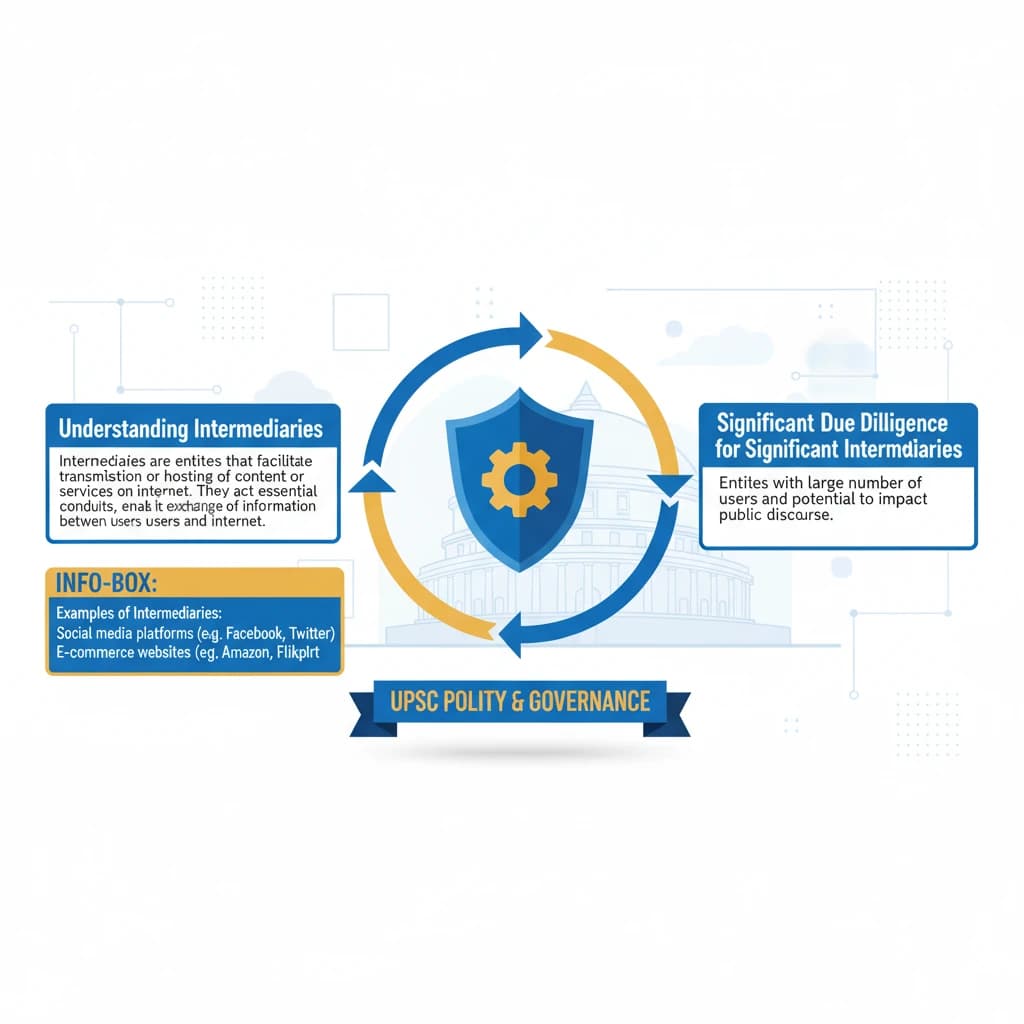
Understanding Intermediaries
Intermediaries are entities that facilitate the transmission or hosting of content or services on the internet. They act as essential conduits, enabling the exchange of information between users and the internet.
Examples of Intermediaries:
- Social media platforms (e.g., Facebook, Twitter)
- E-commerce websites (e.g., Amazon, Flipkart)
- Search engines (e.g., Google)
- Internet Service Providers (ISPs)
- Cloud service providers
Defining Significant Social Media Intermediaries
Significant Social Media Intermediaries (SSMIs) are a specific subset of intermediaries. They are characterized by their substantial user base and considerable influence on public discourse.
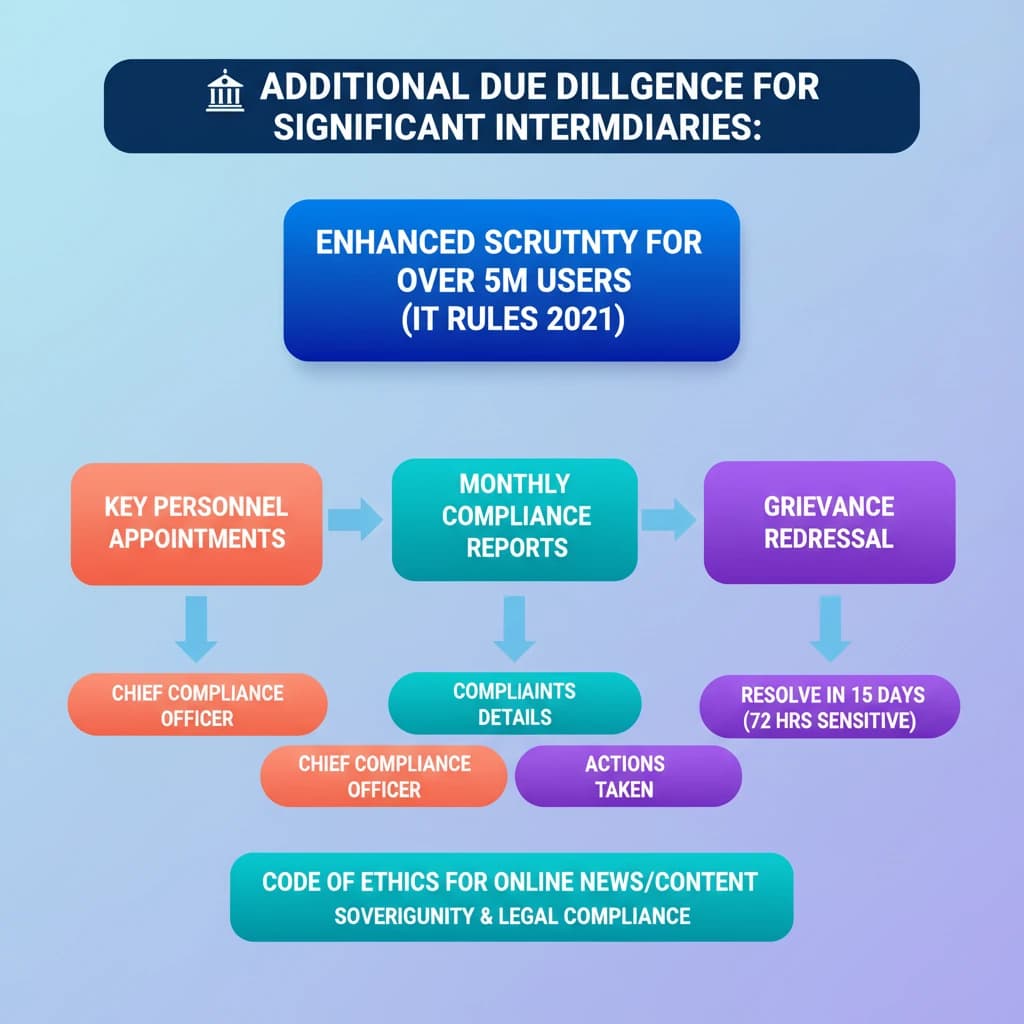
Under the IT Rules, 2021, an intermediary with over 5 million users in India is classified as a significant intermediary. This classification subjects them to enhanced regulatory requirements due to their wider reach and potential impact.
Additional Due Diligence Requirements for SSMIs
To ensure greater accountability and user safety, Significant Social Media Intermediaries are mandated to undertake specific additional due diligence measures. These measures aim to foster a more responsible online environment.
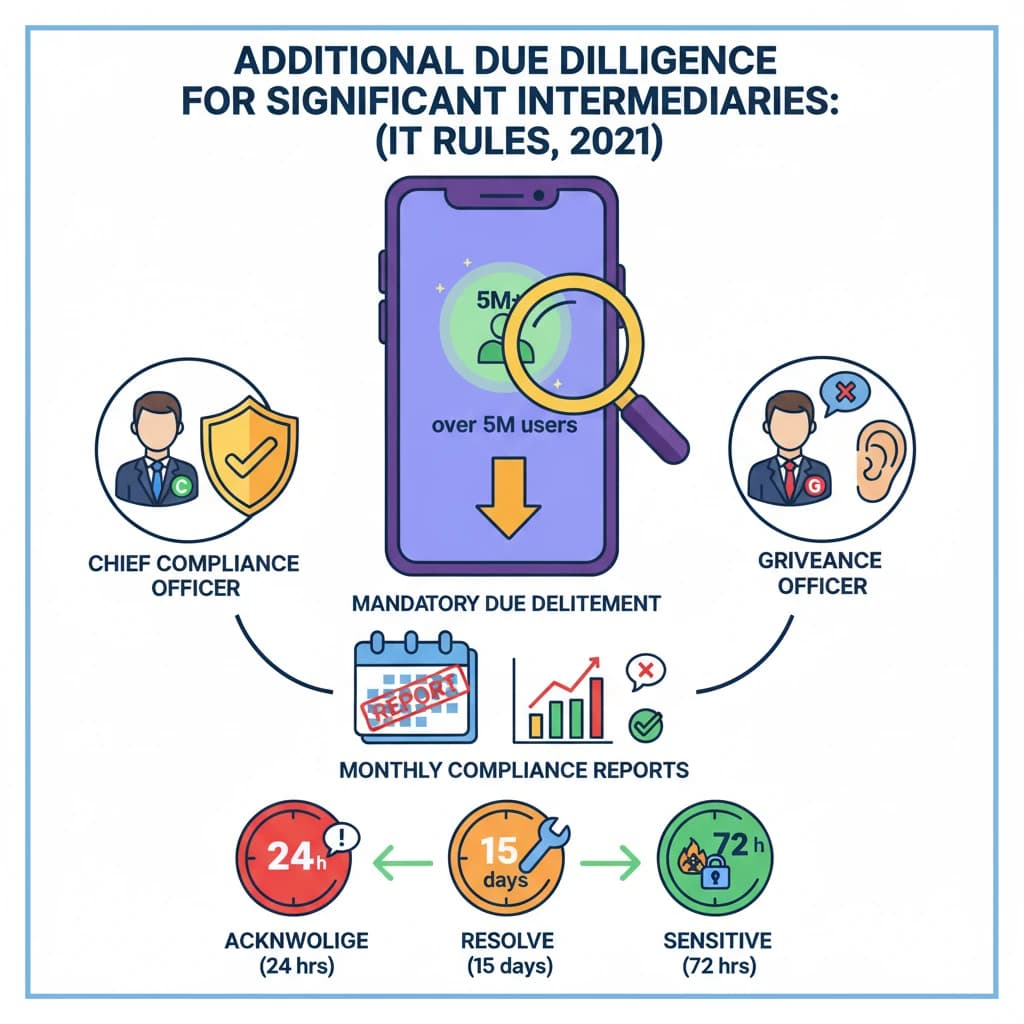
- Appointment of Key Personnel: SSMIs must appoint a Chief Compliance Officer and a Grievance Officer. These roles are crucial for ensuring adherence to the rules and addressing user complaints.
- Monthly Compliance Reports: These intermediaries are required to submit monthly compliance reports. These reports must detail the complaints received and the actions taken to resolve them.
Grievance Redressal Mechanism
A robust Grievance Redressal Mechanism is a cornerstone of the new regulations, ensuring that user complaints are addressed promptly and effectively.
- Acknowledgement Timeline: Intermediaries must acknowledge any complaint received within 24 hours of its submission.
- Resolution Timeline: Most complaints are required to be resolved within 15 days from the date of receipt.
- Expedited Resolution for Sensitive Content: Complaints concerning content that violates privacy or contains harmful material must be addressed with greater urgency, specifically within 72 hours.
Code of Ethics for Publishers
The regulations also extend to publishers of news and online content, mandating adherence to a specific Code of Ethics. This code aims to ensure responsible content creation and dissemination.
The Code of Ethics ensures that published content does not negatively affect the sovereignty of India or violate any existing laws. This provision is vital for maintaining national security and public order.
Regulation of Online Games
The scope of due diligence also covers Online Gaming Intermediaries, bringing a new layer of oversight to this rapidly growing sector.
- Detailed Policies: Online gaming intermediaries must provide clear and detailed policies regarding withdrawals, winnings, and user identity verification. This enhances transparency for users.
- Self-Regulatory Body Verification: Real-money online games are specifically required to be verified by a designated self-regulatory body. This ensures fairness and prevents fraudulent practices.
UPSC Insight: The concept of "due diligence" is central to governance. For GS Paper II (Polity & Governance), understanding its application to digital platforms is crucial. Focus on the balance between regulation and innovation, and the implications for fundamental rights like freedom of speech and privacy.
💡 Key Takeaways
- •Significant Intermediaries (over 5M users) face enhanced due diligence under IT Rules, 2021.
- •Mandatory appointment of Chief Compliance Officer and Grievance Officer.
- •Monthly compliance reports detailing complaints and actions taken.
- •Grievances must be acknowledged within 24 hours, resolved within 15 days (72 hours for sensitive content).
- •Code of Ethics for online news/content publishers to ensure sovereignty and legal compliance.
- •Online gaming intermediaries require detailed policies and self-regulatory body verification for real-money games.
🧠 Memory Techniques
95% Verified Content
📚 Reference Sources
•Press Information Bureau (PIB) releases on IT Rules, 2021
•Reports from reputable legal and policy think tanks on digital regulations in India