Loading page, please wait…
CAR-T Cell Therapy - UPSC Science And Technology
What is CAR-T Cell Therapy in UPSC Science And Technology?
CAR-T Cell Therapy is a key topic under Science And Technology for UPSC Civil Services Examination. Key points include: CAR-T cell therapy uses genetically modified T cells to fight cancer.. It involves collecting patient T cells, engineering them with a Chimeric Antigen Receptor (CAR), expanding them, and re-infusing them.. CARs are designed to recognize specific antigens on cancer cells.. Understanding this topic is essential for both UPSC Prelims and Mains preparation.
Why is CAR-T Cell Therapy important for UPSC exam?
CAR-T Cell Therapy is a Medium-level topic in UPSC Science And Technology. It is tested in both Prelims (factual MCQs) and Mains (analytical answer writing). Previous year UPSC questions have frequently covered aspects of CAR-T Cell Therapy, making it essential for comprehensive IAS preparation.
How to prepare CAR-T Cell Therapy for UPSC?
To prepare CAR-T Cell Therapy for UPSC: (1) Study the comprehensive notes covering all key concepts on Vaidra. (2) Practice previous year questions on this topic. (3) Connect it with current affairs using daily updates. (4) Revise using key takeaways and mind maps available for Science And Technology. (5) Write practice answers linking CAR-T Cell Therapy to related GS Paper topics.
Key takeaways of CAR-T Cell Therapy for UPSC
- CAR-T cell therapy uses genetically modified T cells to fight cancer.
- It involves collecting patient T cells, engineering them with a Chimeric Antigen Receptor (CAR), expanding them, and re-infusing them.
- CARs are designed to recognize specific antigens on cancer cells.
- NexCAR19 is India's first indigenous CAR-T therapy, approved in October 2023 for B-cell cancers.
- This therapy represents a major advancement in precision medicine and India's self-reliance in advanced healthcare.
CAR-T Cell Therapy
Medium⏱️ 8 min read
science and technology
📖 Introduction
Introduction to CAR-T Cell Therapy
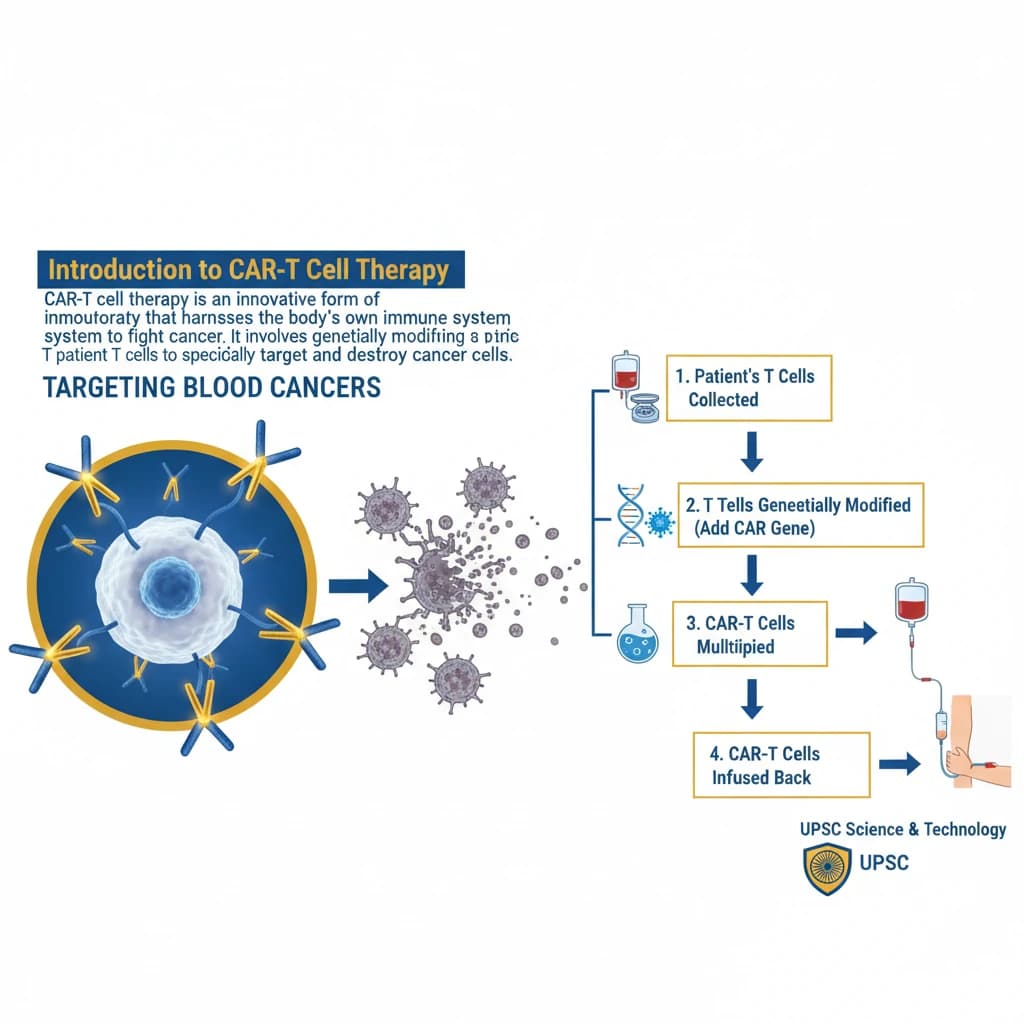
CAR-T cell therapy is an innovative form of immunotherapy that harnesses the body's own immune system to fight cancer. It involves genetically modifying a patient's T cells to specifically target and destroy cancer cells.
This advanced treatment represents a significant breakthrough, particularly in treating certain types of blood cancers, offering new hope for patients who have exhausted conventional therapies.
Mechanism of CAR-T Cell Therapy
The core principle of CAR-T cell therapy lies in equipping T cells with a specialized receptor. This receptor enables them to precisely identify and attack cancer cells.
A chimeric antigen receptor (CAR) is a synthetic protein engineered to recognize a specific antigen (marker) present on the surface of cancer cells. It combines the antigen-binding domain of an antibody with the signaling domains of a T cell receptor.
Once infused back into the patient, these engineered CAR-T cells act as 'living drugs,' actively seeking out and eliminating malignant cells throughout the body.
Steps in CAR-T Cell Therapy
The process of CAR-T cell therapy involves several critical stages, beginning with the collection of the patient's own immune cells.
- Cell Collection: Healthcare providers collect blood from the patient to obtain their T cells. These T cells are then separated from the rest of the blood, which is returned to the patient.
- Genetic Engineering: In a laboratory setting, the isolated T cells are genetically modified. This modification involves introducing a gene that codes for the chimeric antigen receptor (CAR) onto their surface.
- CAR Design: The engineered CAR is specifically designed to recognize and bind to a particular antigen (marker) that is unique to the patient's cancer cells.
- Expansion: The genetically altered CAR-T cells are then multiplied in large numbers in the lab, creating millions of these specialized cancer-fighting cells.
- Pre-Infusion Chemotherapy: Before the CAR-T cells are infused, patients typically receive a course of chemotherapy. This helps to reduce existing immune cells, making space for the new CAR-T cells to expand and function effectively.
- Infusion: The expanded CAR-T cells are infused back into the patient’s bloodstream. Once inside, they can identify and attack cancer cells expressing the targeted antigen.
Development in India: NexCAR19
India has made significant strides in indigenous development of CAR-T cell therapy, marking a crucial step towards self-reliance in advanced medical treatments.
NexCAR19 is an indigenously developed CAR-T cell therapy specifically designed for B-cell cancers. It is a collaborative effort by ImmunoACT, the Indian Institute of Technology Bombay (IIT-B), and Tata Memorial Hospital.
The Central Drugs Standard Control Organisation (CDSCO) granted approval for the commercial use of NexCAR19 to treat certain blood cancers in October 2023. This approval signifies a major milestone for advanced cancer care in India.
The development and approval of NexCAR19 are highly relevant for UPSC, showcasing India's capabilities in biotechnology and healthcare innovation. It can be cited in questions related to 'Make in India' in the pharmaceutical sector and advancements in medical science.
💡 Key Takeaways
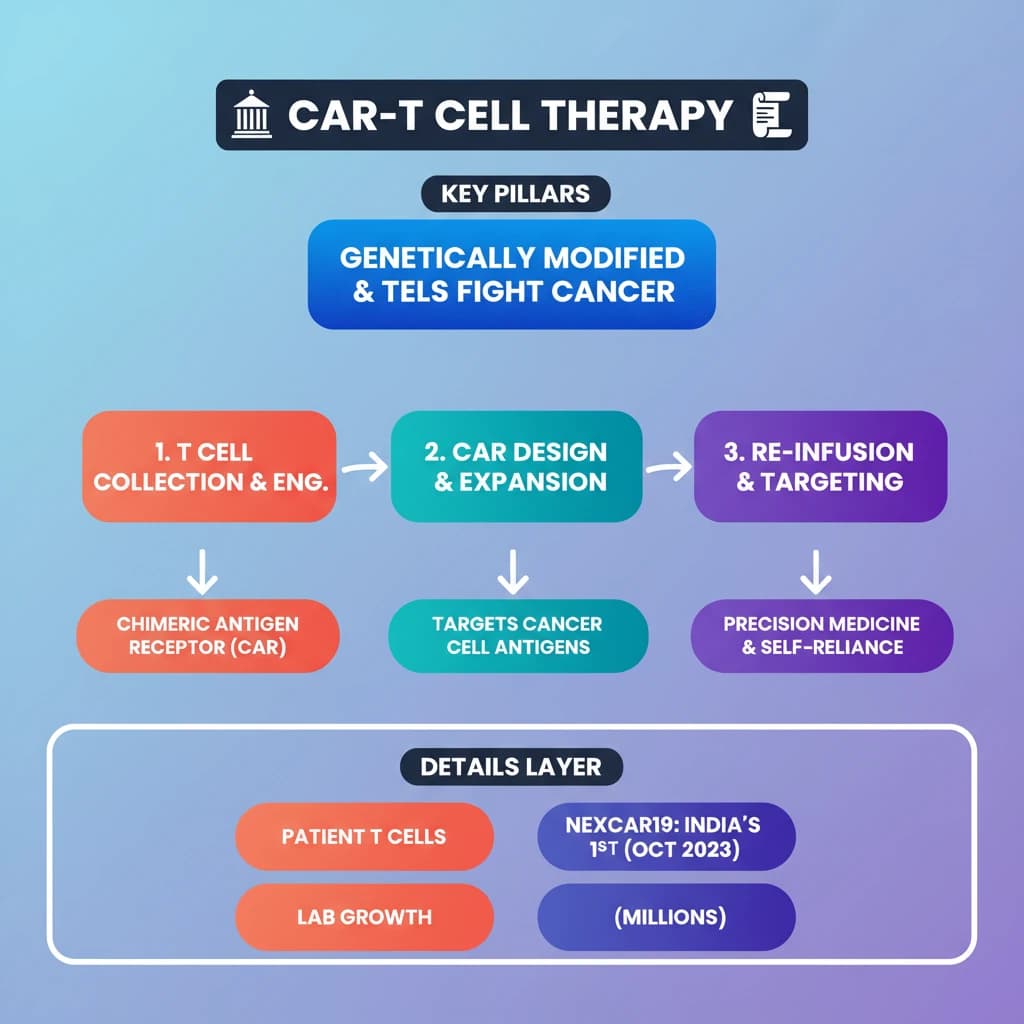
- •CAR-T cell therapy uses genetically modified T cells to fight cancer.
- •It involves collecting patient T cells, engineering them with a Chimeric Antigen Receptor (CAR), expanding them, and re-infusing them.
- •CARs are designed to recognize specific antigens on cancer cells.
- •NexCAR19 is India's first indigenous CAR-T therapy, approved in October 2023 for B-cell cancers.
- •This therapy represents a major advancement in precision medicine and India's self-reliance in advanced healthcare.
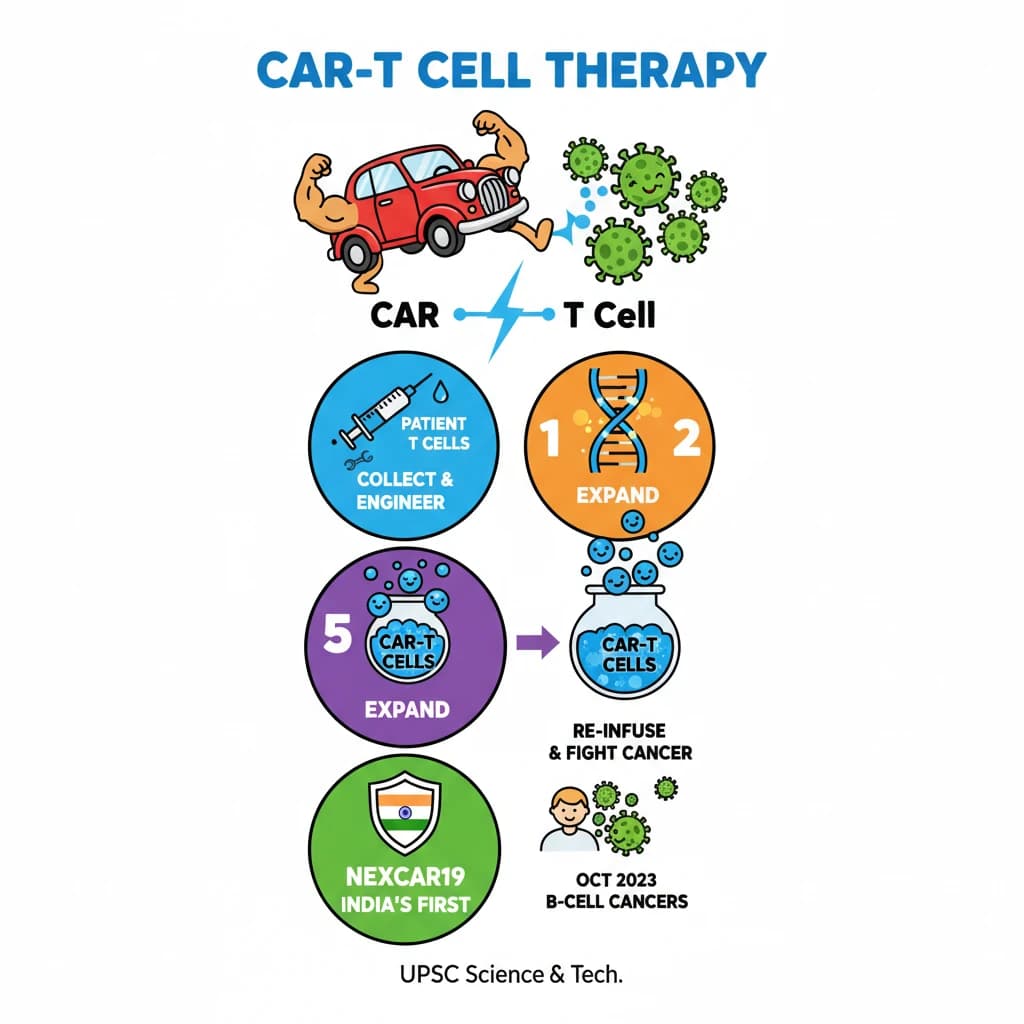
🧠 Memory Techniques
98% Verified Content
📚 Reference Sources
•Official press releases and reports from ImmunoACT, IIT Bombay, and Tata Memorial Hospital regarding NexCAR19 approval.
•Central Drugs Standard Control Organisation (CDSCO) notifications.
•General scientific literature on CAR-T cell therapy (e.g., Cleveland Clinic, NCI).