Loading page, please wait…
Gene Editing vs. Gene Sequencing: Key Differences for UPSC - UPSC Science And Technology
What is Gene Editing vs. Gene Sequencing: Key Differences for UPSC in UPSC Science And Technology?
Gene Editing vs. Gene Sequencing: Key Differences for UPSC is a key topic under Science And Technology for UPSC Civil Services Examination. Key points include: Gene Sequencing 'reads' the DNA sequence, providing information without modification.. Gene Editing 'writes' or 'rewrites' DNA, making targeted changes to the genetic code.. Sequencing is used for diagnostics, research, and understanding genetic makeup (e.g., Human Genome Project).. Understanding this topic is essential for both UPSC Prelims and Mains preparation.
Why is Gene Editing vs. Gene Sequencing: Key Differences for UPSC important for UPSC exam?
Gene Editing vs. Gene Sequencing: Key Differences for UPSC is a Medium-level topic in UPSC Science And Technology. It is tested in both Prelims (factual MCQs) and Mains (analytical answer writing). Previous year UPSC questions have frequently covered aspects of Gene Editing vs. Gene Sequencing: Key Differences for UPSC, making it essential for comprehensive IAS preparation.
How to prepare Gene Editing vs. Gene Sequencing: Key Differences for UPSC for UPSC?
To prepare Gene Editing vs. Gene Sequencing: Key Differences for UPSC for UPSC: (1) Study the comprehensive notes covering all key concepts on Vaidra. (2) Practice previous year questions on this topic. (3) Connect it with current affairs using daily updates. (4) Revise using key takeaways and mind maps available for Science And Technology. (5) Write practice answers linking Gene Editing vs. Gene Sequencing: Key Differences for UPSC to related GS Paper topics.
Key takeaways of Gene Editing vs. Gene Sequencing: Key Differences for UPSC for UPSC
- Gene Sequencing 'reads' the DNA sequence, providing information without modification.
- Gene Editing 'writes' or 'rewrites' DNA, making targeted changes to the genetic code.
- Sequencing is used for diagnostics, research, and understanding genetic makeup (e.g., Human Genome Project).
- Editing is used for therapeutic interventions, agricultural improvements, and basic research (e.g., CRISPR for sickle cell anemia).
- Key techniques for sequencing include Sanger and NGS; for editing, CRISPR-Cas9, ZFNs, and TALENs.
- Both technologies have profound current relevance in precision medicine, agriculture, and raise significant ethical and regulatory considerations.
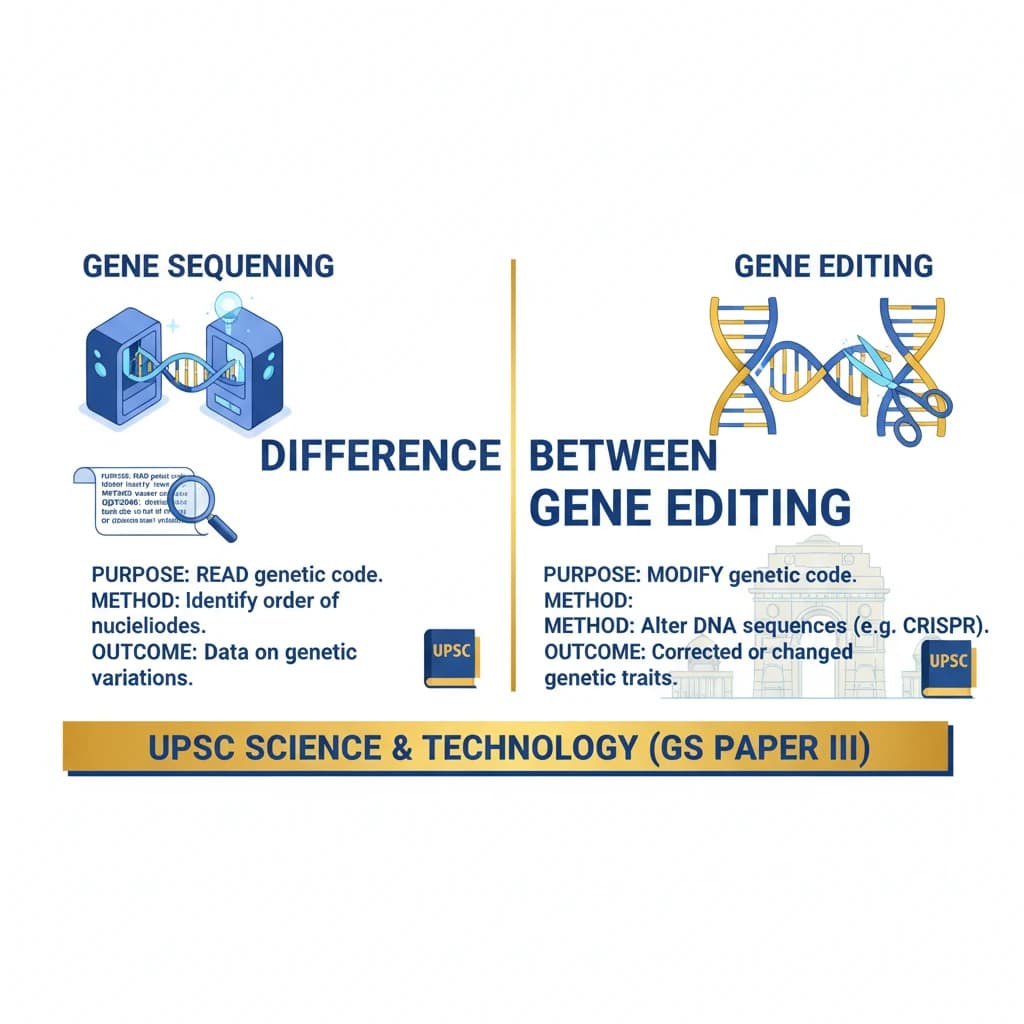
Gene Editing vs. Gene Sequencing: Key Differences for UPSC
Medium⏱️ 10 min read
science and technology
📖 Introduction
Introduction to Genetic Technologies
Understanding the fundamental differences between gene sequencing and gene editing is crucial in the rapidly evolving field of biotechnology. While both involve manipulating or analyzing genetic material, their purposes, methodologies, and outcomes are distinct.
For UPSC, clearly distinguishing these concepts is vital for questions on Science & Technology (GS Paper III), especially concerning advancements in biotechnology and their societal implications.
Core Differences: Gene Sequencing vs. Gene Editing
The table below provides a concise comparison of gene sequencing and gene editing across key characteristics, highlighting their divergent roles in modern genetics.
| Characteristic | Gene Sequencing | Gene Editing |
|---|---|---|
| Definition | The process of determining the precise order of nucleotides (A, T, C, G) in a DNA or RNA molecule. | The process of making targeted modifications to the DNA sequence of a gene or genes. |
| Purpose | To obtain the complete or partial sequence of a gene, a set of genes, or an entire genome. | To introduce desired changes, such as correcting genetic defects, modifying gene expression, or introducing new genetic traits. |
| Techniques | Sanger sequencing, Next-Generation Sequencing (NGS), and others. | CRISPR-Cas9, zinc finger nucleases, TALENs, and other specialised tools. |
| Outcome | Provides information about the genetic makeup and composition of an organism. | Allows for the direct manipulation and alteration of the genetic code. |
| Modification | Does not directly modify the genetic material. | Enables the addition, removal, or alteration of specific DNA sequences. |
Understanding Gene Sequencing
Gene sequencing is essentially "reading" the genetic code. It deciphers the exact order of the four chemical building blocks, or nucleotides (Adenine, Thymine, Cytosine, Guanine), that make up DNA or RNA.
Definition: Gene sequencing is the laboratory technique used to determine the precise order of nucleotides within a DNA or RNA molecule.
The primary purpose of sequencing is to gain comprehensive insights into an organism's genetic blueprint. This can range from sequencing a single gene to an entire genome.
Key Purpose: To map the genetic information, providing a foundational understanding of an organism's heredity, traits, and potential vulnerabilities.
Common techniques include older methods like Sanger sequencing and more advanced platforms such as Next-Generation Sequencing (NGS), which allows for rapid and high-throughput analysis.
- Sanger Sequencing: A traditional method for sequencing individual DNA fragments.
- Next-Generation Sequencing (NGS): High-throughput technologies capable of sequencing millions of DNA fragments simultaneously, revolutionizing genomics.
The outcome of gene sequencing is a vast amount of data detailing the genetic composition. This data is purely informational and does not involve altering the genetic material itself.
Important Note: Gene sequencing is a diagnostic and informational tool; it does not directly modify the genetic material.
Understanding Gene Editing
In contrast, gene editing is about "writing" or "rewriting" the genetic code. It involves making precise, targeted changes to the DNA sequence within a living organism's cells.
Definition: Gene editing refers to a set of technologies that give scientists the ability to change an organism's DNA. These technologies allow genetic material to be added, removed, or altered at particular locations in the genome.
The main purpose of gene editing is to introduce specific, desired changes. This could involve correcting genetic mutations that cause diseases, enhancing certain traits, or disabling problematic genes.
Key Purpose: To directly manipulate the genetic code to achieve therapeutic benefits, agricultural improvements, or fundamental biological research.
Several sophisticated techniques are employed for gene editing. The most prominent among these is CRISPR-Cas9, known for its precision and relative ease of use.
- CRISPR-Cas9: A revolutionary system derived from bacterial immune defenses, enabling highly specific cuts in DNA.
- Zinc Finger Nucleases (ZFNs): Engineered proteins that can bind to specific DNA sequences and cut the DNA.
- TALENs (Transcription Activator-Like Effector Nucleases): Similar to ZFNs, these are engineered proteins that can target and cut specific DNA sequences.
The direct outcome of gene editing is a permanent alteration of the organism's genetic code. This modification can lead to changes in gene function or expression.
Important Note: Gene editing actively modifies the genetic material by adding, removing, or altering specific DNA sequences, leading to functional changes.
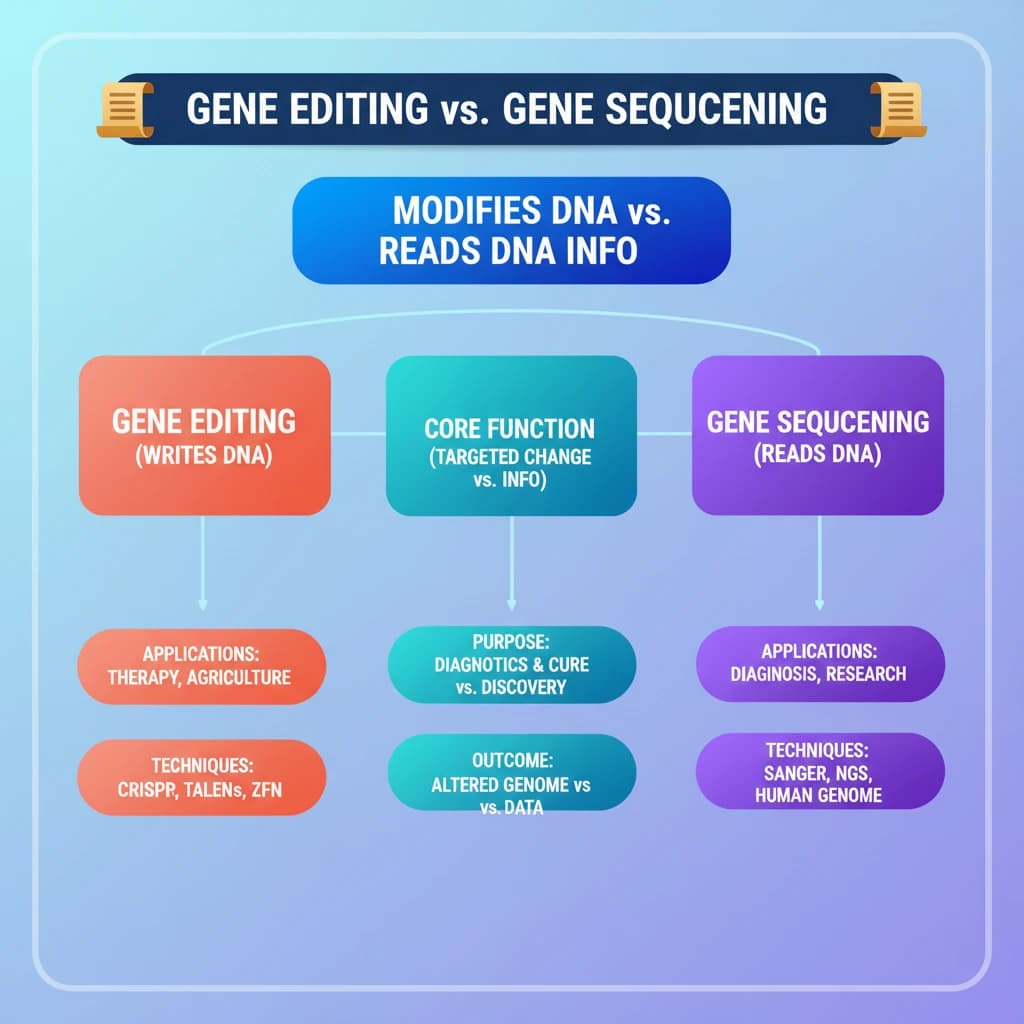
💡 Key Takeaways
- •Gene Sequencing 'reads' the DNA sequence, providing information without modification.
- •Gene Editing 'writes' or 'rewrites' DNA, making targeted changes to the genetic code.
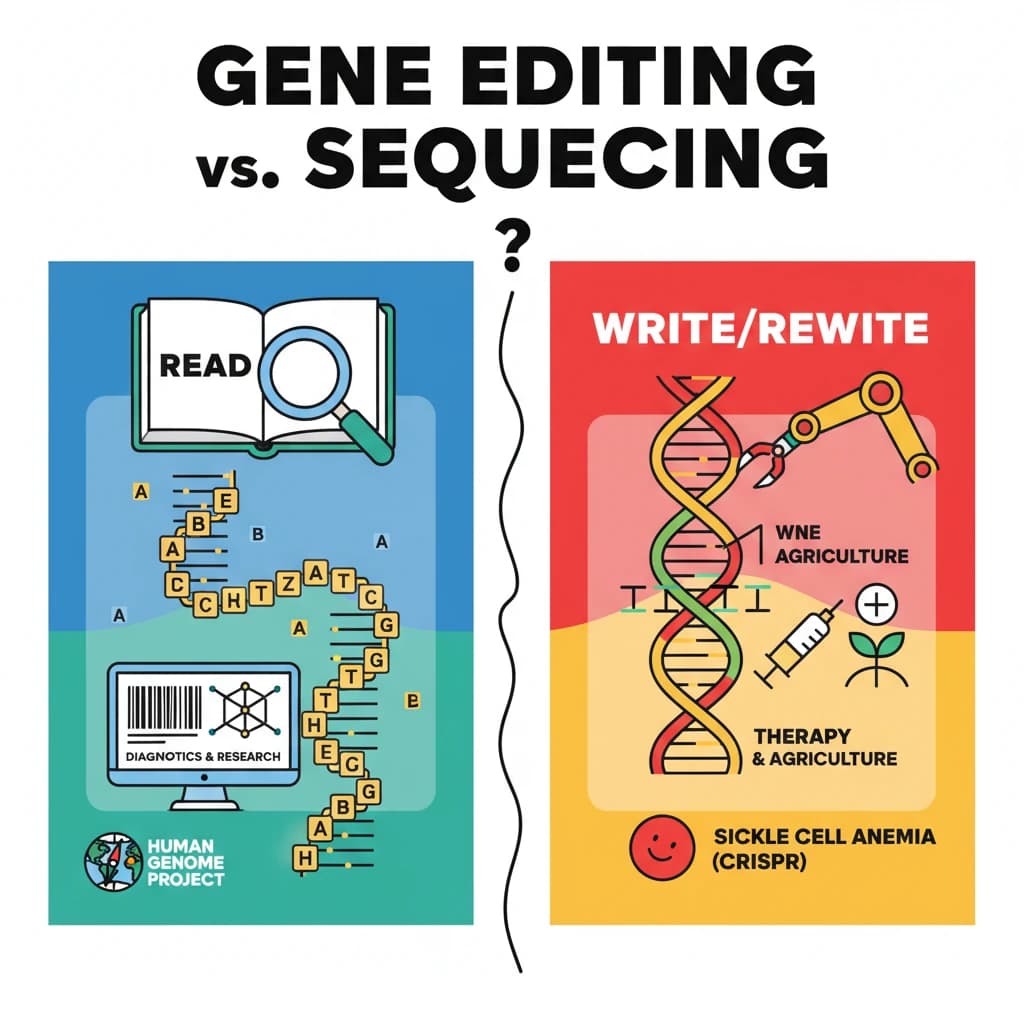
- •Sequencing is used for diagnostics, research, and understanding genetic makeup (e.g., Human Genome Project).
- •Editing is used for therapeutic interventions, agricultural improvements, and basic research (e.g., CRISPR for sickle cell anemia).
- •Key techniques for sequencing include Sanger and NGS; for editing, CRISPR-Cas9, ZFNs, and TALENs.
- •Both technologies have profound current relevance in precision medicine, agriculture, and raise significant ethical and regulatory considerations.
🧠 Memory Techniques
98% Verified Content
📚 Reference Sources
•Centers for Disease Control and Prevention (CDC): 'What is Sickle Cell Disease?'
•Nature Biotechnology, Science, Cell (peer-reviewed journals for CRISPR-Cas9 discoveries and applications)
•World Health Organization (WHO) reports on biotechnology and ethics
•Indian Council of Medical Research (ICMR) guidelines on biomedical research