Loading page, please wait…
International Year of Quantum Science and Technology - UPSC Science And Technology
What is International Year of Quantum Science and Technology in UPSC Science And Technology?
International Year of Quantum Science and Technology is a key topic under Science And Technology for UPSC Civil Services Examination. Key points include: 2025 is the 'International Year of Quantum Science and Technology', designated by the UN.. The resolution was led by Mexico at the UNESCO General Conference in May 2023.. 2025 marks 100 years since Werner Heisenberg's paper on quantum mechanics (Nobel Prize 1932).. Understanding this topic is essential for both UPSC Prelims and Mains preparation.
Why is International Year of Quantum Science and Technology important for UPSC exam?
International Year of Quantum Science and Technology is a Medium-level topic in UPSC Science And Technology. It is tested in both Prelims (factual MCQs) and Mains (analytical answer writing). Previous year UPSC questions have frequently covered aspects of International Year of Quantum Science and Technology, making it essential for comprehensive IAS preparation.
How to prepare International Year of Quantum Science and Technology for UPSC?
To prepare International Year of Quantum Science and Technology for UPSC: (1) Study the comprehensive notes covering all key concepts on Vaidra. (2) Practice previous year questions on this topic. (3) Connect it with current affairs using daily updates. (4) Revise using key takeaways and mind maps available for Science And Technology. (5) Write practice answers linking International Year of Quantum Science and Technology to related GS Paper topics.
Key takeaways of International Year of Quantum Science and Technology for UPSC
- 2025 is the 'International Year of Quantum Science and Technology', designated by the UN.
- The resolution was led by Mexico at the UNESCO General Conference in May 2023.
- 2025 marks 100 years since Werner Heisenberg's paper on quantum mechanics (Nobel Prize 1932).
- India launched the National Quantum Mission (NQM) in April 2023 (2023-2031) under DST.
- NQM has four verticals: Quantum Computing, Communication, Sensing & Metrology, and Materials & Devices.
International Year of Quantum Science and Technology
Medium⏱️ 7 min read
science and technology
📖 Introduction
Designation of the International Year
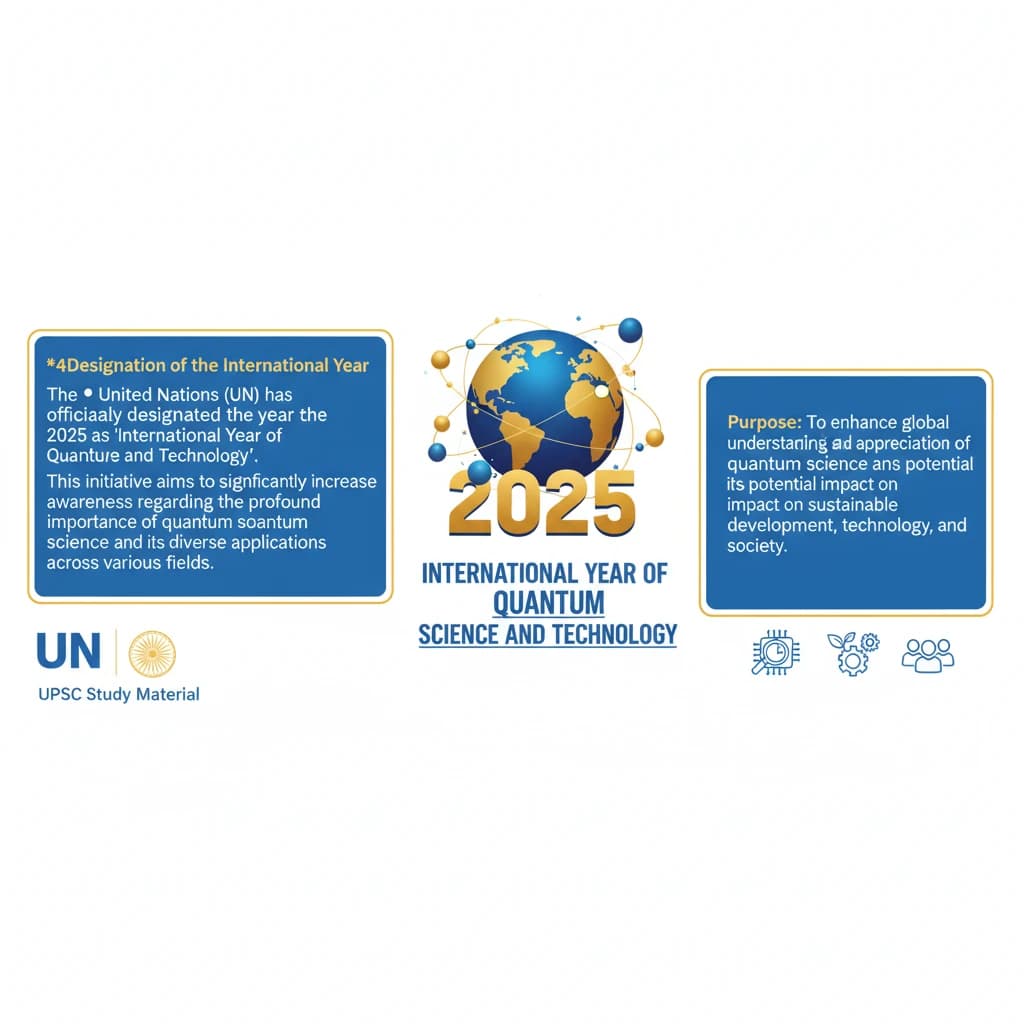
The United Nations (UN) has officially designated the year 2025 as the 'International Year of Quantum Science and Technology'.
This initiative aims to significantly increase public awareness regarding the profound importance of quantum science and its diverse applications across various fields.
Purpose: To enhance global understanding and appreciation of quantum science and technology's impact on society.
Resolution and Global Adoption
The resolution for this international designation was spearheaded by Mexico at the UNESCO General Conference in May 2023.
The proposal garnered substantial international support, being adopted by nearly 60 countries, underscoring the global recognition of quantum science's significance.
Key Players: Initiated by Mexico, adopted at UNESCO General Conference, supported by ~60 nations.
Centenary of Quantum Mechanics: Werner Heisenberg
The year 2025 holds additional historical significance as it marks a century since the renowned German physicist, Werner Heisenberg, published his foundational paper.
This pivotal publication, released in 1925, laid the bedrock for modern quantum mechanics, revolutionizing our understanding of the subatomic world.
Historical Milestone: 100 years since Werner Heisenberg's paper on quantum mechanics in 1925.
Heisenberg was later awarded the prestigious Nobel Prize in Physics in 1932 for his groundbreaking creation of quantum mechanics.
India's National Quantum Mission (NQM)
Demonstrating its commitment to advancing quantum technology, India launched the ambitious National Quantum Mission (NQM) in April 2023.
This mission is designed for implementation over an eight-year period, from 2023 to 2031, under the aegis of the Department of Science & Technology (DST).
UPSC Insight: The National Quantum Mission (NQM) is a crucial topic for GS Paper 3 (Science & Technology). Be prepared for questions on its objectives, verticals, and significance.
The NQM is structured around four critical verticals, ensuring a comprehensive approach to quantum development:
- Quantum Computing
- Quantum Communication
- Quantum Sensing and Metrology
- Quantum Materials and Devices
💡 Key Takeaways
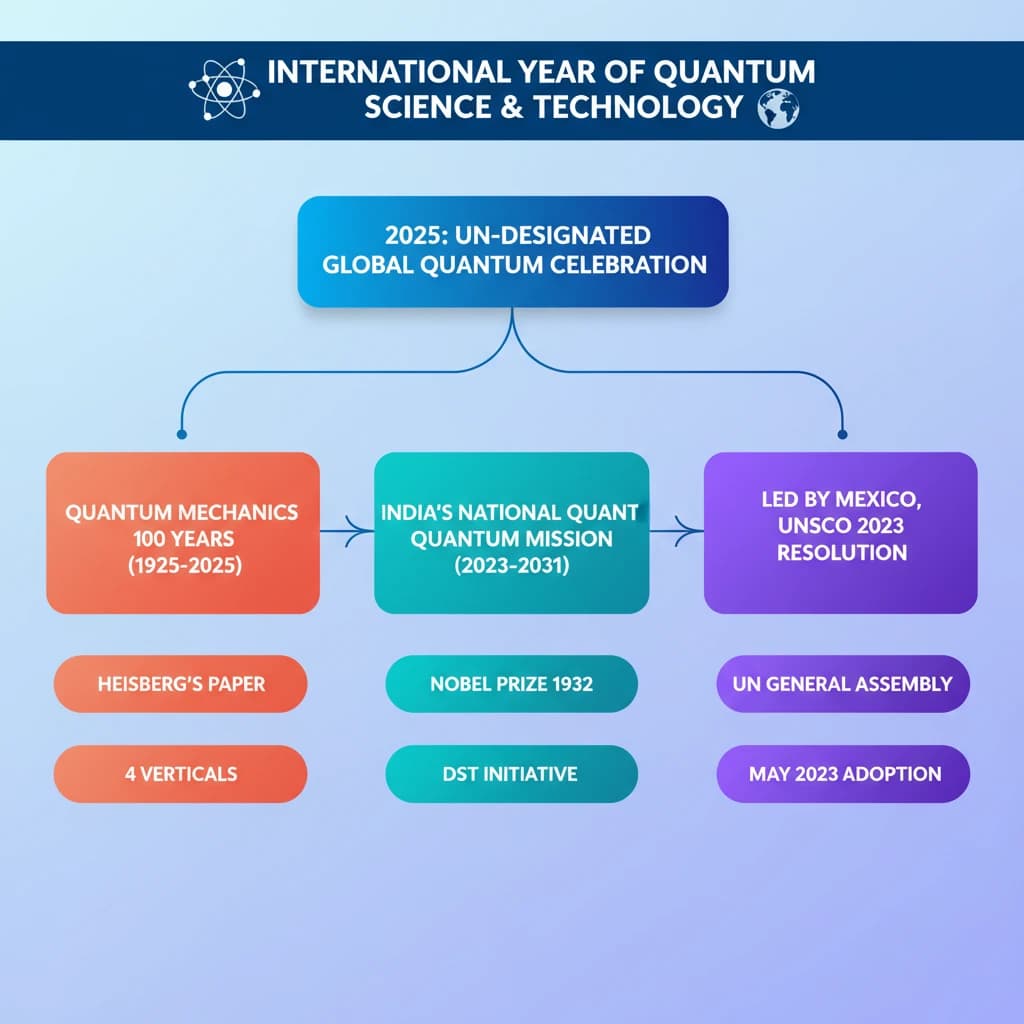
- •2025 is the 'International Year of Quantum Science and Technology', designated by the UN.
- •The resolution was led by Mexico at the UNESCO General Conference in May 2023.
- •2025 marks 100 years since Werner Heisenberg's paper on quantum mechanics (Nobel Prize 1932).
- •India launched the National Quantum Mission (NQM) in April 2023 (2023-2031) under DST.
- •NQM has four verticals: Quantum Computing, Communication, Sensing & Metrology, and Materials & Devices.
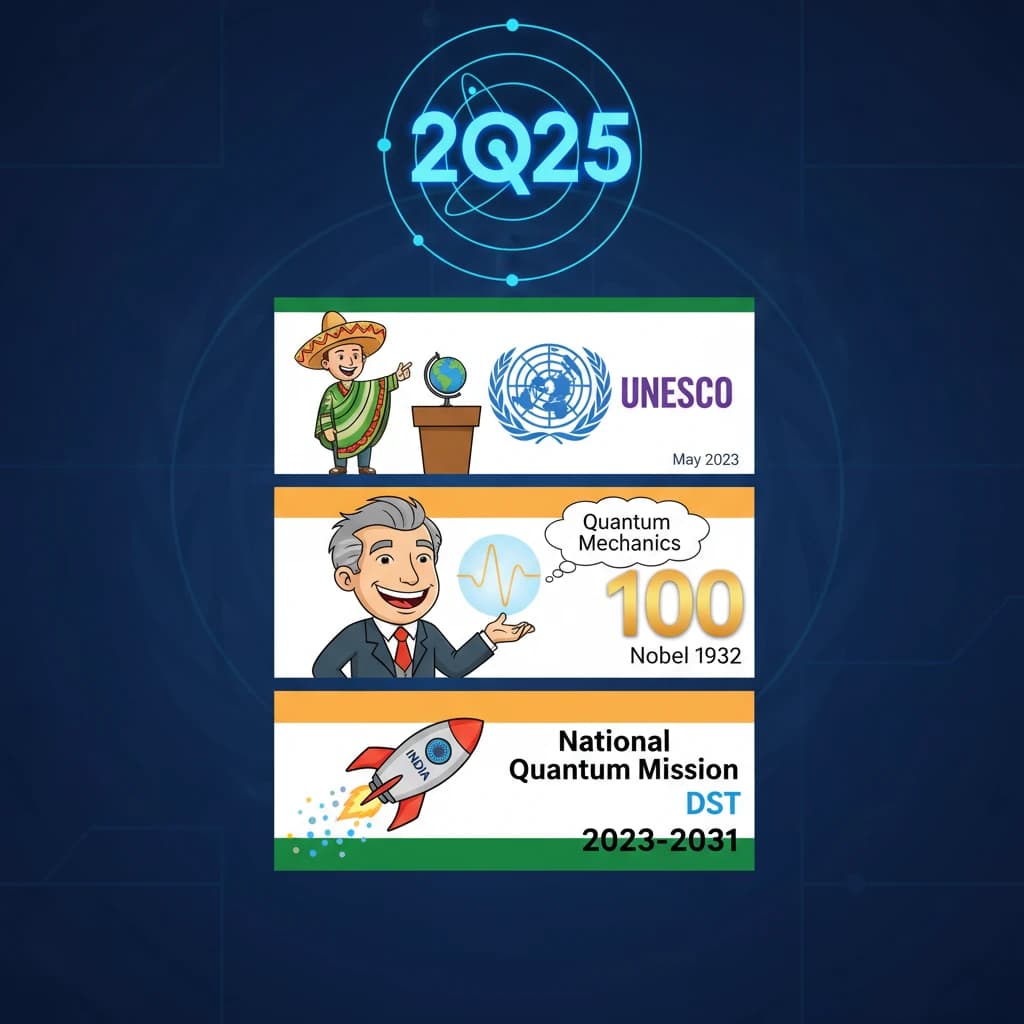
🧠 Memory Techniques
98% Verified Content
📚 Reference Sources
•UNESCO official announcements regarding the International Year
•Department of Science & Technology (DST) documents on National Quantum Mission
•Historical records of Werner Heisenberg's contributions and Nobel Prize