Overview
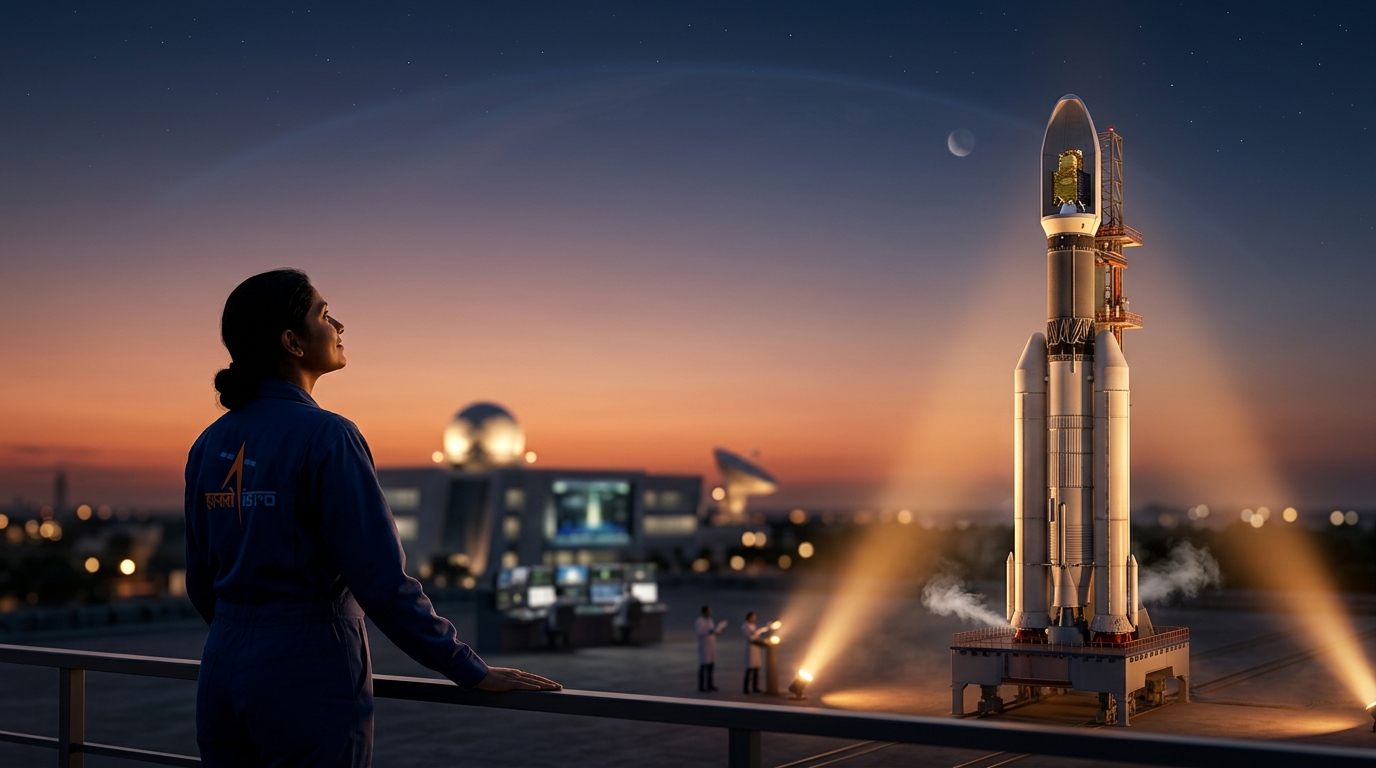
India's space economy is poised for significant growth, with projections indicating it will reach $40 billion by 2030. This is according to the India Spacetech-2026 report by Arkam Ventures. The report, titled ‘India’s Space Odyssey’, highlights the structural shifts in the Indian spacetech ecosystem that will propel it to become the world’s third-largest space-tech economy by 2030.
Key Developments
Growth Drivers
- Cost-efficient engineering: India's ability to deliver space solutions at lower costs is a key competitive advantage.
- Deep manufacturing capabilities: Robust manufacturing infrastructure supports the production of advanced space technologies.
- Emerging startups: A new generation of startups is developing innovative space technologies for global customers.
Capital Inflow
The Indian spacetech sector has witnessed increased capital inflow, with more than 300 startups emerging in the last five years. These startups operate in areas such as satellite manufacturing, earth observation, launch vehicles, and in-space solutions. The report anticipates $3-$5 billion of private capital flowing into the sector over the next couple of years.
ISRO's Role
ISRO's legacy of low-cost, high-impact missions and its active support for private innovation are crucial for this momentum. Its frugal engineering philosophy has influenced how startups design, test, and deliver products. Access to ISRO facilities and technology transfers has reduced time and cost to market.
Talent Pool
A talent flywheel is emerging, with companies founded by alumni of ISRO and institutions such as BITS and IIT Madras. This is supported by more than 25,000 skilled engineering graduates in aerospace and allied sectors annually.
Future Projections
Global Leadership
The report forecasts that five Indian companies will feature among the world’s top 10 companies across the space-tech value chain in the coming years. These companies are expected to excel in areas such as vehicle launch, situational awareness, earth observation satellite manufacturing, and space debris handling.
Launch Capabilities
By 2030, Indian private players are projected to conduct 40 to 45 launches each year for global customers. They are also expected to manufacture one-third of the world’s Earth Observation Satellites and emerge as major exporters of avionics, GNSS, SATCOM, and ground RF systems.
Exam Relevance
This report is highly relevant for the UPSC Civil Services Exam, particularly for GS Paper III (Science and Technology, Economy). It highlights the growth potential of the Indian space sector, the role of government policies, and the increasing participation of private players. Understanding these trends is crucial for answering questions related to technological advancements, economic development, and government initiatives in the space sector.
Key takeaways for UPSC
- GS Paper III (Science and Technology): The report provides insights into the technological advancements in the space sector, including satellite manufacturing, launch vehicles, and earth observation technologies.
- GS Paper III (Economy): The projected growth of the space economy and the expected private capital inflow are important indicators of economic development and investment opportunities.
- GS Paper II (Government Policies): The role of ISRO and government policies in promoting private sector participation and fostering innovation is relevant for understanding government initiatives in strategic sectors.
Important Personalities
Aerospace scientist B.N. Suresh, former Director of Vikram Sarabhai Space Centre and former chancellor of Indian Institute of Space Science and Technology, unveiled the report at the Arkam Spacetech Meetup held in Bengaluru.