Loading page, please wait…
Large Language Models - UPSC Science And Technology
What is Large Language Models in UPSC Science And Technology?
Large Language Models is a key topic under Science And Technology for UPSC Civil Services Examination. Key points include: LLMs are AI models trained on vast datasets to understand and generate human language.. They solve common language problems like text classification, Q&A, and text generation.. Architectural types include Autoregressive (e.g., GPT-3), Transformer-based (e.g., Gemini), and Encoder-decoder models.. Understanding this topic is essential for both UPSC Prelims and Mains preparation.
Why is Large Language Models important for UPSC exam?
Large Language Models is a Medium-level topic in UPSC Science And Technology. It is tested in both Prelims (factual MCQs) and Mains (analytical answer writing). Previous year UPSC questions have frequently covered aspects of Large Language Models, making it essential for comprehensive IAS preparation.
How to prepare Large Language Models for UPSC?
To prepare Large Language Models for UPSC: (1) Study the comprehensive notes covering all key concepts on Vaidra. (2) Practice previous year questions on this topic. (3) Connect it with current affairs using daily updates. (4) Revise using key takeaways and mind maps available for Science And Technology. (5) Write practice answers linking Large Language Models to related GS Paper topics.
Key takeaways of Large Language Models for UPSC
- LLMs are AI models trained on vast datasets to understand and generate human language.
- They solve common language problems like text classification, Q&A, and text generation.
- Architectural types include Autoregressive (e.g., GPT-3), Transformer-based (e.g., Gemini), and Encoder-decoder models.
- LLMs are revolutionizing human-computer interaction and creative tasks.
- Their development raises important ethical and regulatory considerations regarding bias, privacy, and governance.
Large Language Models
Medium⏱️ 8 min read
science and technology
📖 Introduction
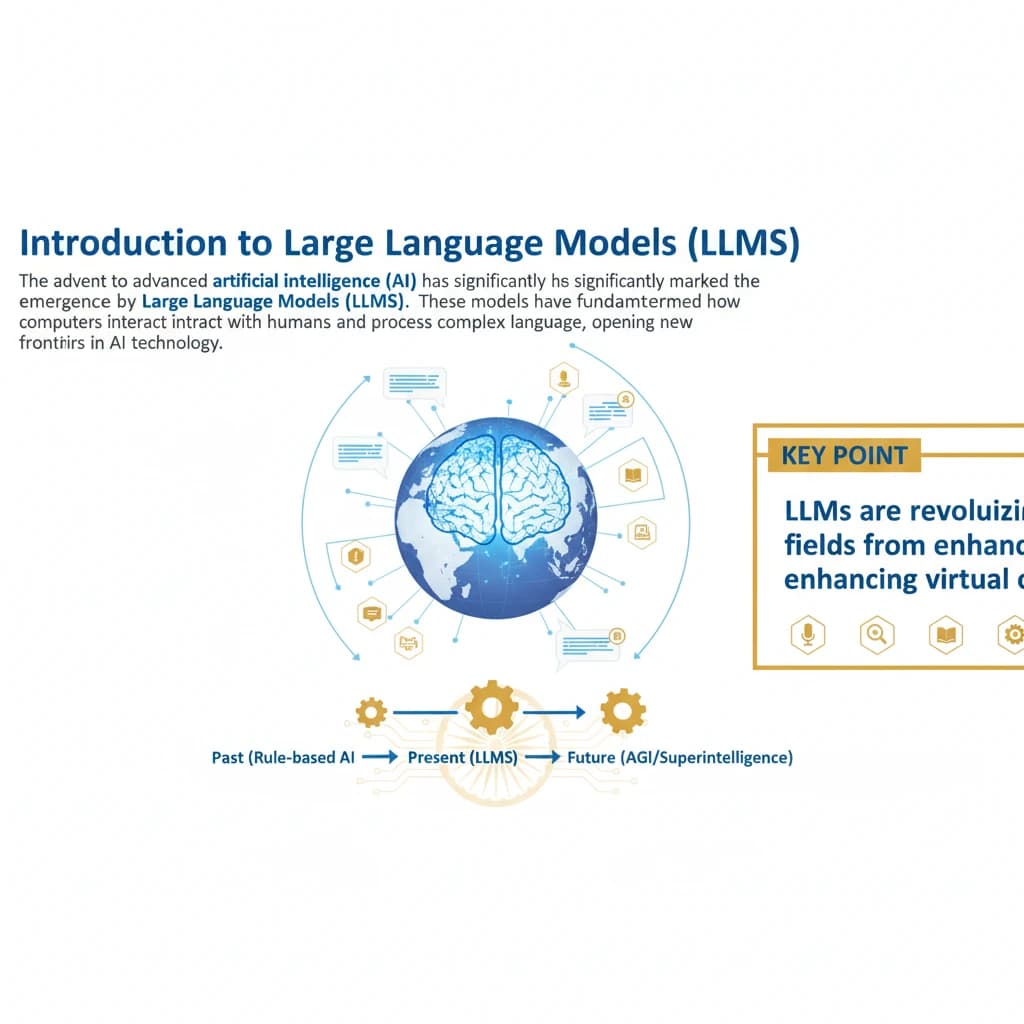
Introduction to Large Language Models (LLMs)
The advent of advanced artificial intelligence (AI) has been significantly marked by the emergence of Large Language Models (LLMs).
These models have fundamentally transformed how computers interact with humans and process complex language, opening new frontiers in AI technology.
LLMs are revolutionizing fields from enhancing virtual conversations to powering creative content generation, showcasing their diverse capabilities.
What are Large Language Models (LLMs)?
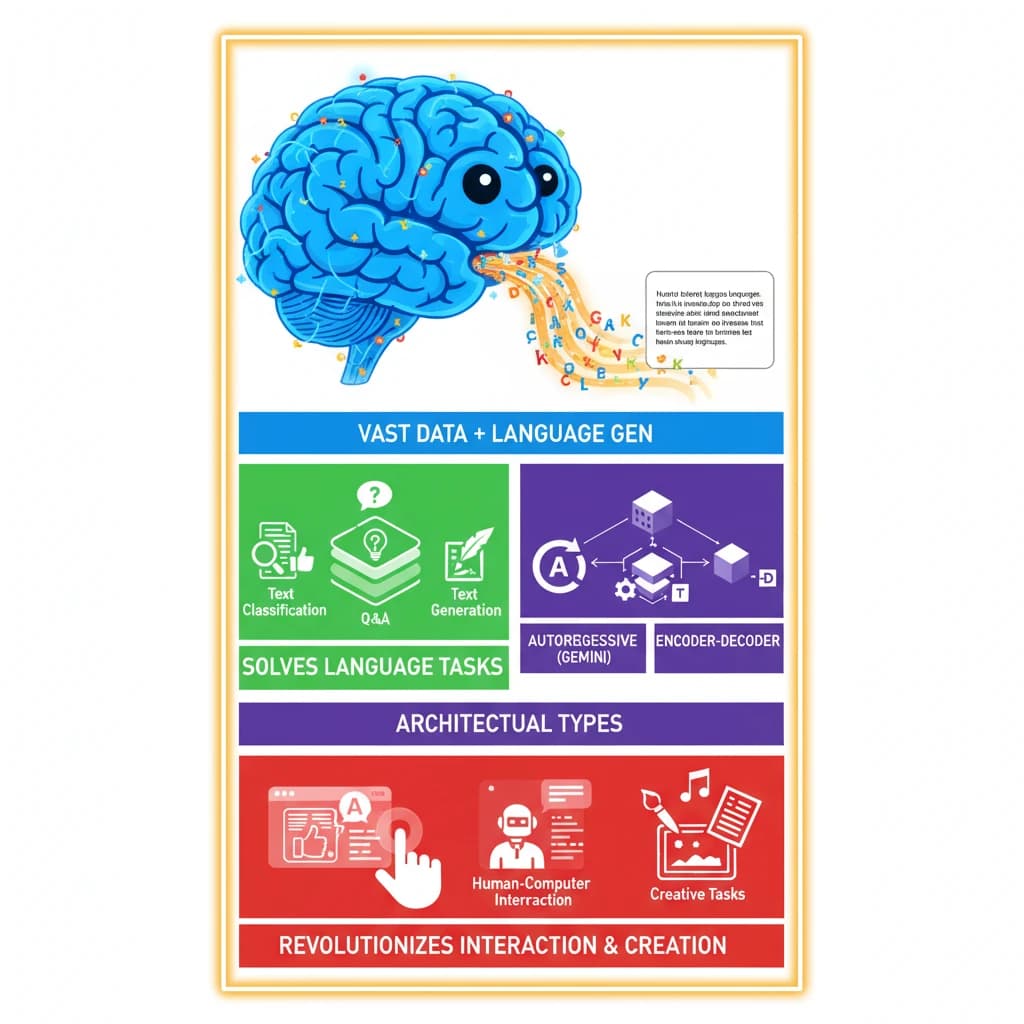
Definition: Large Language Models (LLMs) are general-purpose language models designed to solve common language problems.
These problems include text classification, question answering, and text generation, demonstrating their versatility.
LLMs are trained on massive datasets, enabling them to comprehend intricate patterns, structures, and relationships inherent in human language.
Types of Large Language Models (LLMs) Based on Architecture
LLMs can be categorized based on their underlying architectural designs, each with distinct mechanisms for language processing:
- Autoregressive Models: These models predict the next word in a sequence by considering the previous words.
- Example: GPT-3 (Generative Pre-trained Transformer 3) is a prominent instance of an autoregressive LLM.
- Transformer-based Models: These models utilise a specific artificial neural network architecture known as the Transformer for efficient language processing.
- Examples: LaMDA (Language Model for Dialogue Applications) and Gemini (formerly known as Bard) are notable transformer-based LLMs.
- Encoder-decoder Models: This architecture involves two main components: an encoder that converts input text into a numerical representation, and a decoder that then transforms this representation into another language or format.
💡 Key Takeaways
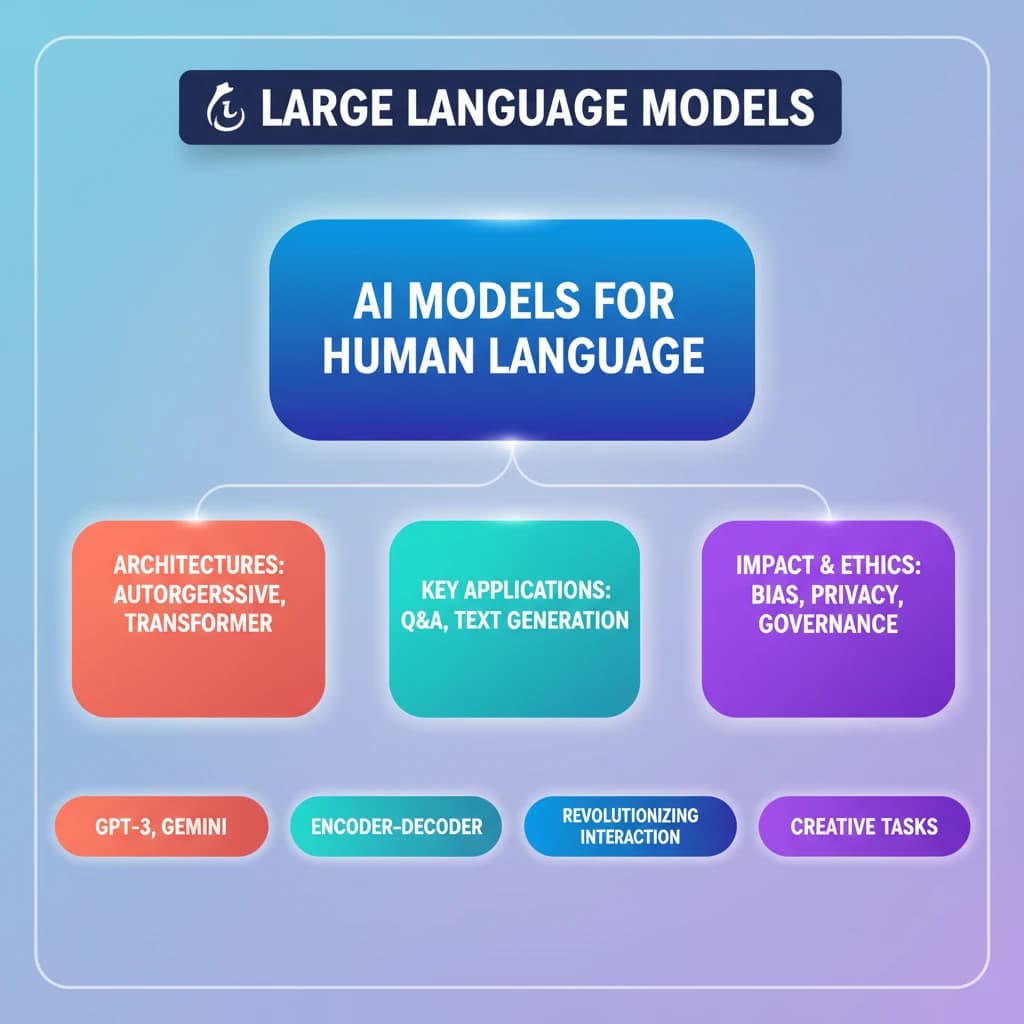
- •LLMs are AI models trained on vast datasets to understand and generate human language.
- •They solve common language problems like text classification, Q&A, and text generation.
- •Architectural types include Autoregressive (e.g., GPT-3), Transformer-based (e.g., Gemini), and Encoder-decoder models.
- •LLMs are revolutionizing human-computer interaction and creative tasks.
- •Their development raises important ethical and regulatory considerations regarding bias, privacy, and governance.
🧠 Memory Techniques
95% Verified Content
📚 Reference Sources
•OpenAI Documentation (GPT-3)
•Google AI Blog (LaMDA, Gemini/Bard)
•Academic papers on Transformer architecture and NLP history