Loading page, please wait…
Space Based Surveillance (SBS) Mission - UPSC Science And Technology
What is Space Based Surveillance (SBS) Mission in UPSC Science And Technology?
Space Based Surveillance (SBS) Mission is a key topic under Science And Technology for UPSC Civil Services Examination. Key points include: CCS approved Phase 3 of India's Space Based Surveillance (SBS) mission.. SBS is crucial for national security, providing intelligence, reconnaissance, and surveillance (ISR).. It enhances Space Situational Awareness (SSA) and protects Indian space assets.. Understanding this topic is essential for both UPSC Prelims and Mains preparation.
Why is Space Based Surveillance (SBS) Mission important for UPSC exam?
Space Based Surveillance (SBS) Mission is a Medium-level topic in UPSC Science And Technology. It is tested in both Prelims (factual MCQs) and Mains (analytical answer writing). Previous year UPSC questions have frequently covered aspects of Space Based Surveillance (SBS) Mission, making it essential for comprehensive IAS preparation.
How to prepare Space Based Surveillance (SBS) Mission for UPSC?
To prepare Space Based Surveillance (SBS) Mission for UPSC: (1) Study the comprehensive notes covering all key concepts on Vaidra. (2) Practice previous year questions on this topic. (3) Connect it with current affairs using daily updates. (4) Revise using key takeaways and mind maps available for Science And Technology. (5) Write practice answers linking Space Based Surveillance (SBS) Mission to related GS Paper topics.
Key takeaways of Space Based Surveillance (SBS) Mission for UPSC
- CCS approved Phase 3 of India's Space Based Surveillance (SBS) mission.
- SBS is crucial for national security, providing intelligence, reconnaissance, and surveillance (ISR).
- It enhances Space Situational Awareness (SSA) and protects Indian space assets.
- Phase 3 signifies a major advancement in India's indigenous space-based security capabilities.
- The mission supports border security, maritime domain awareness, and strategic autonomy.
- It aligns with India's evolving defence posture and the Indian Space Policy 2023.
Space Based Surveillance (SBS) Mission
Medium⏱️ 8 min read
science and technology
📖 Introduction
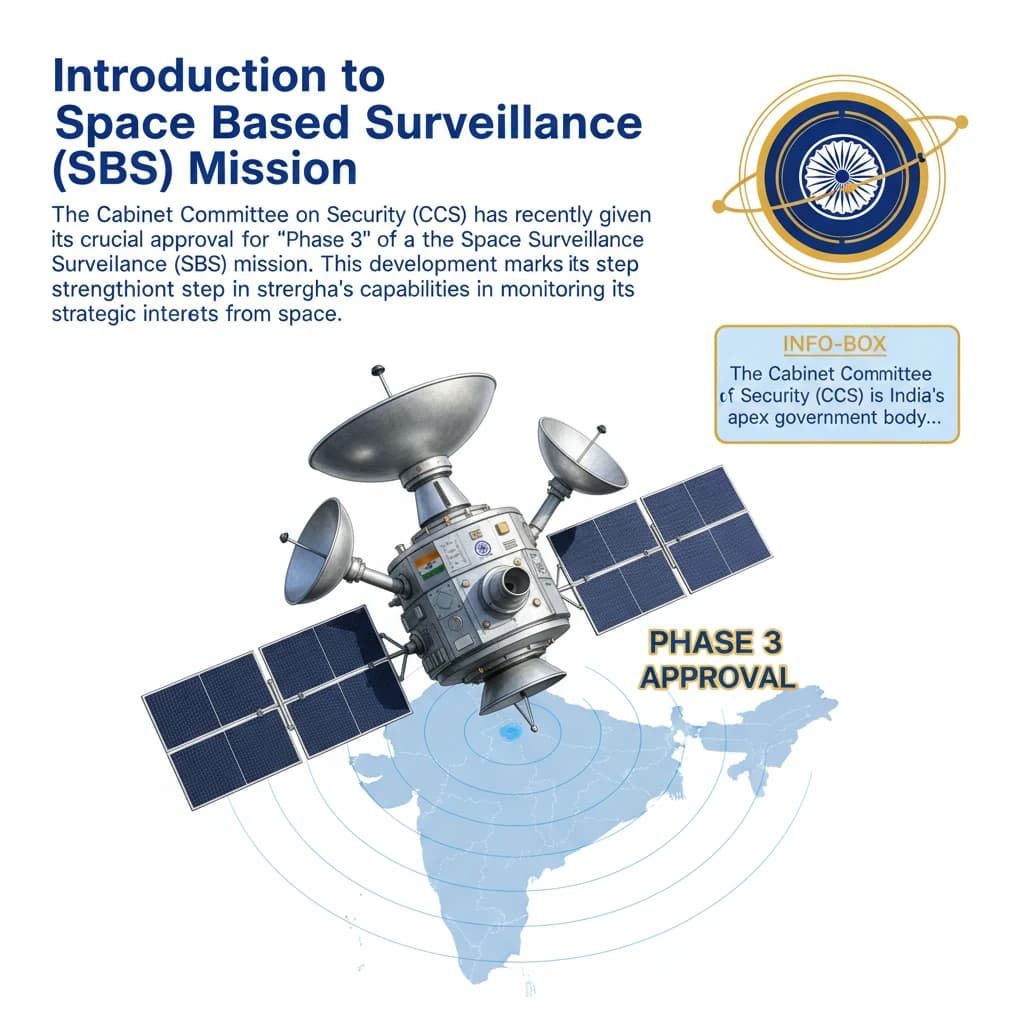
Introduction to Space Based Surveillance (SBS) Mission
The Cabinet Committee on Security (CCS) has recently given its crucial approval for Phase 3 of the Space Based Surveillance (SBS) mission. This development marks a significant step in strengthening India's capabilities in monitoring its strategic interests from space.
The Cabinet Committee on Security (CCS) is India's apex government body that deals with matters of defence expenditures, national security, and foreign policy. Its approval underscores the strategic importance of the SBS mission.
Understanding Space Based Surveillance (SBS)
Space Based Surveillance (SBS) involves the use of satellites and associated ground infrastructure to monitor activities and objects in space, on land, and at sea. It provides critical intelligence, reconnaissance, and surveillance (ISR) capabilities.
These missions are vital for maintaining Space Situational Awareness (SSA), which is the comprehensive understanding of the space environment, including orbiting objects, space weather, and potential threats.
Objectives of the SBS Mission
- Enhanced Domain Awareness: To gain a superior understanding of activities in space, including tracking satellites, space debris, and potential adversary assets.
- National Security: To provide continuous surveillance over India's borders, maritime zones, and areas of strategic interest, detecting potential threats.
- Strategic Autonomy: To reduce reliance on foreign sources for critical intelligence and surveillance data, bolstering India's independent strategic capabilities.
- Asset Protection: To monitor and protect India's own space assets from threats like anti-satellite (ASAT) weapons or space debris collisions.
Significance of Phase 3 Approval
The approval of Phase 3 indicates a progressive and sustained commitment to developing advanced space-based surveillance infrastructure. It suggests that previous phases have laid the groundwork, and this new phase will likely involve more sophisticated technology and expanded coverage.
For UPSC Mains GS Paper 3 (Science & Technology, Internal Security), understanding the implications of such approvals is crucial. Focus on how it enhances India's strategic capabilities and contributes to national security.
💡 Key Takeaways
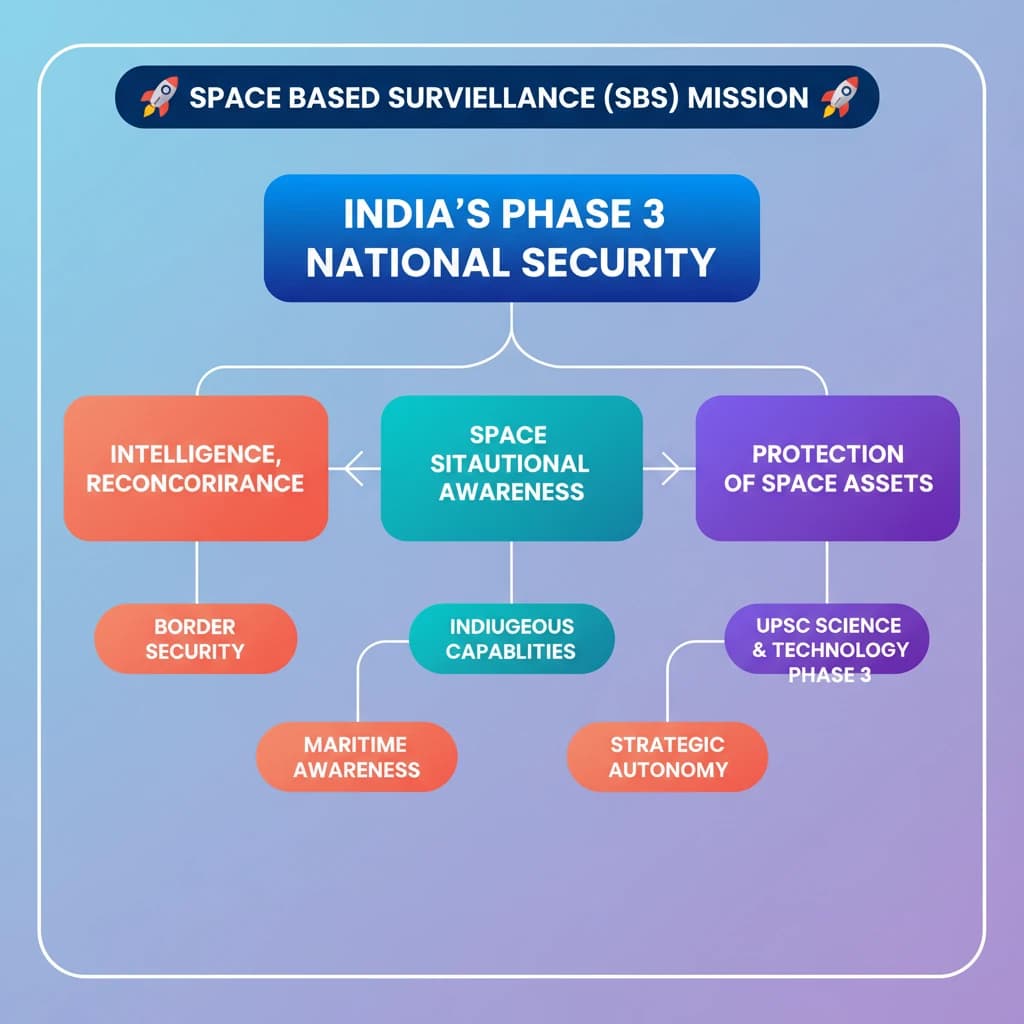
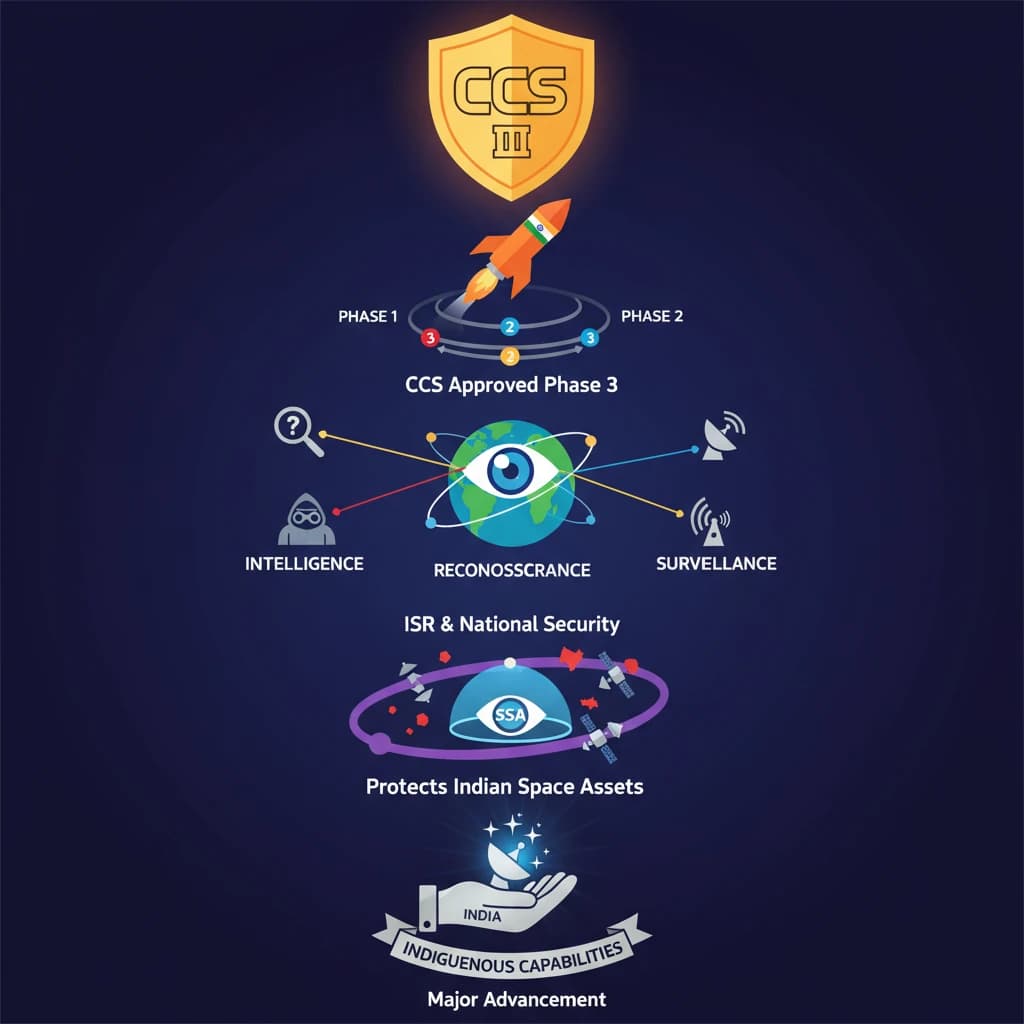
- •CCS approved Phase 3 of India's Space Based Surveillance (SBS) mission.
- •SBS is crucial for national security, providing intelligence, reconnaissance, and surveillance (ISR).
- •It enhances Space Situational Awareness (SSA) and protects Indian space assets.
- •Phase 3 signifies a major advancement in India's indigenous space-based security capabilities.
- •The mission supports border security, maritime domain awareness, and strategic autonomy.
- •It aligns with India's evolving defence posture and the Indian Space Policy 2023.
🧠 Memory Techniques
95% Verified Content
📚 Reference Sources
•ISRO official website (for NETRA, RISAT, general space program info)
•Ministry of Defence, Government of India (for CCS approvals and defence policy context)
•Reputable defence and space news portals (e.g., The Hindu, Indian Express, SpaceNews, The Print)