Loading page, please wait…
Right to Shelter as Fundamental Right - UPSC Social Issues
What is Right to Shelter as Fundamental Right in UPSC Social Issues?
Right to Shelter as Fundamental Right is a key topic under Social Issues for UPSC Civil Services Examination. Key points include: Right to Shelter is an implied fundamental right under Article 21 (Right to Life) of the Indian Constitution.. It has been established through landmark Supreme Court judgments, notably Olga Tellis (1985) and U.P. Avas Evam Vikas Parishad (1995).. The right mandates a dignified living space with basic amenities, not just a roof.. Understanding this topic is essential for both UPSC Prelims and Mains preparation.
Why is Right to Shelter as Fundamental Right important for UPSC exam?
Right to Shelter as Fundamental Right is a Medium-level topic in UPSC Social Issues. It is tested in both Prelims (factual MCQs) and Mains (analytical answer writing). Previous year UPSC questions have frequently covered aspects of Right to Shelter as Fundamental Right, making it essential for comprehensive IAS preparation.
How to prepare Right to Shelter as Fundamental Right for UPSC?
To prepare Right to Shelter as Fundamental Right for UPSC: (1) Study the comprehensive notes covering all key concepts on Vaidra. (2) Practice previous year questions on this topic. (3) Connect it with current affairs using daily updates. (4) Revise using key takeaways and mind maps available for Social Issues. (5) Write practice answers linking Right to Shelter as Fundamental Right to related GS Paper topics.
Key takeaways of Right to Shelter as Fundamental Right for UPSC
- Right to Shelter is an implied fundamental right under Article 21 (Right to Life) of the Indian Constitution.
- It has been established through landmark Supreme Court judgments, notably Olga Tellis (1985) and U.P. Avas Evam Vikas Parishad (1995).
- The right mandates a dignified living space with basic amenities, not just a roof.
- The state has an affirmative obligation to facilitate and provide shelter, especially for vulnerable sections.
- The Haldwani case highlights the judiciary's role in balancing development needs with fundamental rights, cautioning against future encroachments.
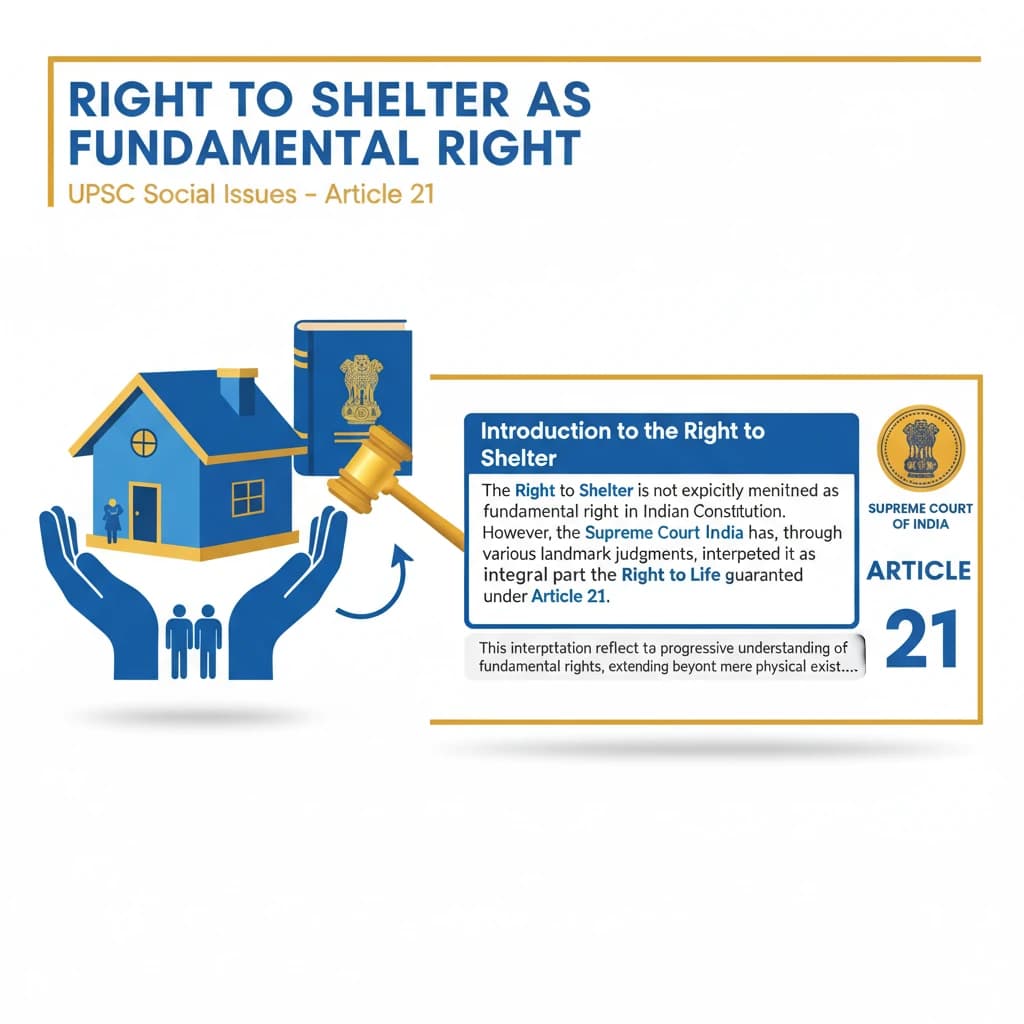
Right to Shelter as Fundamental Right
Medium⏱️ 7 min read
social issues
📖 Introduction
Introduction to the Right to Shelter
The Right to Shelter is not explicitly mentioned as a fundamental right in the Indian Constitution. However, the Supreme Court of India has, through various landmark judgments, interpreted it as an integral part of the Right to Life guaranteed under Article 21.
This interpretation reflects a progressive understanding of fundamental rights, extending beyond mere physical existence to encompass a dignified quality of life.
The Right to Life (Article 21) is broadly interpreted to include the right to live with human dignity, which necessitates basic amenities like shelter, food, and clothing.
The Haldwani Encroachment Case
Recently, the Supreme Court addressed a significant case involving the removal of alleged encroachers from railway land in Haldwani, Uttarakhand. The case highlighted a crucial conflict between infrastructure development and the fundamental rights of citizens.
The Court emphasized the need to strike a delicate balance between the state's interest in developing essential railway infrastructure and the fundamental right to shelter for the affected individuals.
The Haldwani case involved thousands of residents facing eviction from land claimed by Indian Railways, raising concerns about displacement and rehabilitation.
Judicial Pronouncement and Future Implications
While upholding the importance of the right to shelter, the Supreme Court also issued a clear caveat. It stated that its orders should not be misinterpreted as an encouragement for future encroachments on public land.
This aspect underscores the judiciary's commitment to maintaining the rule of law and preventing illegal occupation, even while protecting fundamental rights.
For UPSC Mains GS-II, understanding this balance is crucial. Questions may involve judicial activism, fundamental rights, and the role of the state in providing social welfare versus protecting public property.
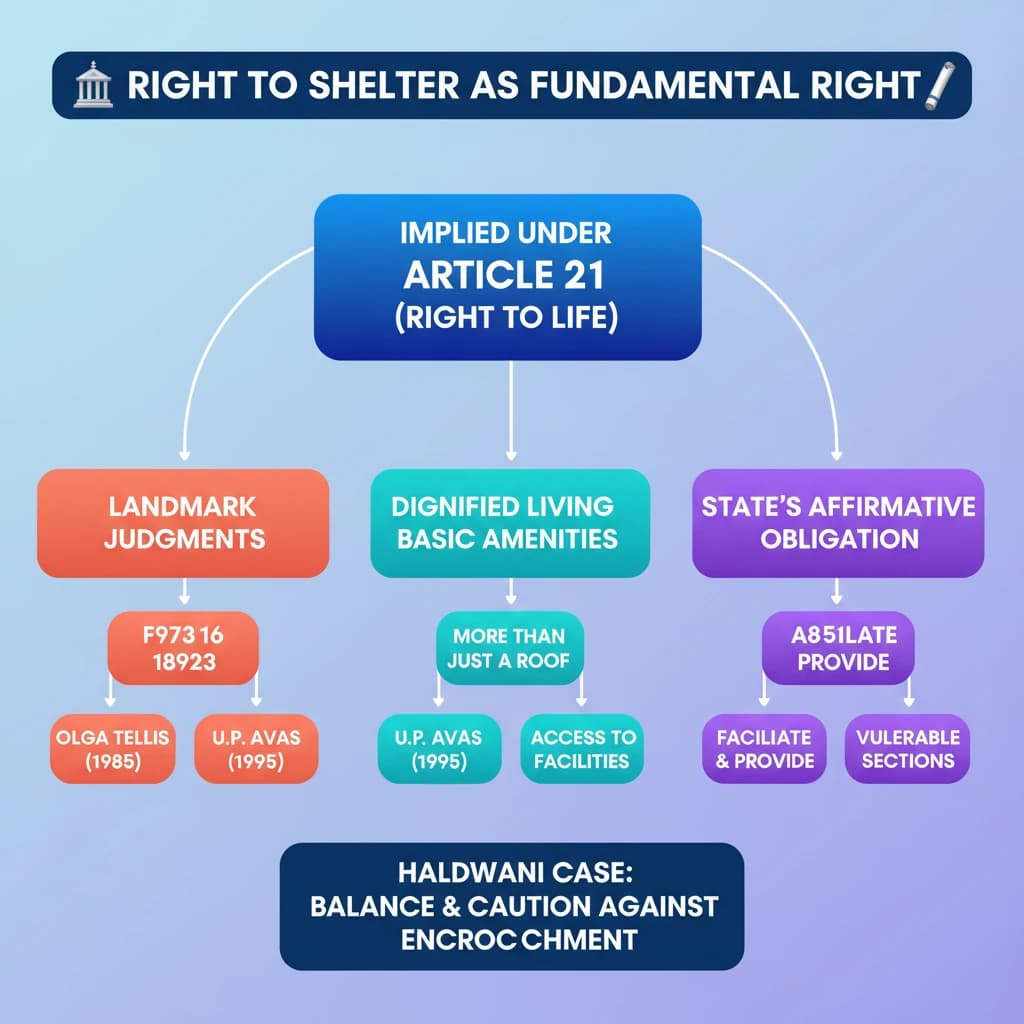
💡 Key Takeaways
- •Right to Shelter is an implied fundamental right under Article 21 (Right to Life) of the Indian Constitution.
- •It has been established through landmark Supreme Court judgments, notably Olga Tellis (1985) and U.P. Avas Evam Vikas Parishad (1995).
- •The right mandates a dignified living space with basic amenities, not just a roof.
- •The state has an affirmative obligation to facilitate and provide shelter, especially for vulnerable sections.
- •The Haldwani case highlights the judiciary's role in balancing development needs with fundamental rights, cautioning against future encroachments.
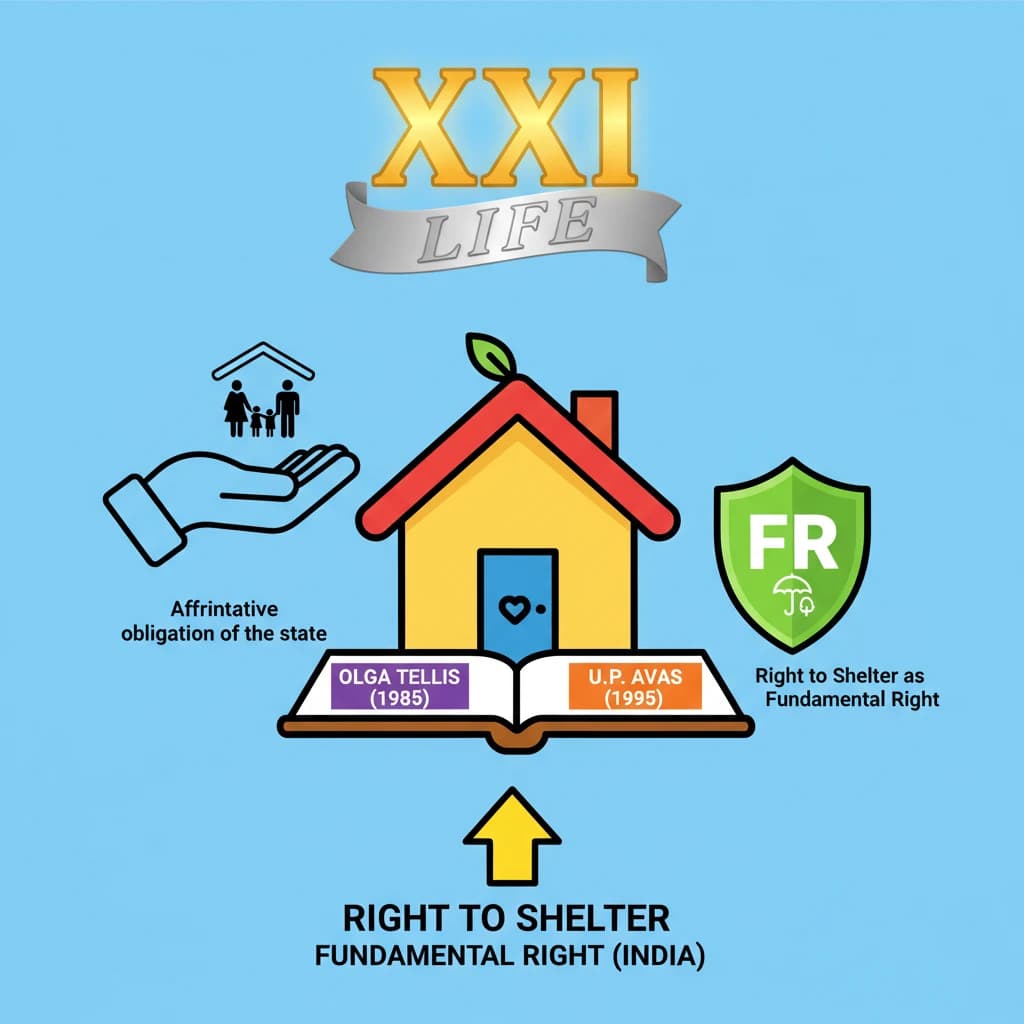
🧠 Memory Techniques
95% Verified Content
📚 Reference Sources
•The Constitution of India (Article 21, DPSP)
•Government of India, Ministry of Housing and Urban Affairs (Pradhan Mantri Awas Yojana documentation)
•Legal commentaries and academic articles on Fundamental Rights in India