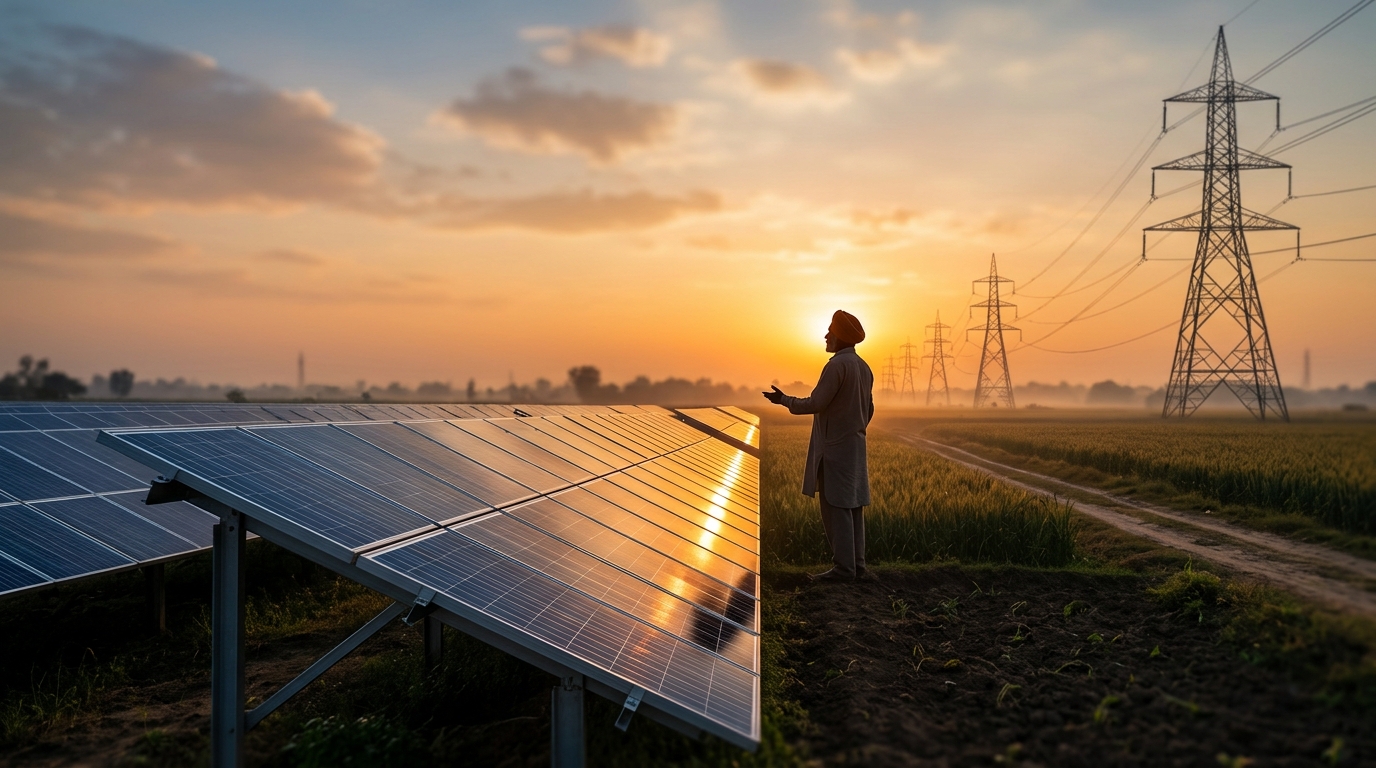
<p>The <span class="key-term" data-definition="₹2.4 lakh crore — Approx. ₹240,000 crore (about $2.9 trillion), the annual outlay by Indian states on electricity subsidies for agriculture and domestic consumers; a major fiscal pressure point for GS3: Economy.">₹2.4 lakh crore</span> spent by Indian states each year on electricity <span class="key-term" data-definition="Electricity subsidy — Financial support provided by governments to keep electricity tariffs low for specific consumer categories, often leading to fiscal strain; relevant to GS3: Economy and public finance.">सब्सिडी</span> is a growing concern for the Union and state budgets. In an interview with <em>The Hindu</em>, <strong>Santosh Kumar Sarangi</strong>, Secretary of the <span class="key-term" data-definition="Ministry of New and Renewable Energy (MNRE) — The central ministry responsible for policy formulation and implementation of renewable energy programmes in India; key agency for GS3: Economy.">Ministry of New and Renewable Energy (MNRE)</span>, highlighted that the Centre’s <span class="key-term" data-definition="Solar programmes — Government initiatives to promote solar energy generation, including schemes for solar farms and rooftop installations; central to India's renewable energy targets (GS3: Economy).">सोलर कार्यक्रम</span> are being designed not only to add clean‑energy capacity but also to persuade states that the subsidy burden can be reduced over time.</p>
<h3>मुख्य विकास</h3>
<ul>
<li>States allocate varying amounts for electricity <span class="key-term" data-definition="subsidy">सब्सिडी</span>, creating a heterogeneous fiscal impact across the country.</li>
<li>The push for <span class="key-term" data-definition="farm solarisation — Installation of solar photovoltaic systems on agricultural land to power irrigation and farm operations, reducing dependence on grid electricity; aligns with renewable energy push (GS3: Economy).">फार्म सोलराइज़ेशन</span> and <span class="key-term" data-definition="rooftop solarisation — Deployment of solar panels on building rooftops for self‑consumption, helping cut electricity bills and subsidy outgo; part of India's distributed generation strategy (GS3: Economy).">रूफ़टॉप सोलराइज़ेशन</span> is expected to curtail the subsidy outgo.</li>
<li>The Centre is linking renewable‑energy incentives to the reduction of state‑level electricity subsidies, signalling a policy shift from pure capacity addition to fiscal rationalisation.</li>
</ul>
<h3>महत्वपूर्ण तथ्य</h3>
<ul>
<li>Annual electricity subsidy bill: <strong>₹2.4 lakh crore</strong>.</li>
<li>States’ subsidy amounts differ, reflecting diverse consumption patterns and tariff structures.</li>
<li>Solar capacity targets under the national mission remain unchanged, but the emphasis on <span class="key-term" data-definition="solar programmes">सोलर कार्यक्रम</span> now includes subsidy‑reduction objectives.</li>
</ul>
<h3>UPSC के लिए प्रासंगिकता</h3>
<p>वित्तीय प्रभावों को समझना</p>