Loading page, please wait…
HomeCurrent AffairsEditorialsGovt SchemesLearning ResourcesUPSC SyllabusPricingAboutBest UPSC AIUPSC AI ToolAI for UPSCUPSC ChatGPT

© 2026 Vaidra. All rights reserved.

PrivacyTerms
Vaidra Logo
Vaidra

Top 4 items + smart groups

UPSC GPT
New
Current Affairs
Daily Solutions
Daily Puzzle
Mains Evaluator

Version 2.0.0 • Built with ❤️ for UPSC aspirants

Afghanistan Faces Deadly Floods and Landslides: 17 Dead, 26 Injured – NDMA Response and Climate Vulnerability — UPSC Current Affairs | March 29, 2026
Afghanistan Faces Deadly Floods and Landslides: 17 Dead, 26 Injured – NDMA Response and Climate Vulnerability
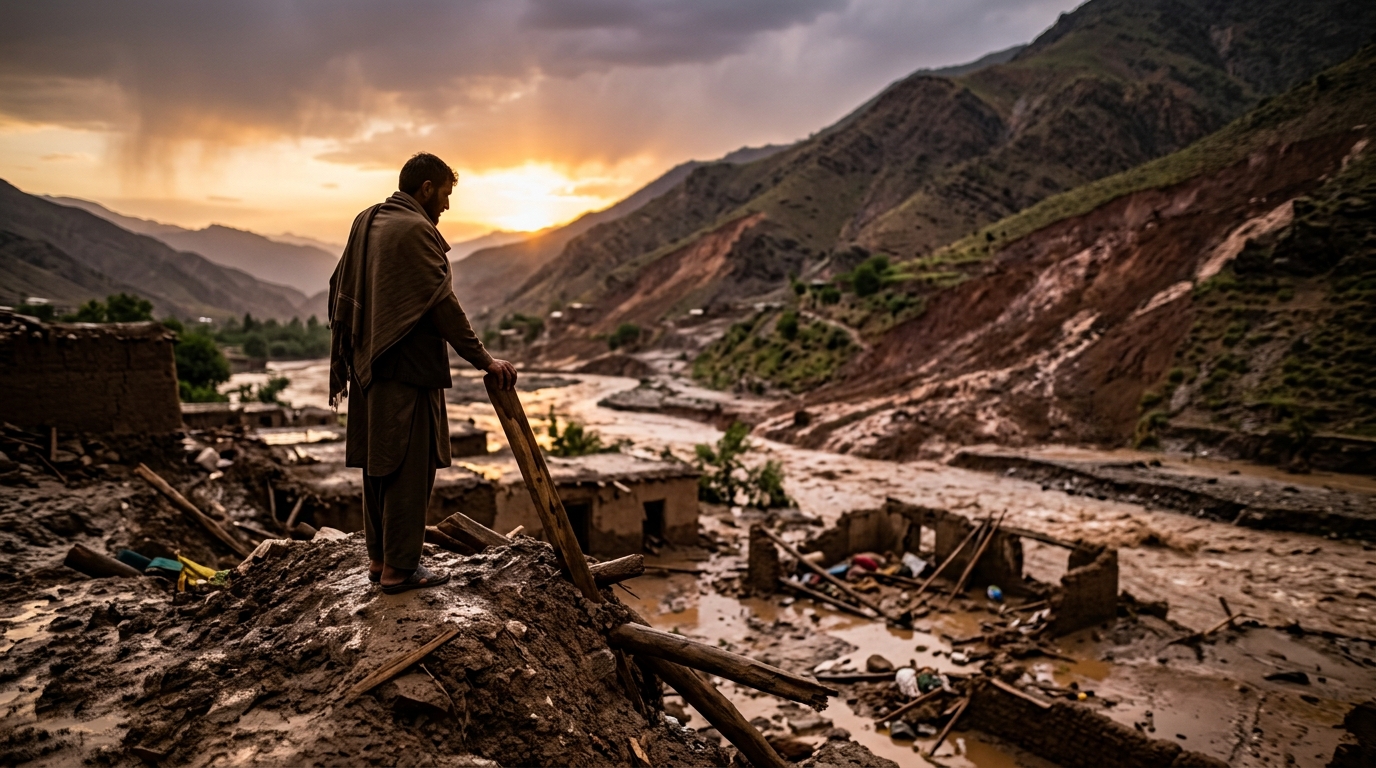
Severe floods, landslides and thunderstorms in 13 Afghan provinces have killed 17 people and injured 26, destroying 147 homes and 80 km of roads. The disaster underscores Afghanistan’s heightened vulnerability due to conflict‑weakened institutions, poor infrastructure, deforestation and climate‑change‑driven extreme weather, highlighting key concerns for UPSC topics on disaster management and environmental security.
Overview Severe flooding, a landslide and thunderstorms across 13 of Afghanistan’s 34 provinces have claimed 17 lives and injured 26 people in the past 24 hours, according to the National Disaster Management Authority (NDMA). The disaster has destroyed 147 homes, washed away 80 km of roads and damaged agricultural land and irrigation canals . The situation remains fluid as NDMA teams continue damage assessments. Key Developments Casualties: 17 dead, 26 injured; numbers may rise as rescue operations progress. Geographic spread: 13 provinces, mainly in western, central and north‑western regions, were affected. Infrastructure loss: 147 homes (complete or partial), 80 km of roads, and extensive agricultural land destroyed. Historical context: Earlier in 2026, heavy snowfall and flash floods caused dozens of deaths; in 2024, over 300 people perished in spring flash floods. Underlying drivers: Decades of conflict, weak infrastructure, a fragile economy, deforestation and accelerating climate change have heightened vulnerability. Important Facts The affected homes are largely mud houses , offering minimal protection against sudden deluges. The loss of irrigation infrastructure threatens crop cycles in an already food‑insecure nation. Road damage hampers relief logistics, especially in remote, mountainous terrain. UPSC Relevance Understanding Afghanistan’s disaster profile is pertinent for GS 2 (Polity & International Relations) – the role of state institutions like the NDMA, and how conflict‑weakened governance affects disaster response. It also ties to GS 3 (Environment, Agriculture & Disaster Management) – the impact of flash floods , climate‑induced extreme weather, and environmental degradation on human security and development. Way Forward Strengthen early‑warning systems and community‑level disaster preparedness, especially in remote provinces. Invest in resilient infrastructure: flood‑resistant housing, all‑weather roads, and reinforced irrigation networks. Promote reforestation and watershed management to enhance natural water absorption. Mobilise international assistance for emergency relief and long‑term climate adaptation projects. Integrate disaster risk reduction into national development plans to mitigate future losses.
  1. Home
  2. Prepare
  3. Current Affairs
  4. Afghanistan Faces Deadly Floods and Landslides: 17 Dead, 26 Injured – NDMA Response and Climate Vulnerability
Login to bookmark articles
Login to mark articles as complete

Overview

Afghanistan’s flood disaster exposes weak disaster governance amid climate‑driven vulnerability

Key Facts

  1. 17 people killed and 26 injured in floods and landslides across Afghanistan in the past 24 hours (2026).
  2. Disaster affected 13 of the 34 provinces, mainly western, central and north‑western regions.
  3. 147 homes (mostly mud houses) destroyed, 80 km of roads washed away and irrigation canals damaged, threatening agricultural output.
  4. National Disaster Management Authority (NDMA) is the central agency responsible for disaster preparedness, response and mitigation in Afghanistan.
  5. Afghanistan experienced >300 deaths in flash floods in 2024 and dozens of deaths from heavy snowfall and flash floods earlier in 2026.
  6. Deforestation and climate change have amplified flood and landslide risk in the country’s mountainous terrain.
  7. Damaged infrastructure hampers relief logistics, especially in remote, hard‑to‑reach areas.

Background & Context

The floods underscore Afghanistan’s vulnerability to climate‑induced extreme weather, a key focus of GS‑3 (Environment, Disaster Management). Weak institutional capacity of the NDMA, compounded by decades of conflict and environmental degradation, illustrates the nexus between governance, disaster response and sustainable development.

UPSC Syllabus Connections

GS3•Disaster and disaster managementEssay•Environment and SustainabilityGS1•Important Geophysical PhenomenaEssay•Economy, Development and Inequality

Mains Answer Angle

GS‑3: Evaluate the effectiveness of Afghanistan’s disaster management framework in the wake of the 2026 floods and suggest policy measures for climate‑resilient development.

Full Article

Read Original on hindu

Analysis

Practice Questions

GS3
Easy
Prelims MCQ

Disaster Management – Recent Events

1 marks
5 keywords
GS3
Medium
Mains Short Answer

Disaster Management – Institutional Capacity

5 marks
5 keywords
GS3
Hard
Mains Essay

Environment, Climate Change & Disaster Management

20 marks
8 keywords
Related:Daily•Weekly

Loading related articles...

Loading related articles...

Tip: Click articles above to read more from the same date, or use the back button to see all articles.

Explore:Current Affairs·Editorial Analysis·Govt Schemes·Study Materials·Previous Year Questions·UPSC GPT