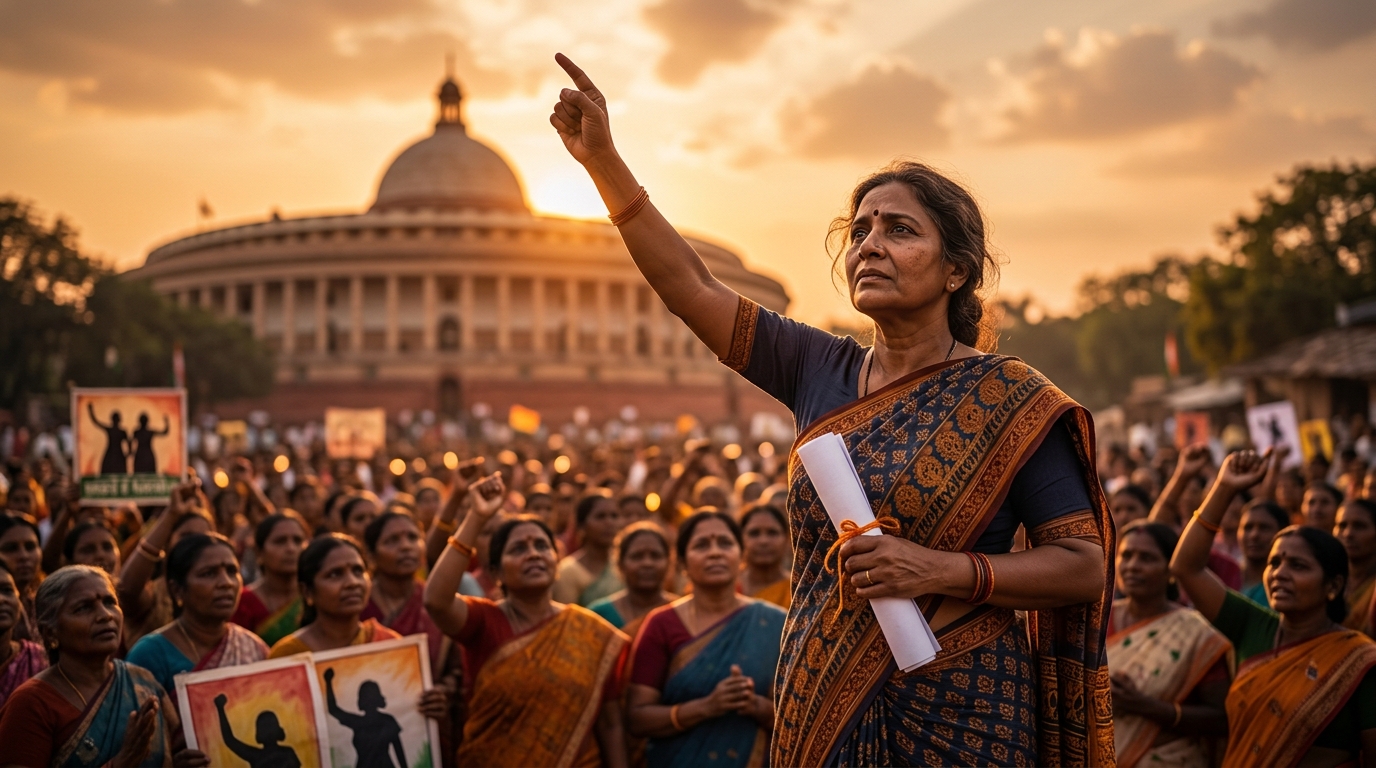
The Union Cabinet, chaired by Prime Minister Narendra Modi, cleared a draft amendment to the Nari Shakti Vandan Adhiniyam on 8 April 2026. In preparation for a special parliamentary sitting (16‑18 April 2026), the BJP has rolled out a massive public‑outreach drive, beginning 11 April, to build consensus for the proposed changes.
Key Developments
- At least 50 town‑hall meetings across the country, the largest of which will be addressed by PM Narendra Modi.
- Women achievers from diverse fields will be highlighted; parallel Nari Shakti padyatras and press conferences on the amendment will be organised.
- The amendment seeks to increase Lok Sabha seats from 543 to 816, reserving 273 seats for women, with a "vertical" allocation for SC and ST categories.
- Implementation is tied to a fresh delimitation exercise using the 2011 census, bypassing the pending 2027 census.
- Parallel amendment of the Delimitation Act will accompany the constitutional change.
- If passed, the laws will be effective by 31 March 2029, enabling reservation in the next Lok Sabha elections and upcoming state polls in Odisha, Arunachal Pradesh, Sikkim and Andhra Pradesh.
Important Facts
• The original 33% reservation was introduced via a constitutional amendment in 2023, but its activation was linked to the 2027 census‑based delimitation, projecting a 2034 rollout. The present proposal accelerates this by using the 2011 census data.
• The increase to 816 Lok Sabha seats reflects a proportional expansion to accommodate the women’s quota without diluting existing state‑wise seat allocations.
• "Vertical reservation" means that within the 33% women’s quota, seats are earmarked for SC and ST women, ensuring intersectional representation.
Exam Relevance
Understanding this development is crucial for GS 2 (Polity) as it illustrates the legislative process (draft bill → Cabinet approval → Parliament) and the use of constitutional amendments to achieve social justice goals. It also highlights the interplay between demographic data (census) and electoral reforms (delimitation), a frequent topic in polity and governance questions. The political strategy of mass outreach underscores the role of party‑led campaigns in policy implementation, relevant for questions on governance and political communication.
Way Forward
The amendment must clear both houses of Parliament before receiving presidential assent. Anticipated debates will focus on the constitutional validity of using an older census, the impact of expanding the Lok Sabha, and the effectiveness of vertical reservation in enhancing women’s representation. Aspirants should monitor the parliamentary proceedings, stakeholder responses from civil society, and the outcomes of the town‑hall events, as these will shape the final shape of the women’s reservation policy.