Loading page, please wait…
HomeCurrent AffairsEditorialsGovt SchemesLearning ResourcesUPSC SyllabusPricingAboutBest UPSC AIUPSC AI ToolAI for UPSCUPSC ChatGPT

© 2026 Vaidra. All rights reserved.

PrivacyTerms
Vaidra Logo
Vaidra

Top 4 items + smart groups

UPSC GPT
New
Current Affairs
Daily Solutions
Daily Puzzle
Mains Evaluator

Version 2.0.0 • Built with ❤️ for UPSC aspirants

CDS General Anil Chauhan Reviews Chinar Corps Readiness, Emphasises Multi‑Domain Jointness in North Kashmir — UPSC Current Affairs | April 4, 2026
CDS General Anil Chauhan Reviews Chinar Corps Readiness, Emphasises Multi‑Domain Jointness in North Kashmir
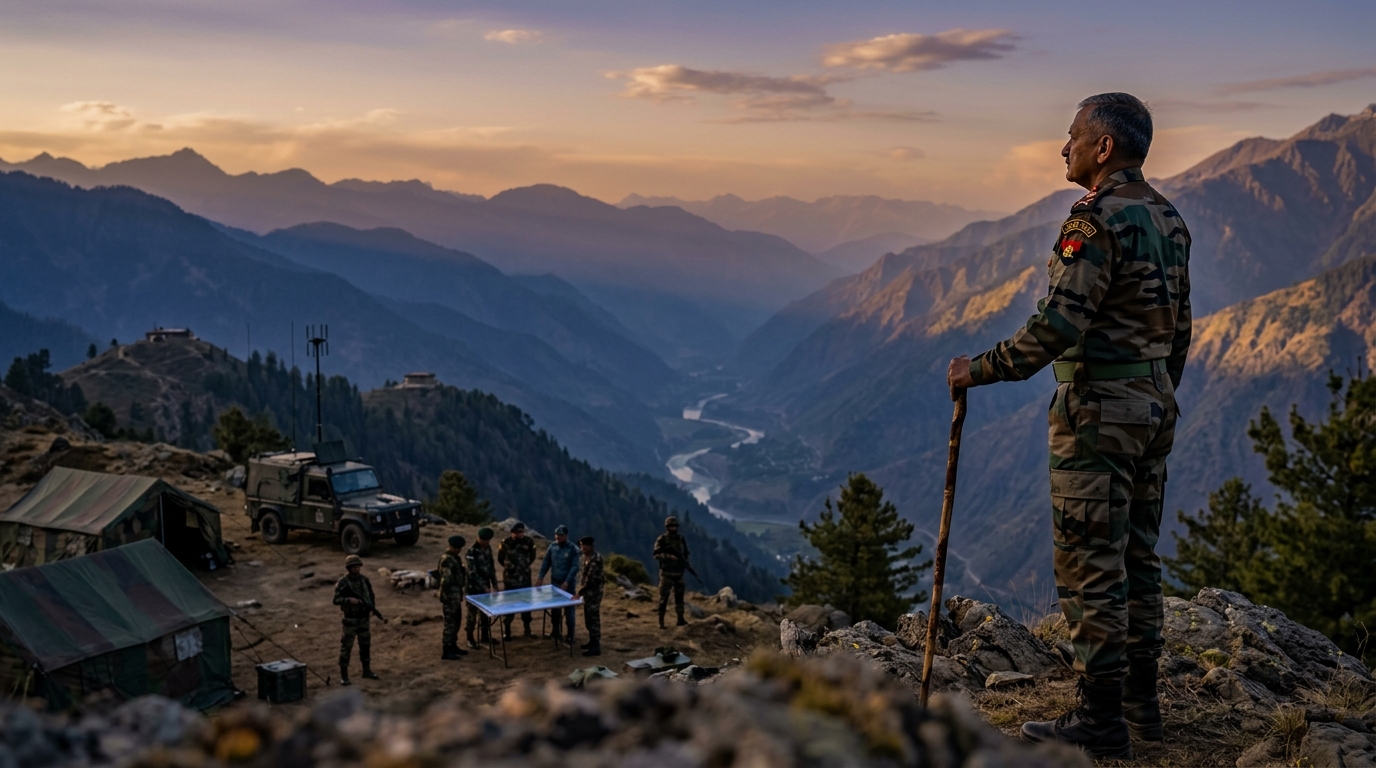
On 4 April 2026, CDS General Anil Chauhan inspected the Chinar Corps in Srinagar, lauding its readiness and urging a shift to Multi‑Domain Operations with greater jointness across land, air, cyber, space and cognitive domains. The visit highlights India’s focus on integrated defence doctrine, technology infusion and a Whole‑of‑Nation approach, crucial for UPSC topics on security and defence reforms.
Overview On 04 April 2026 , the CDS General Anil Chauhan visited the Chinar Corps in Srinagar. The visit focused on assessing operational readiness along the LoC and reinforcing a joint, multi‑domain warfighting outlook. Key Developments CDS praised the corps for its "exemplary operational preparedness, doctrinal coherence and resolute professionalism". Briefings in Baramulla covered future force application and technology infusion . Emphasis on shifting from a domain‑centric to a Multi‑Domain Operations (MDO) approach. Call for accelerated joint training , doctrinal harmonisation, and interoperable command‑and‑control structures . Advocated a deliberate roadmap for technological adaptation, cognitive resilience and a Whole of a Nation effort. Important Facts Location of visit: Srinagar (headquarters of Chinar Corps) and Baramulla . Operational focus: security posture along the LoC in North Kashmir. Key messages: need for foresight, innovation, unified war‑fighting philosophy and resilience against evolving threats. UPSC Relevance The visit underscores several themes that frequently appear in the UPSC syllabus: Defence organisation and reforms – role of the CDS and the integration of army corps like the Chinar Corps . Security challenges in Jammu & Kashmir – operational readiness along the LoC and the broader India‑Pakistan strategic dynamics. Contemporary warfare concepts – adoption of MDO , joint training and interoperable C2 structures, reflecting India’s shift towards network‑centric warfare. National security strategy – the " Whole of a Nation " approach, linking civil administration, society and the armed forces. Way Forward To translate the CDS’s directives into actionable outcomes, the following steps are essential: Formulate a detailed Multi‑Domain Operations doctrine for the Indian Army, Air Force and Navy, with clear timelines for integration. Institutionalise regular joint training exercises at the corps level, focusing on cyber‑space and cognitive domains. Upgrade command‑and‑control infrastructure to ensure interoperability across services. Accelerate procurement and indigenisation of emerging technologies highlighted in the Baramulla briefing. Strengthen coordination between the armed forces and civil administration under the Whole of a Nation framework to enhance resilience in border districts. These measures will help India maintain a credible deterrent, ensure operational readiness in the high‑altitude theatre, and align its defence posture with global best practices.
  1. Home
  2. Prepare
  3. Current Affairs
  4. CDS General Anil Chauhan Reviews Chinar Corps Readiness, Emphasises Multi‑Domain Jointness in North Kashmir
Login to bookmark articles
Login to mark articles as complete

Overview

CDS pushes Multi‑Domain Jointness in Kashmir to boost deterrence and operational readiness

Key Facts

  1. 04 April 2026: CDS General Anil Chauhan inspected the Chinar Corps in Srinagar and Baramulla.
  2. Chinar Corps, a corps‑level formation of the Indian Army, is responsible for security in the Kashmir Valley, especially along the LoC in North Kashmir.
  3. The CDS highlighted the shift from domain‑centric to Multi‑Domain Operations (MDO) integrating land, air, sea, cyber, space and cognitive domains.
  4. Key directives included accelerated joint training, doctrinal harmonisation and interoperable command‑and‑control (C2) structures across the three services.
  5. Emphasis was placed on rapid technology infusion – AI, robotics, advanced sensors – and a ‘Whole of Nation’ approach involving civil administration and the private sector.

Background & Context

The Chief of Defence Staff (CDS) is the senior-most military officer tasked with integrating the Army, Navy and Air Force and advising the government on security matters. In the volatile North Kashmir theatre, where the LoC remains a flashpoint, the Chinar Corps' readiness and the adoption of Multi‑Domain Operations reflect India's broader defence modernisation and jointness reforms under the National Security Strategy.

UPSC Syllabus Connections

GS3•Various security forces and agenciesEssay•Economy, Development and InequalityEssay•Science, Technology and Society

Mains Answer Angle

In GS‑2, candidates can discuss how the CDS’s push for MDO and jointness addresses contemporary security challenges, linking defence reforms with the ‘Whole of Nation’ concept. A possible question may ask to evaluate the effectiveness of joint training and interoperable C2 in enhancing India’s deterrence posture.

Full Article

<h2>Overview</h2> <p>On <strong>04 April 2026</strong>, the <span class="key-term" data-definition="Chief of Defence Staff (CDS) — the senior-most military officer who coordinates among the three services and advises the government; (GS2: Polity – defence and security governance)">CDS</span> <strong>General Anil Chauhan</strong> visited the <span class="key-term" data-definition="Chinar Corps — a corps‑level formation of the Indian Army responsible for security in the Kashmir Valley, headquartered at Srinagar; (GS2: Polity – army organization)">Chinar Corps</span> in Srinagar. The visit focused on assessing operational readiness along the <span class="key-term" data-definition="LoC — Line of Control, the de‑facto border between India and Pakistan in Jammu & Kashmir, a flashpoint for ceasefire violations; (GS1: Geography/International Relations)">LoC</span> and reinforcing a joint, multi‑domain warfighting outlook.</p> <h3>Key Developments</h3> <ul> <li>CDS praised the corps for its "exemplary operational preparedness, doctrinal coherence and resolute professionalism".</li> <li>Briefings in Baramulla covered <span class="key-term" data-definition="Future Force Application &amp; Technology Infusion — integration of emerging technologies such as AI, robotics and advanced sensors into the armed forces; (GS2: Polity – modernisation of defence)">future force application and technology infusion</span>.</li> <li>Emphasis on shifting from a <em>domain‑centric</em> to a <span class="key-term" data-definition="Multi‑Domain Operations (MDO) — a modern warfare concept that integrates actions across land, air, sea, cyber, space and cognitive domains to achieve synergistic effects; (GS2: Polity – contemporary defence doctrine)">Multi‑Domain Operations (MDO)</span> approach.</li> <li>Call for accelerated <span class="key-term" data-definition="Joint Training — training programmes that involve personnel from multiple services to develop interoperability and coordinated response; (GS2: Polity – defence preparedness)">joint training</span>, doctrinal harmonisation, and <span class="key-term" data-definition="Interoperable Command and Control Structures — systems and procedures that allow different services to share information and execute combined operations seamlessly; (GS2: Polity – command architecture)">interoperable command‑and‑control structures</span>.</li> <li>Advocated a deliberate roadmap for technological adaptation, cognitive resilience and a <span class="key-term" data-definition="Whole of a Nation — a security approach that mobilises government, civil society, private sector and citizens in defence and nation‑building; (GS2: Polity – national security strategy)">Whole of a Nation</span> effort.</li> </ul> <h3>Important Facts</h3> <ul> <li>Location of visit: <strong>Srinagar</strong> (headquarters of Chinar Corps) and <strong>Baramulla</strong>.</li> <li>Operational focus: security posture along the <span class="key-term" data-definition="LoC — Line of Control, the de‑facto border between India and Pakistan in Jammu & Kashmir, a flashpoint for ceasefire violations; (GS1: Geography/International Relations)">LoC</span> in North Kashmir.</li> <li>Key messages: need for foresight, innovation, unified war‑fighting philosophy and resilience against evolving threats.</li> </ul> <h3>UPSC Relevance</h3> <p>The visit underscores several themes that frequently appear in the UPSC syllabus:</p> <ul> <li><strong>Defence organisation and reforms</strong> – role of the <span class="key-term" data-definition="Chief of Defence Staff (CDS) — the senior-most military officer who coordinates among the three services and advises the government; (GS2: Polity – defence and security governance)">CDS</span> and the integration of army corps like the <span class="key-term" data-definition="Chinar Corps — a corps‑level formation of the Indian Army responsible for security in the Kashmir Valley, headquartered at Srinagar; (GS2: Polity – army organization)">Chinar Corps</span>.</li> <li><strong>Security challenges in Jammu & Kashmir</strong> – operational readiness along the <span class="key-term" data-definition="LoC — Line of Control, the de‑facto border between India and Pakistan in Jammu & Kashmir, a flashpoint for ceasefire violations; (GS1: Geography/International Relations)">LoC</span> and the broader India‑Pakistan strategic dynamics.</li> <li><strong>Contemporary warfare concepts</strong> – adoption of <span class="key-term" data-definition="Multi‑Domain Operations (MDO) — a modern warfare concept that integrates actions across land, air, sea, cyber, space and cognitive domains to achieve synergistic effects; (GS2: Polity – contemporary defence doctrine)">MDO</span>, joint training and interoperable C2 structures, reflecting India’s shift towards network‑centric warfare.</li> <li><strong>National security strategy</strong> – the "<span class="key-term" data-definition="Whole of a Nation — a security approach that mobilises government, civil society, private sector and citizens in defence and nation‑building; (GS2: Polity – national security strategy)">Whole of a Nation</span>" approach, linking civil administration, society and the armed forces.</li> </ul> <h3>Way Forward</h3> <p>To translate the CDS’s directives into actionable outcomes, the following steps are essential:</p> <ul> <li>Formulate a detailed <em>Multi‑Domain Operations</em> doctrine for the Indian Army, Air Force and Navy, with clear timelines for integration.</li> <li>Institutionalise regular <span class="key-term" data-definition="Joint Training — training programmes that involve personnel from multiple services to develop interoperability and coordinated response; (GS2: Polity – defence preparedness)">joint training</span> exercises at the corps level, focusing on cyber‑space and cognitive domains.</li> <li>Upgrade command‑and‑control infrastructure to ensure <span class="key-term" data-definition="Interoperable Command and Control Structures — systems and procedures that allow different services to share information and execute combined operations seamlessly; (GS2: Polity – command architecture)">interoperability</span> across services.</li> <li>Accelerate procurement and indigenisation of emerging technologies highlighted in the Baramulla briefing.</li> <li>Strengthen coordination between the armed forces and civil administration under the <span class="key-term" data-definition="Whole of a Nation — a security approach that mobilises government, civil society, private sector and citizens in defence and nation‑building; (GS2: Polity – national security strategy)">Whole of a Nation</span> framework to enhance resilience in border districts.</li> </ul> <p>These measures will help India maintain a credible deterrent, ensure operational readiness in the high‑altitude theatre, and align its defence posture with global best practices.</p>
Read Original on pib

Analysis

Practice Questions

Prelims
Easy
Prelims MCQ

Contemporary defence doctrine

1 marks
4 keywords
GS2
Medium
Mains Short Answer

Defence preparedness and reforms

10 marks
5 keywords
GS2
Hard
Mains Essay

Defence modernisation and national security strategy

250 marks
6 keywords
Related:Daily•Weekly

Loading related articles...

Loading related articles...

Tip: Click articles above to read more from the same date, or use the back button to see all articles.

Explore:Current Affairs·Editorial Analysis·Govt Schemes·Study Materials·Previous Year Questions·UPSC GPT