Overview
The India AI Impact Summit 2026 was meant to highlight India’s AI ambitions. Instead, the event exposed the politicisation of technology, with false claims of indigenous robotics, VIP‑driven crowd control, and a protest by the Indian Youth Congress against the India‑U.S. interim trade deal. The police response, involving multiple FIRs, sparked a jurisdictional clash between Delhi and Himachal Pradesh police.
Key Developments
- A private university falsely presented a Chinese‑made robot as an Indian invention, raising questions about credibility and "Made‑in‑India" narratives.
- Several senior officials and "VIPs" monopolised speaking slots, limiting access for genuine AI developers and enthusiasts.
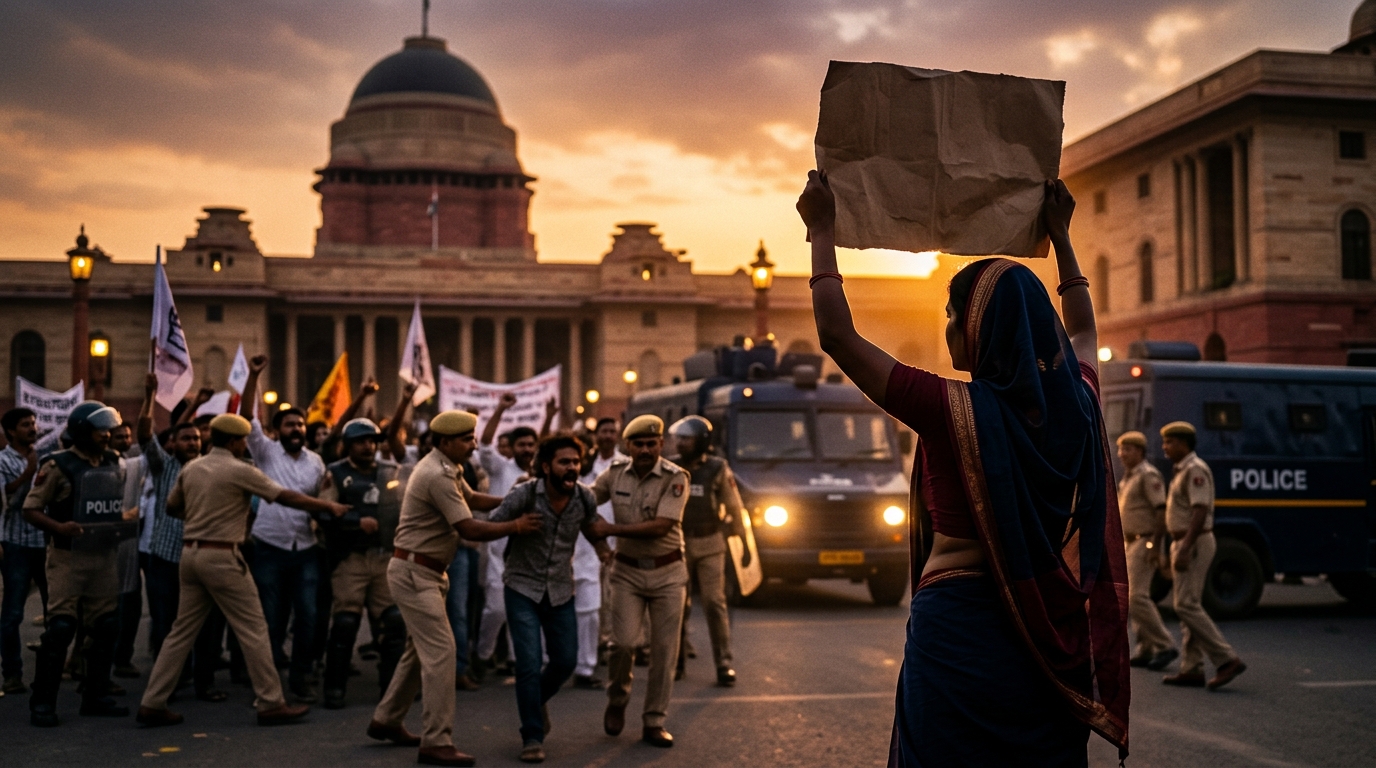
- Members of the Indian Youth Congress staged a non‑violent flash‑mob protest demanding a review of the India‑U.S. interim trade deal.
- Delhi police arrested the activists and filed a slew of charges, including rioting, promoting enmity, and criminal conspiracy.
- The arrests led to a standoff when Himachal Pradesh police detained some activists in Shimla, prompting inter‑state police friction.
Important Facts
The FIRs cited offences such as rioting, promoting enmity between groups, and unlawful assembly. Critics argue that these charges mirror a broader trend where the BJP-led administration treats peaceful dissent as a criminal act, reminiscent of the crackdown on protests against the Citizenship (Amendment) Act. The use of draconian provisions and prolonged detention without trial has been highlighted by civil‑society observers.
Exam Relevance
Understanding the nexus between technology promotion and political mobilisation is vital for GS 2 (Polity) and GS 3 (Economy & Technology). Aspirants should note:
- How major conferences become platforms for political messaging.
- The role of FIR in criminalising dissent.
- The impact of inter‑state police coordination on federal‑state relations.
- Implications of false "Made‑in‑India" claims on the "Atmanirbhar Bharat" narrative.
Way Forward
For a balanced tech ecosystem, the government should:
- Ensure transparent vetting of product demonstrations to avoid misrepresentation.
- Limit VIP interference to preserve space for genuine innovators.
- Adopt a proportional legal response to peaceful protests, reserving serious charges for genuine threats to public order.
- Strengthen judicial oversight to swiftly quash frivolous FIRs, safeguarding democratic dissent.
Such measures would reinforce India’s commitment to democratic values while fostering a credible AI landscape.