Loading page, please wait…
HomeCurrent AffairsEditorialsGovt SchemesLearning ResourcesUPSC SyllabusPricingAboutBest UPSC AIUPSC AI ToolAI for UPSCUPSC ChatGPT

© 2026 Vaidra. All rights reserved.

PrivacyTerms
Vaidra Logo
Vaidra

Top 4 items + smart groups

UPSC GPT
New
Current Affairs
Daily Solutions
Daily Puzzle
Mains Evaluator

Version 2.0.0 • Built with ❤️ for UPSC aspirants

Delhi Police Special Cell Foils Pakistan‑Backed Inter‑State Terror, Arms & Espionage Network (Solar CCTV) | GS3 UPSC Current Affairs April 2026
Delhi Police Special Cell Foils Pakistan‑Backed Inter‑State Terror, Arms & Espionage Network (Solar CCTV)
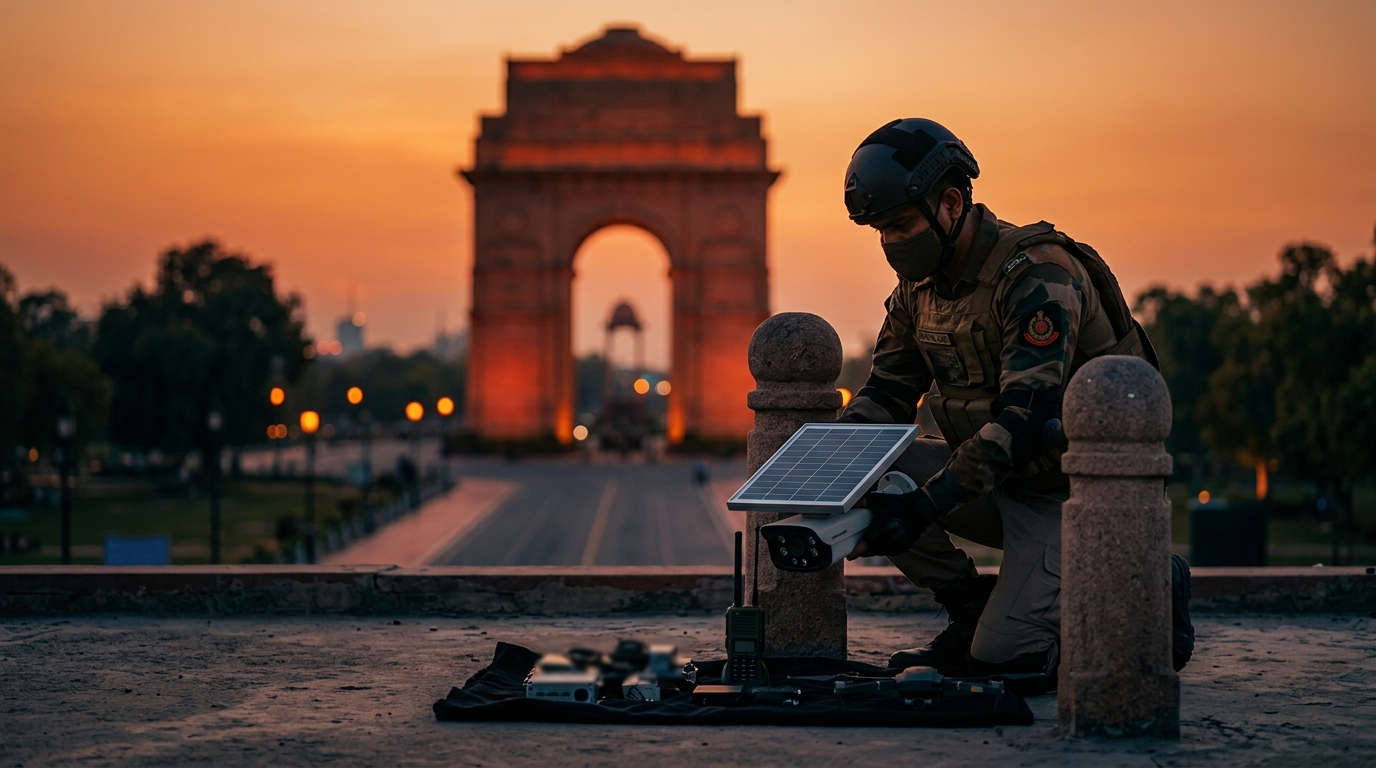
On 10 April 2026, the Delhi Police <span class="key-term" data-definition="Special Cell — elite unit of the Delhi Police tasked with counter‑terrorism and intelligence operations (GS2: Polity)">Special Cell</span> dismantled a Pakistan‑backed inter‑state terror, arms and espionage network that used solar‑powered CCTV cameras to monitor sensitive military sites in Punjab and Rajasthan. The bust highlights the persistent cross‑border security challenge and the need for stronger intelligence coordination and surveillance counter‑measures.
Special Cell of the Delhi Police on 10 April 2026 uncovered a sophisticated inter‑State terror, arms and espionage module allegedly supported by handlers from Pakistan and its external intelligence agency, the Inter‑Services Intelligence (ISI) . The operation revealed a covert surveillance network that employed solar‑powered CCTV cameras installed near sensitive military locations across Punjab and Rajasthan . Key Developments Discovery of a cross‑border terror and arms‑smuggling network operating in multiple Indian states. Identification of a hidden surveillance grid using solar‑powered CCTV units to monitor defence installations. Evidence points to direct logistical and operational support from Pakistan’s ISI. Arrests and seizure of equipment conducted by the Special Cell on the same day of the bust. Important Facts The surveillance devices were strategically placed within a 50‑kilometre radius of key army cantonments, ammunition depots and training centres. Their solar‑powered nature allowed continuous operation without reliance on the local power grid, making detection difficult. Preliminary forensic analysis suggests the cameras were imported in dismantled form, re‑assembled on site, and linked to a central command node located in the border districts of Punjab. The module also facilitated the movement of small‑calibre weapons and intelligence reports between operatives in India and handlers in Pakistan. UPSC Relevance This incident underscores several themes frequently examined in the UPSC syllabus. It highlights the role of state police intelligence units ( Special Cell ) in counter‑terrorism, a key component of GS2: Polity . The cross‑border dimension brings into focus India‑Pakistan relations, the functioning of foreign intelligence agencies like the ISI , and the challenges of safeguarding sensitive military locations . Additionally, the use of solar‑powered surveillance technology links to emerging security‑technology trends covered under GS3: Technology & Environment . Way Forward To mitigate similar threats, the following steps are recommended: Strengthen inter‑agency coordination between central intelligence agencies (e.g., RAW, IB) and state police units like the Special Cell . Deploy advanced detection systems for covert surveillance equipment, especially in zones surrounding defence installations. Enhance border monitoring mechanisms in Punjab and Rajasthan through joint Indo‑Pak security dialogues, while maintaining a firm diplomatic stance against state‑sponsored terrorism. Promote research and development of indigenous, tamper‑proof surveillance solutions to reduce reliance on foreign‑origin equipment. Implementing these measures will bolster India’s internal security architecture and reinforce its deterrence posture against cross‑border terror networks.
  1. Home
  2. Prepare
  3. Current Affairs
  4. Delhi Police Special Cell Foils Pakistan‑Backed Inter‑State Terror, Arms & Espionage Network (Solar CCTV)
Must Review
Login to bookmark articles
Login to mark articles as complete

Overview

gs.gs382% UPSC Relevance

Delhi Police busts Pakistan‑ISI backed solar‑CCTV spy network targeting military sites

Key Facts

  1. On 10 April 2026, Delhi Police Special Cell uncovered an inter‑state terror, arms and espionage module backed by Pakistan’s ISI.
  2. The network installed solar‑powered CCTV cameras within a 50 km radius of army cantonments, ammunition depots and training centres in Punjab and Rajasthan.
  3. Forensic analysis showed the cameras were imported in dismantled form, re‑assembled on site and linked to a central command node in border districts of Punjab.
  4. The module facilitated movement of small‑calibre weapons and transmission of intelligence reports between operatives in India and ISI handlers in Pakistan.
  5. Special Cell arrested the operatives and seized the surveillance equipment, weapons and related communication gear on the same day.

Background & Context

The bust highlights the role of state police intelligence units (Special Cell) in counter‑terrorism, the cross‑border threat posed by Pakistan’s ISI, and the emerging use of renewable‑energy‑driven surveillance technology—topics covered under GS2 (Polity & Security) and GS3 (Technology & Environment) of the UPSC syllabus.

Mains Answer Angle

In a GS3 answer, candidates can discuss the security‑technology challenge of covert solar‑powered surveillance and propose a coordinated policy framework linking internal security agencies, defence establishments and diplomatic channels.

Full Article

<p><span class="key-term" data-definition="Special Cell — elite unit of the Delhi Police tasked with counter‑terrorism and intelligence operations (GS2: Polity)">Special Cell</span> of the <span class="key-term" data-definition="Delhi Police — the law‑enforcement agency for the National Capital Territory of Delhi, responsible for maintaining public order and security (GS2: Polity)">Delhi Police</span> on <strong>10 April 2026</strong> uncovered a sophisticated <span class="key-term" data-definition="inter‑State terror, arms and espionage module — a coordinated network that spans state boundaries to facilitate terrorism, illegal arms flow, and intelligence gathering (GS2: Polity, GS3: Security)">inter‑State terror, arms and espionage module</span> allegedly supported by handlers from <span class="key-term" data-definition="Pakistan — South Asian nation sharing a porous border with India, often involved in cross‑border security challenges (GS2: Polity)">Pakistan</span> and its external intelligence agency, the <span class="key-term" data-definition="Inter‑Services Intelligence (ISI) — Pakistan’s premier external intelligence agency, often implicated in cross‑border terrorism (GS2: Polity)">Inter‑Services Intelligence (ISI)</span>. The operation revealed a covert surveillance network that employed <span class="key-term" data-definition="solar‑powered CCTV cameras — surveillance devices powered by solar energy, enabling covert monitoring in remote or sensitive areas (GS3: Technology & Environment)">solar‑powered CCTV cameras</span> installed near <span class="key-term" data-definition="sensitive military locations — installations such as army bases, ammunition depots, and training centers that are critical to national defence (GS2: Polity, GS3: Security)">sensitive military locations</span> across <strong>Punjab</strong> and <strong>Rajasthan</strong>.</p> <h3>Key Developments</h3> <ul> <li>Discovery of a cross‑border terror and arms‑smuggling network operating in multiple Indian states.</li> <li>Identification of a hidden surveillance grid using solar‑powered CCTV units to monitor defence installations.</li> <li>Evidence points to direct logistical and operational support from Pakistan’s ISI.</li> <li>Arrests and seizure of equipment conducted by the <span class="key-term" data-definition="Special Cell — elite unit of the Delhi Police tasked with counter‑terrorism and intelligence operations (GS2: Polity)">Special Cell</span> on the same day of the bust.</li> </ul> <h3>Important Facts</h3> <p>The surveillance devices were strategically placed within a 50‑kilometre radius of key army cantonments, ammunition depots and training centres. Their solar‑powered nature allowed continuous operation without reliance on the local power grid, making detection difficult. Preliminary forensic analysis suggests the cameras were imported in dismantled form, re‑assembled on site, and linked to a central command node located in the border districts of Punjab. The module also facilitated the movement of small‑calibre weapons and intelligence reports between operatives in India and handlers in Pakistan.</p> <h3>UPSC Relevance</h3> <p>This incident underscores several themes frequently examined in the UPSC syllabus. It highlights the role of <strong>state police intelligence units</strong> (<span class="key-term" data-definition="Special Cell — elite unit of the Delhi Police tasked with counter‑terrorism and intelligence operations (GS2: Polity)">Special Cell</span>) in counter‑terrorism, a key component of <span class="key-term" data-definition="GS2: Polity — the study of Indian political institutions, governance structures and security apparatus (GS2)">GS2: Polity</span>. The cross‑border dimension brings into focus India‑Pakistan relations, the functioning of foreign intelligence agencies like the <span class="key-term" data-definition="Inter‑Services Intelligence (ISI) — Pakistan’s premier external intelligence agency, often implicated in cross‑border terrorism (GS2: Polity)">ISI</span>, and the challenges of safeguarding <span class="key-term" data-definition="sensitive military locations — installations such as army bases, ammunition depots, and training centers that are critical to national defence (GS2: Polity, GS3: Security)">sensitive military locations</span>. Additionally, the use of solar‑powered surveillance technology links to emerging security‑technology trends covered under <span class="key-term" data-definition="solar‑powered CCTV cameras — surveillance devices powered by solar energy, enabling covert monitoring in remote or sensitive areas (GS3: Technology & Environment)">GS3: Technology & Environment</span>.</p> <h3>Way Forward</h3> <p>To mitigate similar threats, the following steps are recommended: <ul><li>Strengthen inter‑agency coordination between central intelligence agencies (e.g., RAW, IB) and state police units like the <span class="key-term" data-definition="Special Cell — elite unit of the Delhi Police tasked with counter‑terrorism and intelligence operations (GS2: Polity)">Special Cell</span>.</li><li>Deploy advanced detection systems for covert surveillance equipment, especially in zones surrounding defence installations.</li><li>Enhance border monitoring mechanisms in Punjab and Rajasthan through joint Indo‑Pak security dialogues, while maintaining a firm diplomatic stance against state‑sponsored terrorism.</li><li>Promote research and development of indigenous, tamper‑proof surveillance solutions to reduce reliance on foreign‑origin equipment.</li></ul>Implementing these measures will bolster India’s internal security architecture and reinforce its deterrence posture against cross‑border terror networks.</p>
Read Original on hindu

Analysis

Practice Questions

Prelims
Easy
Prelims MCQ

Police intelligence and counter‑terrorism

1 marks
4 keywords
GS3
Medium
Mains Short Answer

Security of sensitive installations & technology policy

10 marks
4 keywords
GS3
Hard
Mains Essay

Technology‑driven security threats and India‑Pakistan relations

25 marks
6 keywords
Related:Daily•Weekly

Loading related articles...

Loading related articles...

Tip: Click articles above to read more from the same date, or use the back button to see all articles.

Quick Reference

Key Insight

Delhi Police busts Pakistan‑ISI backed solar‑CCTV spy network targeting military sites

Key Facts

  1. On 10 April 2026, Delhi Police Special Cell uncovered an inter‑state terror, arms and espionage module backed by Pakistan’s ISI.
  2. The network installed solar‑powered CCTV cameras within a 50 km radius of army cantonments, ammunition depots and training centres in Punjab and Rajasthan.
  3. Forensic analysis showed the cameras were imported in dismantled form, re‑assembled on site and linked to a central command node in border districts of Punjab.
  4. The module facilitated movement of small‑calibre weapons and transmission of intelligence reports between operatives in India and ISI handlers in Pakistan.
  5. Special Cell arrested the operatives and seized the surveillance equipment, weapons and related communication gear on the same day.

Background

The bust highlights the role of state police intelligence units (Special Cell) in counter‑terrorism, the cross‑border threat posed by Pakistan’s ISI, and the emerging use of renewable‑energy‑driven surveillance technology—topics covered under GS2 (Polity & Security) and GS3 (Technology & Environment) of the UPSC syllabus.

Mains Angle

In a GS3 answer, candidates can discuss the security‑technology challenge of covert solar‑powered surveillance and propose a coordinated policy framework linking internal security agencies, defence establishments and diplomatic channels.

Explore:Current Affairs·Editorial Analysis·Govt Schemes·Study Materials·Previous Year Questions·UPSC GPT