Discovery of SCAN Network Provides Precise Target for Parkinson’s Therapy – Implications for Neuromodulation — UPSC Current Affairs | March 31, 2026
Discovery of SCAN Network Provides Precise Target for Parkinson’s Therapy – Implications for Neuromodulation
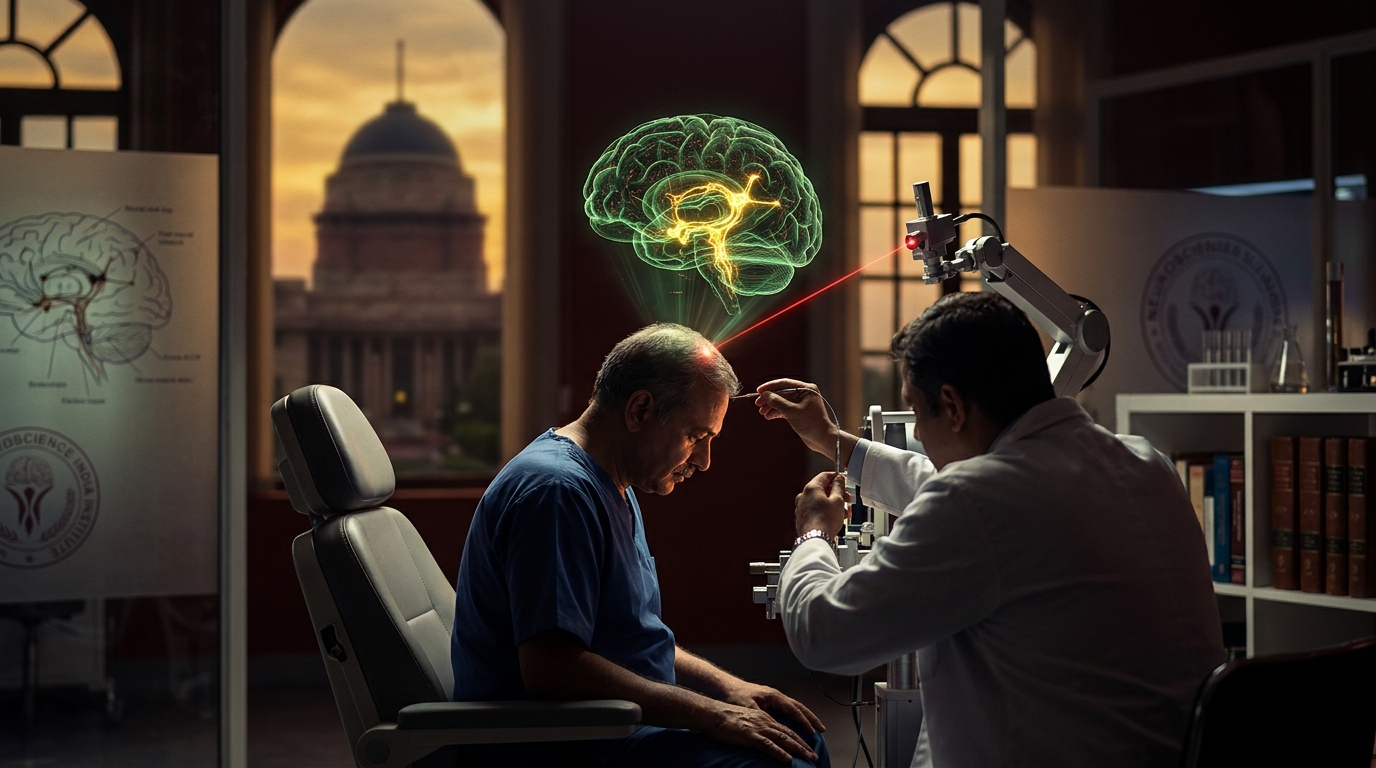
A recent Nature study identified the somatic cognitive action network (<span class="key-term" data-definition="Somatic Cognitive Action Network — a large‑scale brain network linking motor and higher‑order regions, newly linked to Parkinson’s disease (GS4: Health)">SCAN</span>) as abnormally over‑connected in Parkinson’s disease, offering precise targets for therapies such as transcranial magnetic stimulation (<span class="key-term" data-definition="Transcranial Magnetic Stimulation — a non‑invasive technique that uses magnetic fields to modulate neuronal activity, explored for neurological disorders (GS4: Health)">TMS</span>). The findings could reshape treatment strategies, moving from invasive deep brain stimulation to personalized, cortex‑based modulation.
Parkinson’s disease affects over 10 million people worldwide, causing motor slowness, tremors and loss of coordination. Traditional treatments such as levodopa and deep brain stimulation (DBS) have limitations. A new study published in Nature uncovers a higher‑order brain network, the SCAN , whose abnormal strengthening offers a precise therapeutic target. Key Developments Researchers employed PFM to identify three consistent “dot” zones across the motor cortex, later named SCAN. Analysis of 863 Parkinson’s patients showed SCAN’s over‑connectivity with the basal ganglia and thalamus, a pattern absent in amyotrophic lateral sclerosis (ALS) patients. A pilot trial with 18 participants applied TMS to SCAN regions; compared with control stimulation of effector zones, the SCAN‑targeted group showed marked reduction in tremor, rigidity, bradykinesia and instability within two weeks. Experts suggest future non‑invasive and minimally invasive neuromodulatory therapies could be personalized using PFM‑guided SCAN targeting. Important Facts Traditional motor‑effector mapping (Penfield map) lacks the resolution to explain coordination deficits in Parkinson’s. PFM replaces population‑averaged imaging with individual‑specific maps, akin to moving from a cartoon face to a real portrait. SCAN integrates motor execution with planning and attention, bridging primary motor cortex and higher‑order cognitive areas. Over‑connectivity of SCAN serves as a potential biomarker for disease severity and treatment response. While promising, SCAN is not yet featured in standard neuro‑anatomical atlases. UPSC Relevance The discovery underscores the importance of interdisciplinary research—combining neuroscience, imaging technology and clinical trials—to address public health challenges. Aspirants should note the link between neuro‑degenerative disorders and health policy, especially in the context of ageing populations, healthcare infrastructure, and the need for affordable, scalable treatments (GS4: Health). Understanding concepts such as Parkinson’s disease and emerging therapeutic modalities can aid in answering ethics, governance and health‑system questions in the UPSC mains. Way Forward Further large‑scale, multi‑center trials are required to validate SCAN‑targeted TMS and to compare its efficacy against DBS and pharmacotherapy. Integration of PFM into routine neuro‑imaging could enable personalized treatment plans, reducing reliance on invasive procedures. Policymakers should facilitate funding for translational research, streamline regulatory pathways for non‑invasive neuromodulation, and update medical curricula to incorporate new network‑level biomarkers.
Must Review
Login to bookmark articles
Login to mark articles as complete
Overview
Targeted neuromodulation of SCAN network could revolutionize Parkinson’s care in ageing India
Key Facts
Parkinson’s disease affects more than 10 million people worldwide as of 2026.
Conventional treatments – levodopa and deep brain stimulation (DBS) – are limited by dyskinesia and invasiveness.
Precision Functional Mapping (PFM) uncovered a higher‑order brain network, the Somatic Cognitive Action Network (SCAN), comprising three consistent “dot” zones in the motor cortex.
In a cohort of 863 Parkinson’s patients, SCAN showed abnormal over‑connectivity with the basal ganglia and thalamus, a pattern not seen in ALS patients.
A pilot trial of transcranial magnetic stimulation (TMS) on 18 participants targeting SCAN zones produced marked reductions in tremor, rigidity, bradykinesia and instability within two weeks.
SCAN is absent from standard neuro‑anatomical atlases, making it a novel biomarker for disease severity and therapeutic response.
Scaling SCAN‑guided neuromodulation demands regulatory reforms, dedicated research funding, and inclusion in medical curricula.
Background & Context
India’s rapidly ageing population is projected to increase the burden of neuro‑degenerative disorders, pressing the health system to adopt cost‑effective, scalable therapies. The SCAN discovery exemplifies how interdisciplinary research—combining neuroscience, advanced imaging and clinical trials—can inform policy reforms, infrastructure planning and equitable access to cutting‑edge treatments.
UPSC Syllabus Connections
Essay•Science, Technology and Society
Mains Answer Angle
GS 3 – Discuss how emerging neuroscience breakthroughs like the SCAN network can be integrated into India’s health‑policy framework for an ageing society, focusing on research funding, regulatory pathways and delivery of affordable care.