Overview
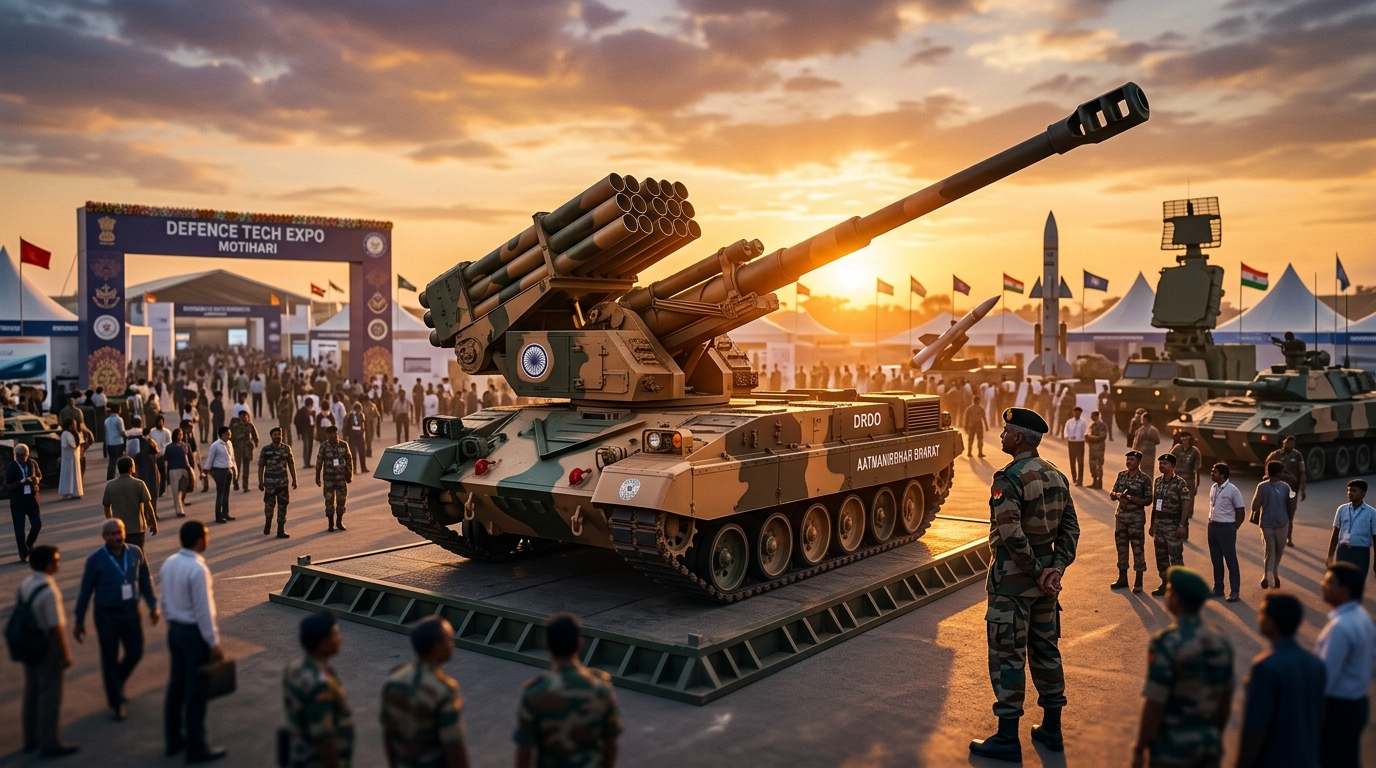
The DRDO will exhibit a wide spectrum of cutting‑edge defence systems at the Mahatma Gandhi Prekshagrih in Motihari, Bihar from 15 to 18 April 2026. The exhibition, inaugurated by Shri Radha Mohan Singh, MP and Chairman of the Parliamentary Standing Committee on Defence, is themed “Shanti, Satya Aur Vigyan Ka Sangam – Surakshit Aur Aatmanirbhar Bharat Ki Aur”. It aims to demonstrate India’s progress towards a self‑reliant defence ecosystem.
Key Developments (Bullet Points)
- Display of the AEW&C system, enhancing situational awareness.
- Showcasing of the Akash missile and its next‑generation launcher Akash‑NG.
- Exhibition of the supersonic BrahMos missile.
- Presentation of strategic weapons such as the A‑SAT missile, Prithvi and the anti‑tank NAG.
- Artillery advancements including the ATAGS and the Pinaka MLRS.
- Armoured platforms such as the Arjun‑Mk‑I & II, Indian Light Tank (ILT) and modular bridging solutions.
- Indigenous propulsion showcase: rapid prototype of the Kaveri Engine with spatial reality display.
- Protective technologies for CBRN scenarios, including ACADA systems, NBC suits and water‑purification units.
Important Facts
The exhibition will feature over 30 distinct systems ranging from missile technology to naval steel composites. It serves as a platform for the public, especially youth, to witness the tangible outcomes of the ‘Aatmanirbhar Bharat’ drive in defence. The event also aligns with the government’s broader objective of reducing import dependence for critical defence equipment.
Exam Relevance
Understanding DRDO’s portfolio is essential for GS III (Defence) and GS II (Polity) as it reflects India’s strategic autonomy, indigenous R&D capabilities, and the role of parliamentary oversight (e.g., the Standing Committee on Defence). The showcased systems illustrate concepts of deterrence, force multiplication, and the challenges of modern warfare, all of which are frequent essay topics. Moreover, the emphasis on self‑reliance ties into the broader economic policy of ‘Aatmanirbhar Bharat’, intersecting with GS III (Economy) discussions on import substitution.
Way Forward
For aspirants, it is advisable to track the operational induction timelines of these systems, assess their impact on India’s defence posture, and analyse policy measures that facilitate indigenous production. Monitoring future exhibitions and DRDO’s annual reports will provide updated data for answer writing. Additionally, linking these technological strides to India’s strategic doctrines (e.g., ‘Cold Start’) can enrich analytical responses in the UPSC mains.