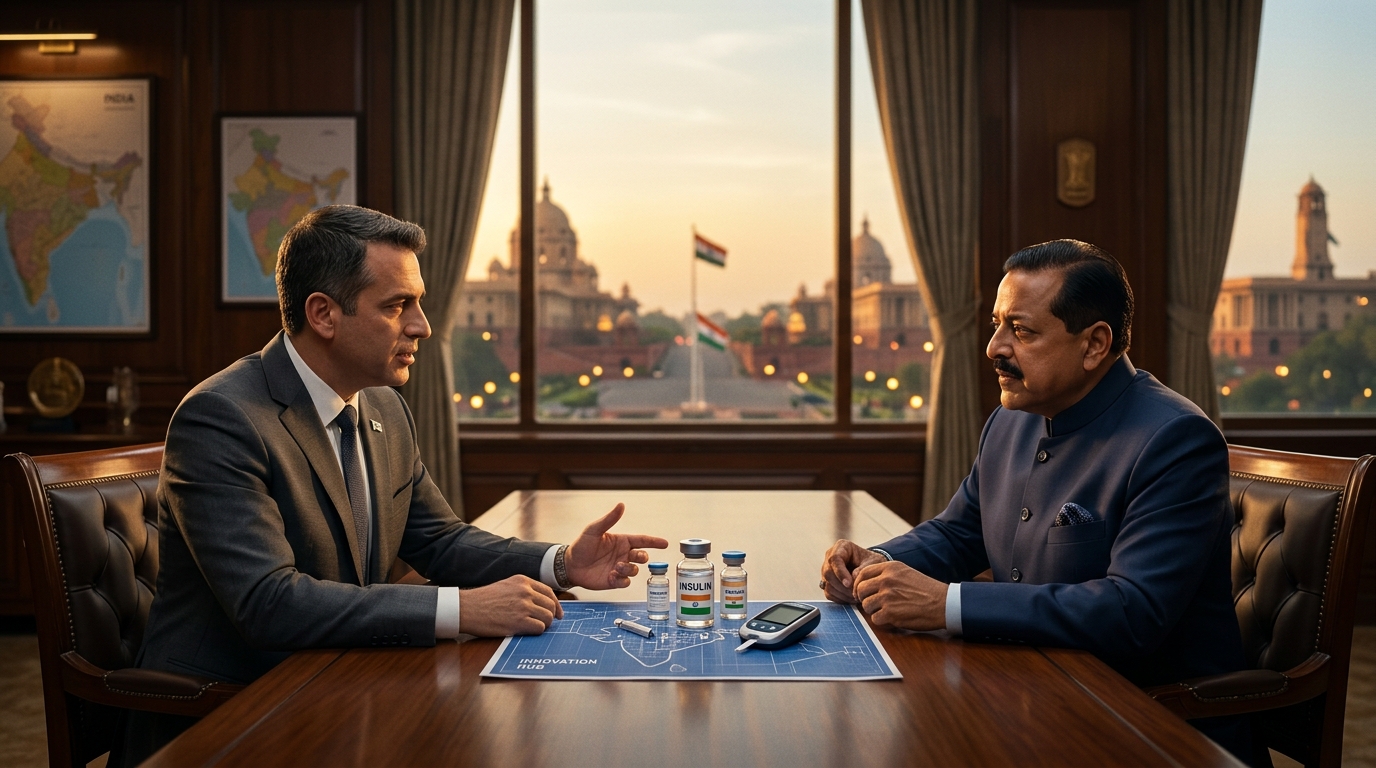
Ministry of Science & TechnologyDr. Jitendra Singh backs scaling up indigenous Insulin production amid global supply concernsIndia’s biotech push targets affordable diabetes devices, industry collaboration: Dr. Jitendra SinghMinister flags biosimilar Insulin gap, highlights scope for domestic manufacturingPosted On:04 APR 2026 4:40PM by PIB Delhi"International Diabetes Federation" (IDF) President-elect, Dr Niti Pall, currently on India visit, called on Union Minister Dr Jitendra Singh, who is also a noted Professor of Medicine & Diabetes, and among other things, discussed indigenous biosimilar Insulin production as well as Diabetes related indigenous biomanufacturing prospects.The meeting underscored the importance of strengthening India’s capabilities in insulin manufacturing, particularly biosimilar insulins and Continuous Glucose Monitoring (CGM) instruments.The discussion brought into focus growing global concerns over the future availability of insulin, with Dr. Paul flagging the risk of supply constraints as major multinational manufacturers increasingly shift their focus towards newer therapies such as GLP-1 drugs. She noted that insulin production globally is currently concentrated among a limited number of companies, making supply chains vulnerable and affordability a continuing challenge, especially for Type 1 diabetes patients who are dependent on lifelong insulin therapy.Against this backdrop, biosimilar insulin—highly similar versions of existing insulin therapies designed to deliver comparable safety and efficacy at lower cost—emerged as a key area of discussion.Dr. Jitendra Singh acknowledged that while India has established strengths in pharmaceuticals and medical devices, domestic insulin manufacturing remains relatively limited, indicating a critical gap alongside a significant opportunity.Dr Jitendra Singh informed that the Department of Biotechnology is already supporting efforts to enhance insulin production capacity, including recent steps to scale up manufacturing by an Indian company. The Minister emphasised that augmenting insulin availability is both a national requirement, given India’s high diabetes burden, and a global responsibility in view of rising demand across developing regions.Dr. Paul highlighted that countries across Asia and Africa are increasingly looking to India for affordable diabetes care solutions, drawing parallels with India’s role in supplying cost-effective vaccines. She pointed out that high insulin prices in many regions continue to limit access, reinforcing the need for alternative manufacturing hubs capable of delivering quality products at lower cost.The interaction also covered the broader ecosystem of diabetes care technologies, including continuous glucose monitoring (CGM) systems and insulin pumps. Dr. Paul noted the rapid expansion of low-cost devices from countries such as China, with significant price advantages over Western products, and cautioned that these manufacturers are already capturing substantial market share.Dr. Jitendra Singh observed that Indian companies possess the technological capability to develop comparable devices, including CGMs, and stressed that scaling up production would require stronger industry participation and targeted support. He indicated that efforts are underway within the domestic ecosystem to develop cost-effective monitoring technologies.Both sides discussed the potential for deeper collaboration involving Indian researchers, industry stakeholders and international partners in areas such as clinical trials, technology development and financing models.Dr. Jitendra Singh suggested convening a stakeholder meeting during Dr. Paul’s proposed next visit to India in July to bring together relevant actors and explore pathways for scaling up manufacturing and global outreach.The exchange reflects a broader policy emphasis on strengthening India’s bio-manufacturing base while addressing the growing burden of diabetes. With limited global suppliers, rising demand and persistent affordability challenges, the focus on biosimilar insulin and indigenous medical devices positions India within an evolving global conversation on equitable access to essential therapies.NKR/AK/NMVisitor Counter : 528
Loading page, please wait…