Loading page, please wait…
HomeCurrent AffairsEditorialsGovt SchemesLearning ResourcesUPSC SyllabusPricingAboutBest UPSC AIUPSC AI ToolAI for UPSCUPSC ChatGPT

© 2026 Vaidra. All rights reserved.

PrivacyTerms
Vaidra Logo
Vaidra

Top 4 items + smart groups

UPSC GPT
New
Current Affairs
Daily Solutions
Daily Puzzle
Mains Evaluator

Version 2.0.0 • Built with ❤️ for UPSC aspirants

IISc PhD Scholar’s Film Exposes Unregulated Dolphin‑Watching Industry Threatening Indian Ocean Humpback Dolphins in Goa — UPSC Current Affairs | March 21, 2026
IISc PhD Scholar’s Film Exposes Unregulated Dolphin‑Watching Industry Threatening Indian Ocean Humpback Dolphins in Goa
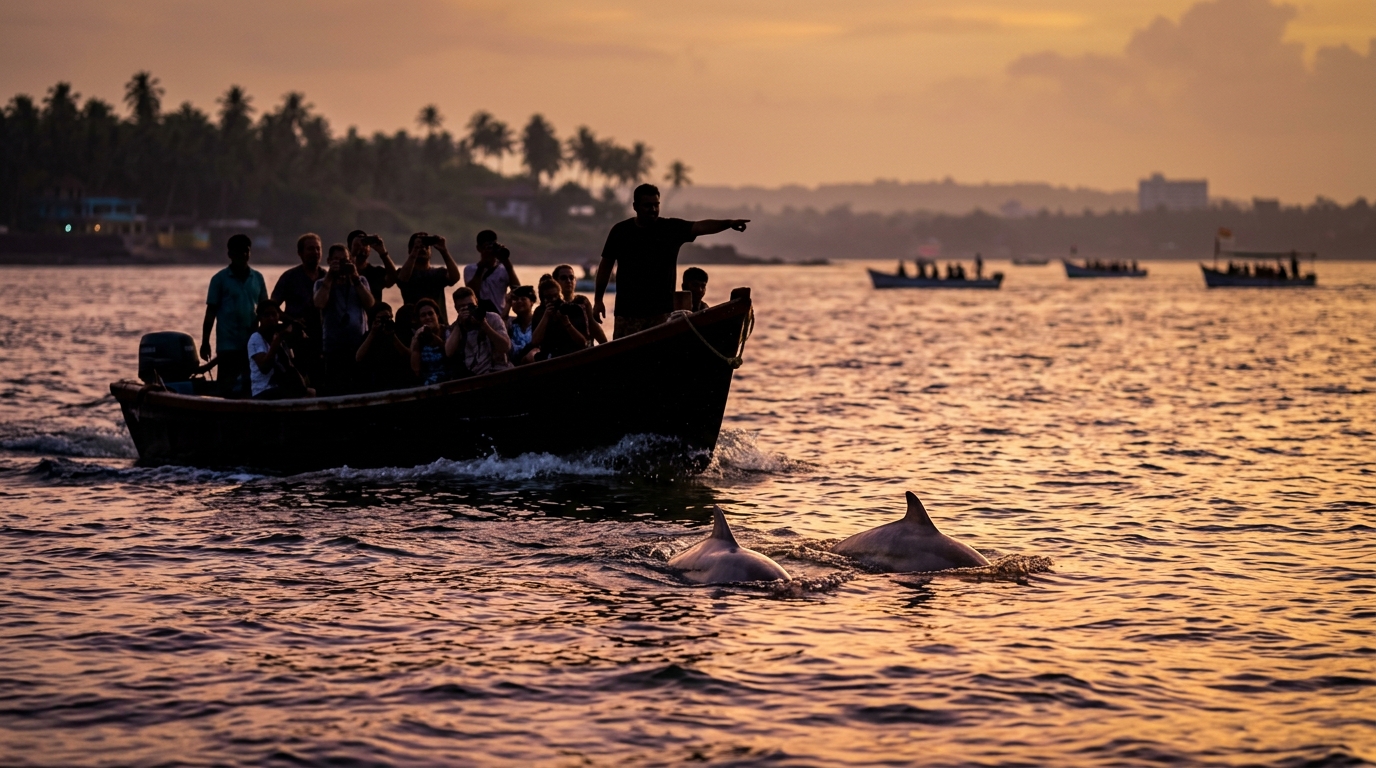
Researcher <strong>Imran Samad</strong>, now a PhD scholar at <strong>IISc</strong>, has released the short film *The Humpbacks of Goa* highlighting the endangered Indian Ocean humpback dolphin and the unregulated <span class="key-term" data-definition="Dolphin‑watching industry — A tourism activity where boats take visitors to observe dolphins in their natural habitat; raises concerns about wildlife disturbance and regulation (GS3: Environment, GS4: Ethics).">dolphin‑watching industry</span> in Goa. The film underscores the lack of national guidelines, the ecological vulnerability of coastal cetaceans, and calls for integrated conservation measures involving government, tourism, and local communities.
Overview Researcher Imran Samad first encountered dolphins in 2020 while pursuing his master’s at the NCBS . After completing his master’s on Ganges river dolphins, he joined the IISc for a PhD and co‑produced the short film *The Humpbacks of Goa* with Akhilesh Tambe . Funded by the Rufford Foundation and the Prime Minister’s Research Fellowship , the film spotlights the endangered Indian Ocean humpback dolphin and the burgeoning dolphin‑watching industry in Goa. Key Developments Release of *The Humpbacks of Goa*, a documentary focusing on the Cetaceans conservation challenges in a major tourist hub. Reveals that the dolphin‑watching industry in Goa has operated for over 20 years with minimal regulation. Highlights the absence of national‑level guidelines for marine wildlife tourism, unlike regulated wildlife sectors such as tiger tourism. Calls for a multi‑stakeholder framework involving the government, tourism ministry, fisheries, local communities, and tourists. Important Facts about Indian Ocean Humpback Dolphin The Indian Ocean humpback dolphin ( Sousa plumbea ) is one of two humpback dolphin species found in India, the other being the Indo‑Pacific humpback dolphin on the east coast. These Mysticetes and Odontocetes are obligatory coastal species, typically staying within 2‑4 km of the shoreline. Their narrow coastal distribution makes them highly vulnerable to fishing nets, boat traffic, and pollution. Despite these pressures, they persist in nutrient‑rich waters created by river outflows along the Goan coast. UPSC Relevance Understanding the plight of humpback dolphins touches upon several UPSC syllabus areas: environmental governance (GS3), the need for wildlife protection legislation and its implementation (GS3), and the ethical dimensions of ecotourism (GS4). The case illustrates gaps in the Wildlife Protection Act, 1972 concerning marine mammals and underscores the importance of integrating coastal zone management with tourism policy. Way Forward Imran envisions a collaborative platform where the government , tourism ministry , local fishing communities , and tour operators align on conservation goals. Immediate steps include: (i) drafting national guidelines for dolphin‑watching, (ii) training boat operators in non‑intrusive observation techniques, (iii) raising awareness among tourists through educational material, and (iv) conducting systematic scientific surveys to fill data gaps on distribution, population size, and life‑history traits of Indian cetaceans.
  1. Home
  2. Prepare
  3. Current Affairs
  4. IISc PhD Scholar’s Film Exposes Unregulated Dolphin‑Watching Industry Threatening Indian Ocean Humpback Dolphins in Goa
Must Review
Login to bookmark articles
Login to mark articles as complete

Overview

Unregulated dolphin‑watching threatens coastal cetaceans, demanding national marine‑tourism policy

Key Facts

  1. IISc PhD scholar Imran Samad co‑produced the documentary *The Humpbacks of Goa* (2026).
  2. The film was funded by the Rufford Foundation and the Prime Minister’s Research Fellowship.
  3. Goa’s dolphin‑watching industry has operated for over 20 years with little or no regulation.
  4. Indian Ocean humpback dolphin (Sousa plumbea) stays within 2‑4 km of the shoreline, making it vulnerable to fishing nets, boat traffic and pollution.
  5. The Wildlife Protection Act, 1972 does not specifically list marine mammals, leaving a regulatory vacuum.
  6. No national‑level guidelines exist for marine wildlife tourism, unlike tiger‑tourism regulations.
  7. Key recommendations: draft national dolphin‑watching guidelines, train boat operators, educate tourists, and conduct systematic scientific surveys.

Background & Context

The issue sits at the intersection of marine biodiversity conservation (GS3), gaps in wildlife legislation, and the ethics of ecotourism (GS4). It highlights the need to integrate coastal zone management with tourism policy and to extend the Wildlife Protection Act to marine mammals.

UPSC Syllabus Connections

Prelims_GS•Physical Geography of IndiaEssay•Environment and SustainabilityPrelims_GS•Ecology and BiodiversityGS3•Conservation, environmental pollution and degradation

Mains Answer Angle

GS III – Environment and Biodiversity: Discuss the regulatory lacuna in marine ecotourism and propose a multi‑stakeholder framework to safeguard Indian Ocean humpback dolphins.

Full Article

Read Original on hindu

Analysis

Practice Questions

GS1
Easy
Prelims MCQ

Wildlife Protection Act, 1972

1 marks
3 keywords
GS3
Medium
Mains Short Answer

Marine ecotourism regulation

10 marks
4 keywords
GS3
Hard
Mains Essay

Ecotourism, marine biodiversity, governance

250 marks
5 keywords
Related:Daily•Weekly

Loading related articles...

Loading related articles...

Tip: Click articles above to read more from the same date, or use the back button to see all articles.

Explore:Current Affairs·Editorial Analysis·Govt Schemes·Study Materials·Previous Year Questions·UPSC GPT