Loading page, please wait…
HomeCurrent AffairsEditorialsGovt SchemesLearning ResourcesUPSC SyllabusPricingAboutBest UPSC AIUPSC AI ToolAI for UPSCUPSC ChatGPT

© 2026 Vaidra. All rights reserved.

PrivacyTerms
Vaidra Logo
Vaidra

Top 4 items + smart groups

UPSC GPT
New
Current Affairs
Daily Solutions
Daily Puzzle
Mains Evaluator

Version 2.0.0 • Built with ❤️ for UPSC aspirants

India Launches Nationwide Single‑Dose HPV Vaccination for 14‑Year‑Old Girls – Public Health Implications — UPSC Current Affairs | February 27, 2026
India Launches Nationwide Single‑Dose HPV Vaccination for 14‑Year‑Old Girls – Public Health Implications
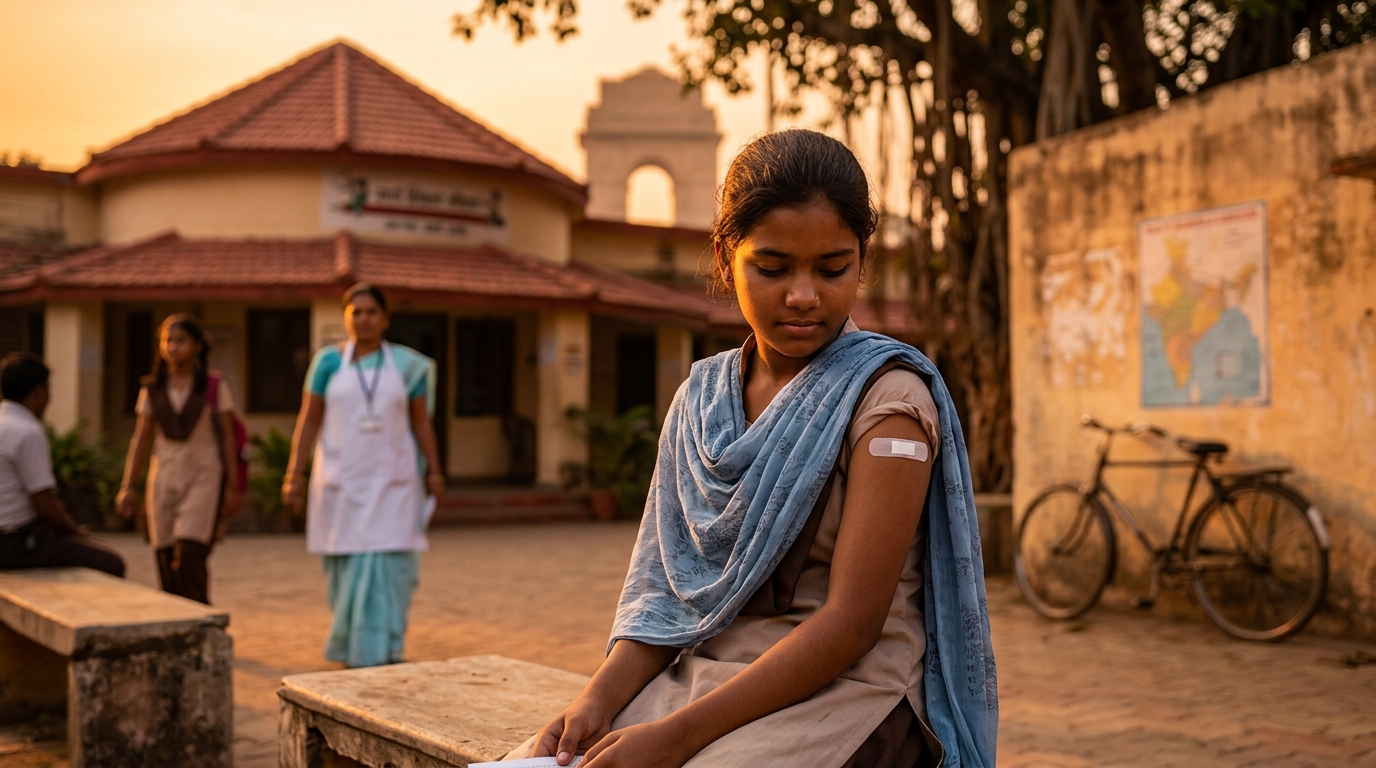
The Indian government is launching a nationwide single‑dose HPV vaccination programme for 14‑year‑old girls, aiming to curb the country's high cervical cancer burden. Successful implementation will require robust cold‑chain logistics, vigilant AEFI monitoring, and transparent communication to overcome past vaccine‑related concerns, making it a key topic for UPSC health and policy studies.
Overview The Union Health Ministry has announced a nationwide rollout of a HPV vaccination programme targeting girls aged 14. The scheme will use a single‑dose schedule recommended by the WHO . Administration will be confined to government health facilities under the supervision of trained medical officers and equipped teams for post‑vaccination monitoring. Key Developments Vaccination will be delivered at designated public health centres with trained medical officers and support staff. Only a AEFI surveillance system will be operational to record and manage any side‑effects. The programme adopts a single‑dose approach, aligning with global best practice. Implementation will require a robust cold chain to maintain vaccine efficacy. Important Facts India bears a disproportionate share of the global cervical cancer burden. The SEARO records the second‑highest incidence and death rates among WHO regions, and India accounts for over 65% of this load. In 2022, the country reported 127,526 new cases and 79,906 deaths from cervical cancer, making it the second most common cancer among Indian women. Screening coverage remains abysmally low at 1.9% for women aged 30‑49. Scientific evidence links more than 80% of cervical cancers in India to persistent infection with high‑risk HPV types 16 and 18. International experience shows that single‑dose HPV vaccination can markedly reduce infection rates, precancerous lesions, and ultimately cervical cancer incidence. The programme’s credibility must address past concerns. A 2009‑10 HPV vaccine trial in Andhra Pradesh and Gujarat resulted in the deaths of seven participants. An ICMR investigation could not conclusively link the deaths to the vaccine, but highlighted the need for rigorous AEFI investigation. UPSC Relevance Understanding this initiative touches upon multiple GS papers: GS2 (Health) – disease burden, vaccination strategy, and regulatory oversight; GS3 (Economy & Development) – public‑health financing, infrastructure like cold chain, and impact on human capital; GS1 (International Relations) – alignment with WHO recommendations and global health security; and GS4 (Ethics) – issues of informed consent, transparency, and handling past controversies. Way Forward Strengthen the cold chain network, especially in remote areas. Ensure real‑time, transparent reporting of AEFI and swift investigation by ICMR . Integrate HPV vaccination with existing adolescent health programmes to improve coverage. Scale up cervical cancer screening (e.g., VIA, HPV DNA testing) to complement vaccination and achieve early detection. Launch public‑awareness campaigns to counter vaccine hesitancy, emphasizing scientific evidence and safety.
  1. Home
  2. Prepare
  3. Current Affairs
  4. India Launches Nationwide Single‑Dose HPV Vaccination for 14‑Year‑Old Girls – Public Health Implications
Must Review
Login to bookmark articles
Login to mark articles as complete

Overview

Single‑dose HPV vaccine for 14‑year‑old girls tackles India’s cervical cancer crisis

Key Facts

  1. Union Health Ministry announced nationwide rollout for all 14‑year‑old girls in 2024.
  2. Programme follows WHO‑recommended single‑dose schedule of non‑avalent HPV vaccine covering types 16/18.
  3. India recorded 127,526 new cervical cancer cases and 79,906 deaths in 2022, accounting for 65% of SEARO burden.
  4. Screening coverage for women aged 30‑49 remains only 1.9% across the country.
  5. Cold‑chain infrastructure to be upgraded; >90% of public health centres equipped with 2‑4 °C storage capacity.
  6. AEFI surveillance will be overseen by ICMR and the National AEFI Committee after past 2009‑10 trial concerns.
  7. WHO estimates the single‑dose programme could avert ~250,000 cervical cancer cases and 150,000 deaths over 30 years.

Background & Context

Cervical cancer is a major public‑health challenge in India, contributing to the highest female cancer mortality after breast cancer. Integrating WHO‑endorsed single‑dose HPV vaccination aligns with global health security goals and addresses the low screening coverage that hampers early detection.

UPSC Syllabus Connections

Prelims_GS•Biology and HealthPrelims_CSAT•Decision Making

Mains Answer Angle

In GS‑2 (Health) candidates can discuss the vaccination programme as a policy response to disease burden, focusing on implementation challenges, financing, and ethical considerations of adolescent immunisation.

Full Article

Read Original on hindu

Analysis

Practice Questions

Prelims
Easy
Prelims MCQ

WHO recommendation on single‑dose HPV vaccine

2 marks
4 keywords
GS2
Medium
Mains Short Answer

Cervical cancer burden & HPV vaccination strategy

10 marks
5 keywords
GS2
Hard
Mains Essay

Implementation challenges of HPV vaccination

250 marks
6 keywords
Related:Daily•Weekly

Loading related articles...

Loading related articles...

Tip: Click articles above to read more from the same date, or use the back button to see all articles.

Explore:Current Affairs·Editorial Analysis·Govt Schemes·Study Materials·Previous Year Questions·UPSC GPT