Overview
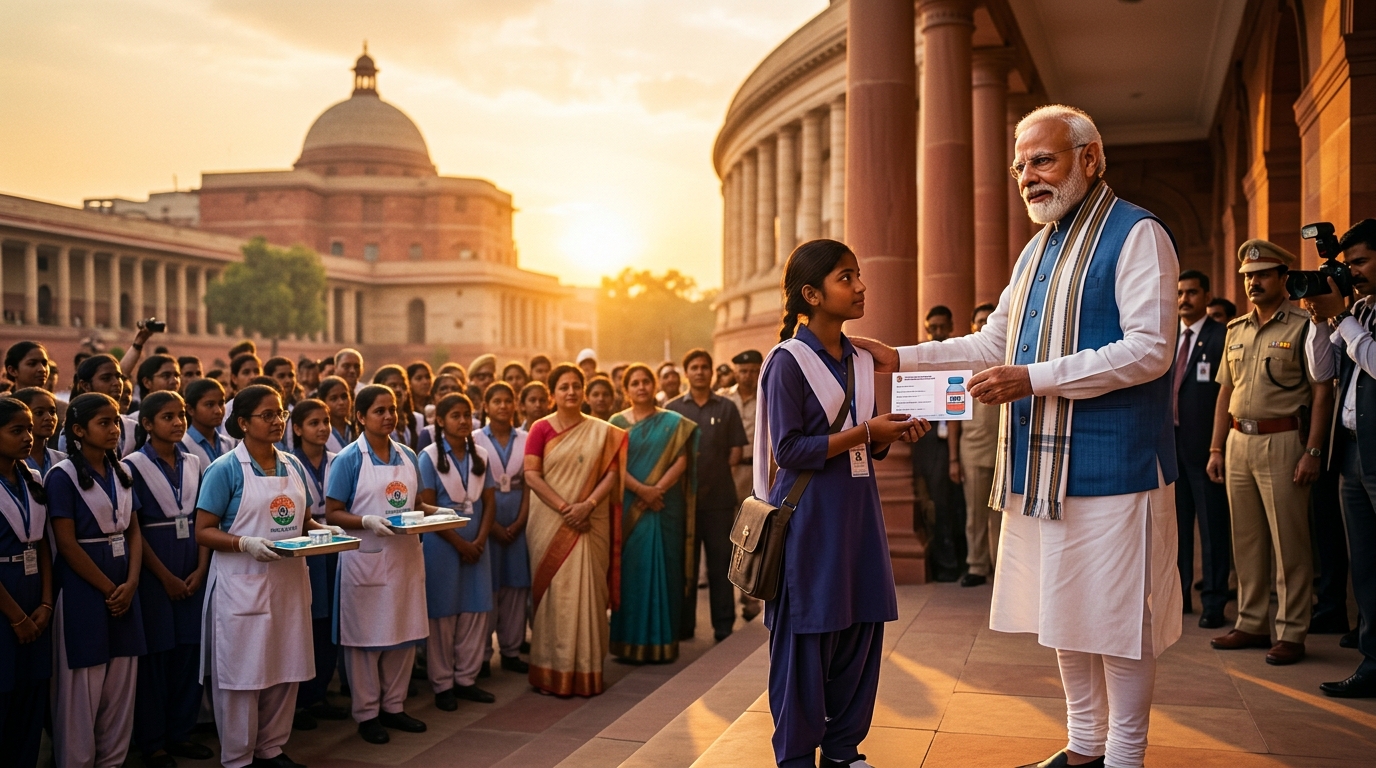
The Prime Minister Shri Narendra Modi will inaugurate a nation‑wide HPV vaccination programme for 14‑year‑old girls on 11:30 AM, 28 February 2026 from Ajmer, Rajasthan. The move aligns with the government’s Swastha Nari agenda and seeks to curb the burden of cervical cancer in India.
Key Developments
- Targeting 1.15 crore girls aged 14 years each year across all States and Union Territories.
- Vaccines will be provided free of cost at Ayushman Arogya Mandirs, CHCs, district hospitals and medical colleges.
- Each session supervised by trained Medical Officers with 24×7 cold‑chain support and AEFI management.
- Vaccination is voluntary with prior informed consent from parents/guardians.
- Three‑month “mission mode” campaign followed by routine immunisation days.
Important Facts
According to GLOBOCAN 2022, India records over 1.2 lakh new cervical cancer cases and nearly 80,000 deaths annually. Over 80 % of these cases are linked to HPV types 16 and 18. The programme will use Gardasil, a WHO‑approved vaccine.
In June 2022, the WHO’s SAGE recommended a single‑dose schedule for girls aged 9‑20 years. India’s NTAGI has adopted this guidance.
India joins more than 160 countries that have incorporated HPV vaccination into their immunisation calendars, with over 90 employing the single‑dose approach. Procurement is secured through a transparent mechanism in partnership with GAVI, ensuring quality and uninterrupted supply.
Exam Relevance
The initiative touches upon multiple UPSC syllabus areas: health‑policy implementation (GS1), inter‑governmental coordination and public‑policy design (GS2), financing and procurement through international agencies (GS3), and ethical considerations of preventive health and informed consent (GS4). It exemplifies delivery‑oriented governance where scientific evidence, policy commitment and operational readiness converge.
Way Forward
- Strengthen cold‑chain infrastructure and real‑time monitoring to avoid vaccine wastage.
- Scale up awareness campaigns to improve parental consent and address vaccine hesitancy.
- Integrate HPV screening (Pap smear) with vaccination for a comprehensive cervical‑cancer control strategy.
- Periodically assess impact through epidemiological surveys and adjust coverage targets.
- Encourage research on long‑term efficacy of the single‑dose regimen in the Indian context.
Successful execution will not only reduce cervical‑cancer incidence but also set a precedent for large‑scale preventive health programmes in India.