Overview
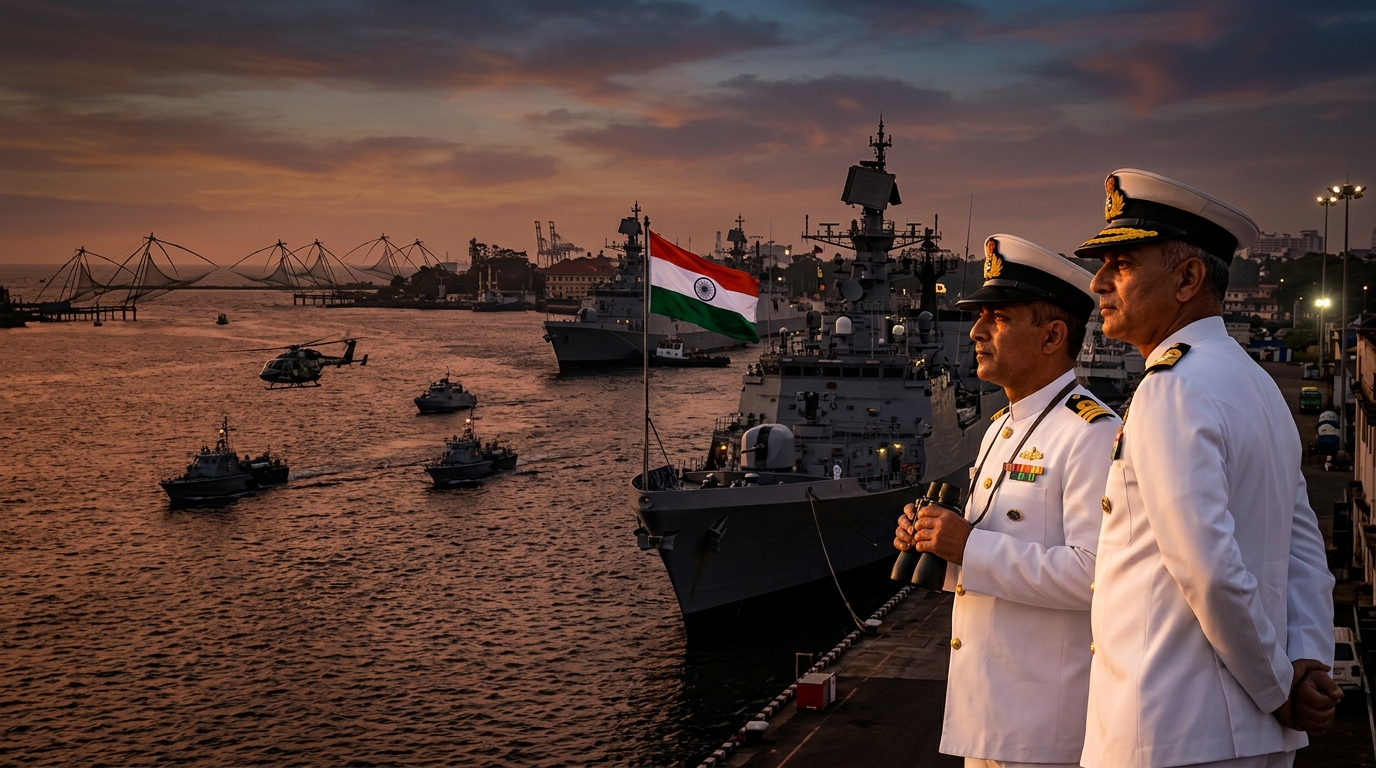
The Indian Navy has successfully concluded the harbour‑training phase of its IOS SAGAR programme at the Southern Naval Command, Kochi. The two‑week course brought together crews from several partner nations to enhance seamanship, navigation, communication and specialised warfare skills.
Key Developments
- Multinational crews underwent hands‑on training in VBSS, advanced bridgemanship and damage‑control techniques.
- State‑of‑the‑art simulators provided realistic, scenario‑based learning, improving readiness for complex maritime contingencies.
- Training was overseen by the Flag Officer Sea Training (FOST), familiarising participants with Indian Navy procedures.
- The Naval Workup Team delivered focused sea‑training modules, strengthening coordination and interoperability among the partner navies.
Important Facts
- Duration: over two weeks of intensive classroom and on‑board sessions.
- Location: Southern Naval Command, Kochi, a premier training hub of the Indian Navy.
- Scope: Covers basic seamanship to specialised modules such as VBSS and advanced bridgemanship.
- Strategic focus: Addresses shared challenges in the IOR such as piracy, illegal fishing, trafficking and disaster response.
Exam Relevance
The exercise illustrates India’s maritime diplomacy under the MAHASAGAR outlook and the “One Ocean, One Mission” vision. It showcases how the navy functions as a capacity‑building partner, a theme relevant to GS 2 (Polity) and GS 3 (Security & International Relations). Understanding such initiatives helps answer questions on India’s strategic engagement in the Indo‑Pacific, maritime security architecture, and regional cooperation mechanisms.
Way Forward
Having completed the harbour phase, IOS SAGAR will progress to operational deployment, involving joint sea‑patrols, port visits and coordinated disaster‑relief drills across the IOR. Continued use of advanced simulators and joint training modules is expected to deepen interoperability, deter non‑state threats and reinforce India’s role as a net security provider in the Indo‑Pacific.