Loading page, please wait…
HomeCurrent AffairsEditorialsGovt SchemesLearning ResourcesUPSC SyllabusPricingAboutBest UPSC AIUPSC AI ToolAI for UPSCUPSC ChatGPT

© 2026 Vaidra. All rights reserved.

PrivacyTerms
Vaidra Logo
Vaidra

Top 4 items + smart groups

UPSC GPT
New
Current Affairs
Daily Solutions
Daily Puzzle
Mains Evaluator

Version 2.0.0 • Built with ❤️ for UPSC aspirants

Indigenous Stealth Frigate ‘Dunagiri’ Delivered to Indian Navy – Boost to Aatmanirbhar Warship Programme (Project 17A) — UPSC Current Affairs | March 31, 2026
Indigenous Stealth Frigate ‘Dunagiri’ Delivered to Indian Navy – Boost to Aatmanirbhar Warship Programme (Project 17A)
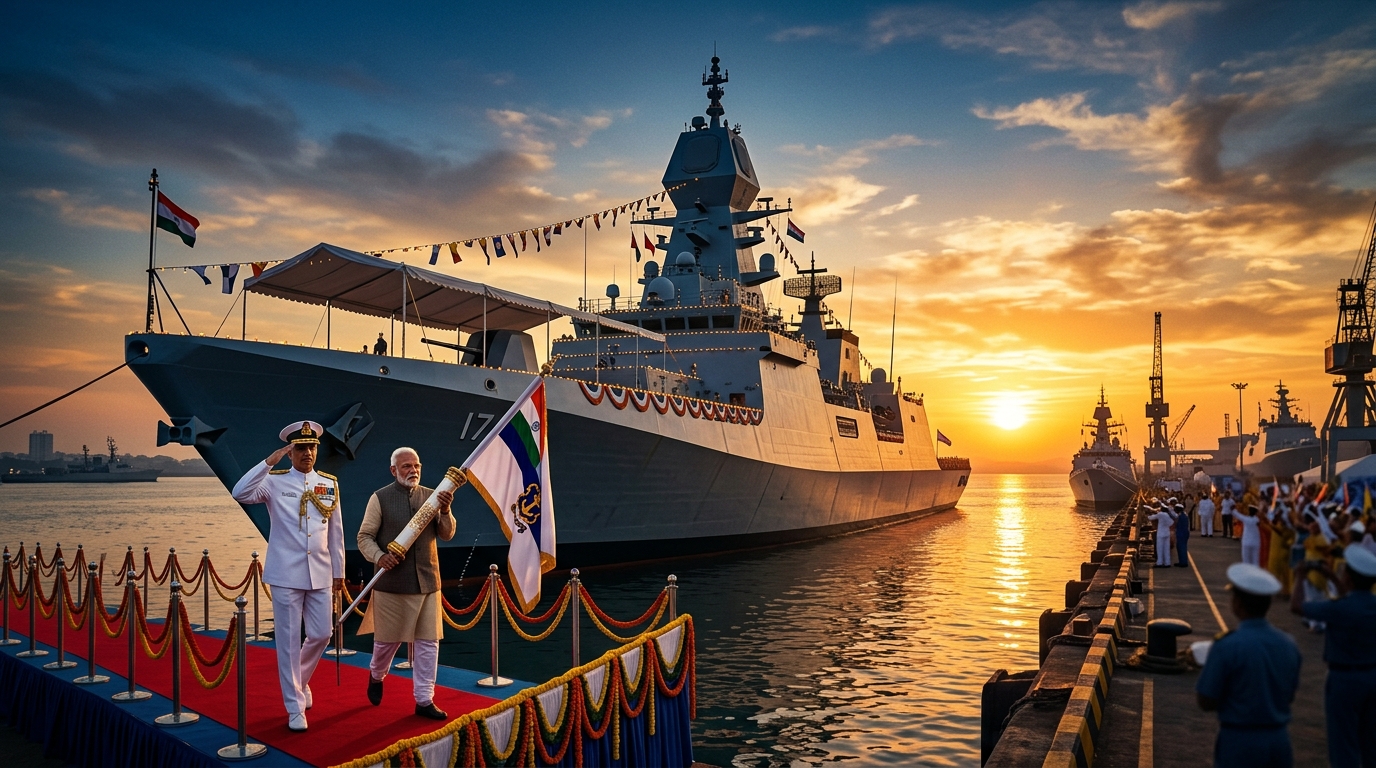
On 30 March 2026, the Ministry of Defence handed over the indigenous stealth frigate INS Dunagiri (Project 17A) to the Indian Navy at GRSE, Kolkata, marking the fifth delivery under the programme and a 75 % indigenisation milestone. The ship’s advanced CODOG propulsion, IPMS, and BrahMos‑based weapons suite illustrate India’s push for Aatmanirbhar defence manufacturing and have significant implications for UPSC topics on strategic autonomy, indigenous technology, and defence industry policy.
Overview The Ministry of Defence handed over the fifth Project 17A frigate, INS Dunagiri (Yard 3023) , to the Indian Navy on 30 March 2026 at the GRSE yard in Kolkata. The delivery marks a significant step toward Aatmanirbhar warship building. Key Developments Fifth ship of the Nilgiri‑class (Project 17A) and second built at GRSE. Construction time reduced to 80 months , down from 93 months for the lead ship, thanks to lessons from earlier vessels. Indigenisation content stands at 75 % , involving over 200 MSMEs and creating ~ 4,000 direct and >10,000 indirect jobs. Advanced weapon and sensor suite includes BrahMos SSM , MFSTAR , MRSAM , 76 mm gun, and close‑in weapon systems. Propulsion via CODOG plant coupled with a IPMS . Important Facts The new INS Dunagiri revives the name of the former Leander‑class frigate that served from 1977 to 2010, symbolising continuity and technological progress. Compared to the earlier Shivalik (Project 17) class, the P‑17A ships feature superior stealth shaping, reduced radar cross‑section, and upgraded combat systems, making them true multi‑mission platforms for anti‑surface, anti‑air, and anti‑submarine warfare. UPSC Relevance Understanding the Project 17A programme helps aspirants answer questions on: India’s Aatmanirbhar defence policy and indigenisation targets. Role of public sector undertakings like GRSE in strategic manufacturing. Technological trends such as CODOG propulsion and IPMS in modern warships. Impact of defence indigenisation on employment, MSME growth, and export potential. Way Forward To sustain the momentum, the Navy and the Ministry of Defence should: Accelerate the remaining Project 17A deliveries and initiate the next‑generation Project 17B with higher indigenisation. Strengthen the supply chain of MSMEs through technology transfer and financial support. Integrate indigenous sensors and missiles like MFSTAR and MRSAM into future platforms. Enhance training for crew on advanced combat systems and IPMS to maximise operational readiness. Overall, the delivery of INS Dunagiri underscores India’s growing capability to design, build, and operate sophisticated warships without external dependence, a cornerstone of the nation’s strategic autonomy.
  1. Home
  2. Prepare
  3. Current Affairs
  4. Indigenous Stealth Frigate ‘Dunagiri’ Delivered to Indian Navy – Boost to Aatmanirbhar Warship Programme (Project 17A)
Must Review
Login to bookmark articles
Login to mark articles as complete

Overview

Indigenous stealth frigate INS Dunagiri bolsters Aatmanirbhar naval capability

Key Facts

  1. INS Dunagiri (Yard 3023) – fifth Project 17A frigate – handed over to the Indian Navy on 30 March 2026 at GRSE, Kolkata.
  2. Construction time reduced to 80 months, down from 93 months for the lead ship, reflecting improved project management.
  3. Indigenisation content stands at 75%, involving over 200 MSMEs and generating ~4,000 direct and >10,000 indirect jobs.
  4. Weapon & sensor suite includes BrahMos SSM, MFSTAR radar, MRSAM, 76 mm gun and close‑in weapon systems.
  5. Propulsion uses a Combined Diesel or Gas (CODOG) plant integrated with an Integrated Platform Management System (IPMS).
  6. Second Project 17A frigate built at GRSE; the programme aims to deliver a total of six Nilgiri‑class stealth frigates.
  7. Project 17A ships feature superior stealth shaping and reduced radar cross‑section compared with the earlier Shivalik (Project 17) class.

Background & Context

The delivery underscores India's Aatmanirbhar defence drive, showcasing how public‑sector shipyards and MSME ecosystems are being leveraged to achieve strategic autonomy. It aligns with the GS‑3 focus on defence modernisation, indigenous manufacturing and the economic impact of defence indigenisation.

Mains Answer Angle

GS‑3 – Discuss how indigenous warship programmes such as Project 17A contribute to strategic autonomy and employment generation, and evaluate the challenges in scaling indigenisation across the defence sector.

Full Article

Read Original on pib

Analysis

Practice Questions

GS3
Easy
Prelims MCQ

Indigenous warship construction

1 marks
3 keywords
GS3
Medium
Mains Short Answer

Defence manufacturing and employment

5 marks
4 keywords
GS3
Hard
Mains Essay

Strategic autonomy and defence indigenisation

20 marks
8 keywords
Related:Daily•Weekly

Loading related articles...

Loading related articles...

Tip: Click articles above to read more from the same date, or use the back button to see all articles.

Explore:Current Affairs·Editorial Analysis·Govt Schemes·Study Materials·Previous Year Questions·UPSC GPT