<h3>Overview</h3>
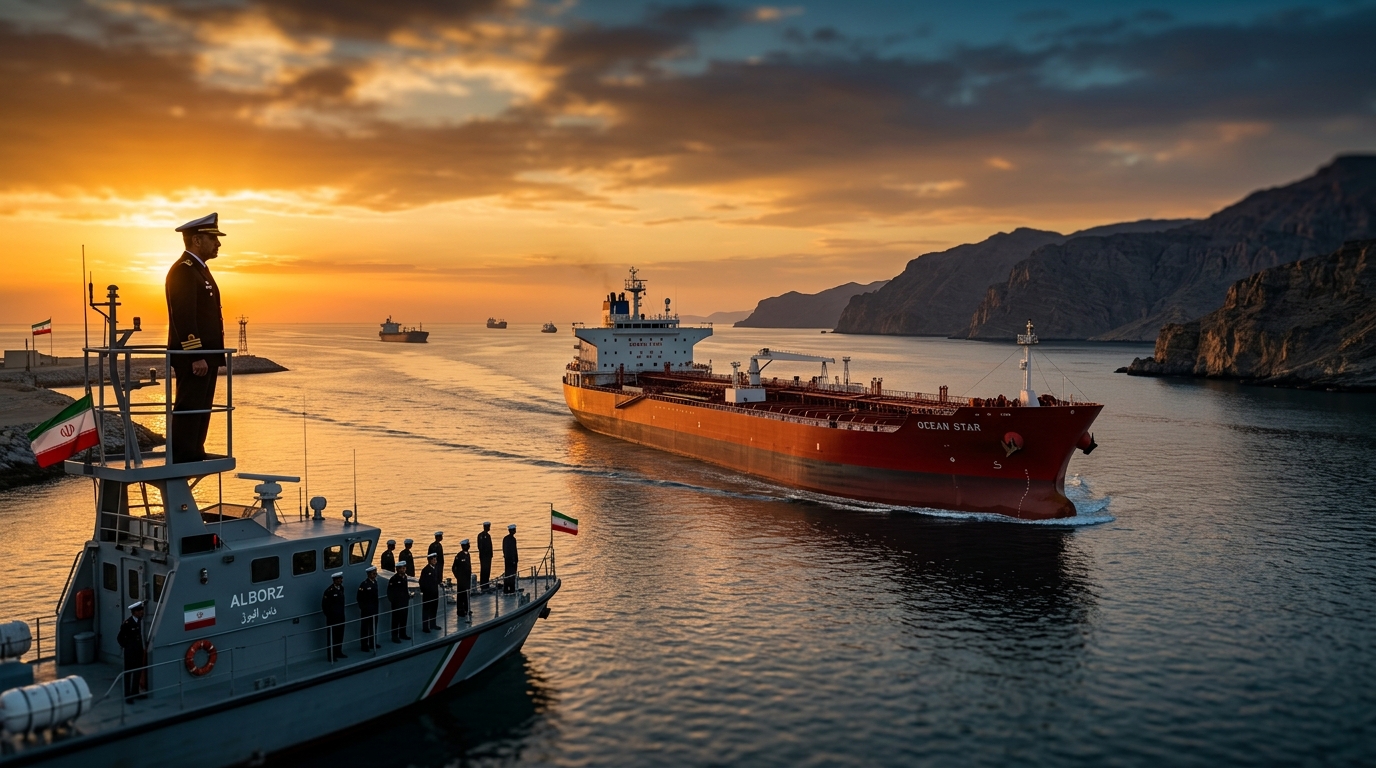
<p>On <strong>April 17, 2026</strong>, Iran’s Foreign Ministry announced that the <span class="key-term" data-definition="A narrow maritime passage between Oman and Iran, through which a significant portion of global oil trade flows; its security is a key concern in international relations and energy security (GS3: Economy; GS2: Polity)">Strait of Hormuz</span> will remain fully open for commercial shipping for the rest of the ongoing <span class="key-term" data-definition="A two‑week suspension of hostilities between the United States and Iran announced in 2026, aimed at de‑escalating tensions in the Middle East (GS2: Polity)">U.S.-Iran truce</span>. The declaration aligns with the <span class="key-term" data-definition="A temporary halt to fighting agreed by warring parties, often used to create space for diplomatic negotiations; relevant to conflict resolution studies (GS2: Polity)">ceasefire</span> in Lebanon that was brokered a day earlier between <strong>U.S. President Donald Trump</strong> and <span class="key-term" data-definition="A Shiite political and militant organization based in Lebanon, designated as a terrorist group by several countries; its involvement in regional conflicts impacts South Asian foreign policy considerations (GS2: Polity)">Hezbollah</span>. The route for vessels is the one previously published by the <span class="key-term" data-definition="Iran’s governmental body that oversees port operations and maritime navigation, responsible for issuing notices on shipping routes (GS3: Economy)">Ports and Maritime Organisation of the Islamic Rep. of Iran</span>."</p>
<h3>Key Developments</h3>
<ul>
<li>Iran confirms that all commercial ships can transit the <span class="key-term" data-definition="A narrow maritime passage between Oman and Iran, through which a significant portion of global oil trade flows; its security is a key concern in international relations and energy security (GS3: Economy; GS2: Polity)">Strait of Hormuz</span> without restrictions for the remaining days of the <span class="key-term" data-definition="A two‑week suspension of hostilities between the United States and Iran announced in 2026, aimed at de‑escalating tensions in the Middle East (GS2: Polity)">U.S.-Iran truce</span>.</li>
<li>The announcement follows a <span class="key-term" data-definition="A temporary halt to fighting agreed by warring parties, often used to create space for diplomatic negotiations; relevant to conflict resolution studies (GS2: Polity)">ceasefire</span> between Israel and <span class="key-term" data-definition="A Shiite political and militant organization based in Lebanon, designated as a terrorist group by several countries; its involvement in regional conflicts impacts South Asian foreign policy considerations (GS2: Polity)">Hezbollah</span>, mediated by the United States.</li>
<li>The coordinated shipping route, as earlier issued by the <span class="key-term" data-definition="Iran’s governmental body that oversees port operations and maritime navigation, responsible for issuing notices on shipping routes (GS3: Economy)">Ports and Maritime Organisation of the Islamic Rep. of Iran</span>, remains unchanged.</li>
</ul>
<h3>Important Facts</h3>
<p>• The <span class="key-term" data-definition="A narrow maritime passage between Oman and Iran, through which a significant portion of global oil trade flows; its security is a key concern in international relations and energy security (GS3: Economy; GS2: Polity)">Strait of Hormuz</span> handles roughly 20% of the world’s petroleum shipments, making its openness vital for global energy markets.<br>
• The ceasefire in Lebanon was announced on <strong>April 16, 2026</strong> by President <strong>Donald Trump</strong>, aiming to halt hostilities between Israel and <span class="key-term" data-definition="A Shiite political and militant organization based in Lebanon, designated as a terrorist group by several countries; its involvement in regional conflicts impacts South Asian foreign policy considerations (GS2: Polity)">Hezbollah</span> for ten days.<br>
• Iran’s statement was posted on social media by Foreign Minister <strong>Abbas Araghchi</strong>, emphasizing coordination with maritime authorities.</p>
<h3>UPSC Relevance</h3>
<p>The development touches upon several GS topics: <br>
• <strong>International Relations (GS2)</strong> – the interplay of U.S., Iran, Israel, and Lebanon showcases diplomatic negotiations, conflict de‑escalation, and regional security dynamics.<br>
• <strong>Energy Security (GS3)</strong> – the strategic importance of the <span class="key-term" data-definition="A narrow maritime passage between Oman and Iran, through which a significant portion of global oil trade flows; its security is a key concern in international relations and energy security (GS3: Economy; GS2: Polity)">Strait of Hormuz</span> for oil transport underscores the need to understand maritime chokepoints in global economics.<br>
• <strong>Maritime Law & Policy (GS3)</strong> – the role of the <span class="key-term" data-definition="Iran’s governmental body that oversees port operations and maritime navigation, responsible for issuing notices on shipping routes (GS3: Economy)">Ports and Maritime Organisation of the Islamic Rep. of Iran</span> illustrates state regulation of international shipping lanes.</p>
<h3>Way Forward</h3>
<p>Analysts suggest monitoring the durability of the <span class="key-term" data-definition="A two‑week suspension of hostilities between the United States and Iran announced in 2026, aimed at de‑escalating tensions in the Middle East (GS2: Polity)">U.S.-Iran truce</span> and its impact on commercial traffic through the <span class="key-term" data-definition="A narrow maritime passage between Oman and Iran, through which a significant portion of global oil trade flows; its security is a key concern in international relations and energy security (GS3: Economy; GS2: Polity)">Strait of Hormuz</span>. Continued diplomatic engagement, especially by the United Nations and regional bodies, will be crucial to prevent any escalation that could disrupt global oil supplies and affect India’s energy imports.</p>