Overview
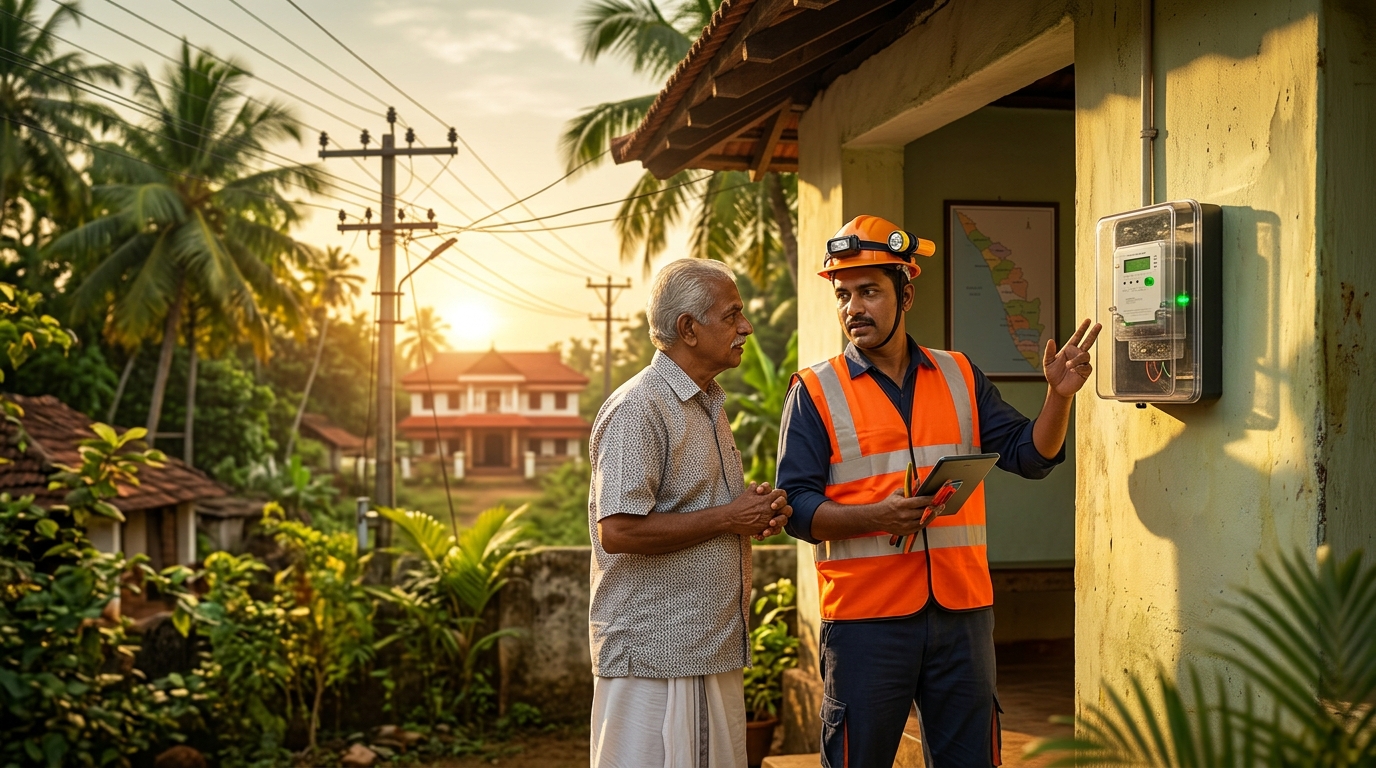
Under the Revamped Distribution Sector Scheme (RDSS), the Kerala State Electricity Board (KSEB) has installed over 1.70 lakh smart meters as of 31 December 2025. The rollout, monitored by the Union Power Ministry, forms a critical component of India’s push for efficient power distribution and financial sustainability of utilities.
Key Developments
- Phase‑I Completion: By 20 January 2026, KSEB reported the installation of 1,71,285 meters, covering transformer, feeder, border and high‑tension consumer meters. The phase is slated to finish by 31 August 2026.
- Future Expansion – Phase‑II: KSEB has initiated tendering for the second phase, targeting close to 50 lakh meters (including 15 lakh new connections and 35 lakh replacements) to be completed by May 2028.
- Funding Model Shift: While the Centre originally proposed a TOTEX model, Kerala adopted a state‑approved CAPEX model in August 2023 after union opposition, reflecting a tailored financial approach.
Important Facts
- Meter Breakdown (as of Dec 2025): 1.67 lakh consumer meters, 111 transformer meters, and 2,904 feeder meters.
- RDSS Allocation for Kerala: Approval for installing 1.33 crore smart meters across multiple phases, underscoring the scale of the programme.
Exam Relevance
This case study touches upon several UPSC syllabus areas: GS Paper III (Energy & Power) – operational efficiency, financial sustainability, and technology adoption in the power sector; GS Paper II (Polity & Governance) – centre‑state coordination, policy implementation challenges, and labour‑union dynamics; and GS Paper IV (Ethics & Integrity) – decision‑making in public finance. Potential questions may explore the impact of smart metering on loss reduction, the merits of TOTEX vs. CAPEX models, or the role of state governments in national schemes.
Way Forward
Successful execution of Phase‑II will require robust monitoring, capacity building for field staff, and addressing consumer awareness. Aligning the CAPEX model with performance‑based incentives could enhance financial viability. Continuous data analytics from smart meters can inform demand‑side management, support renewable integration, and aid in achieving India’s energy security goals.