Overview
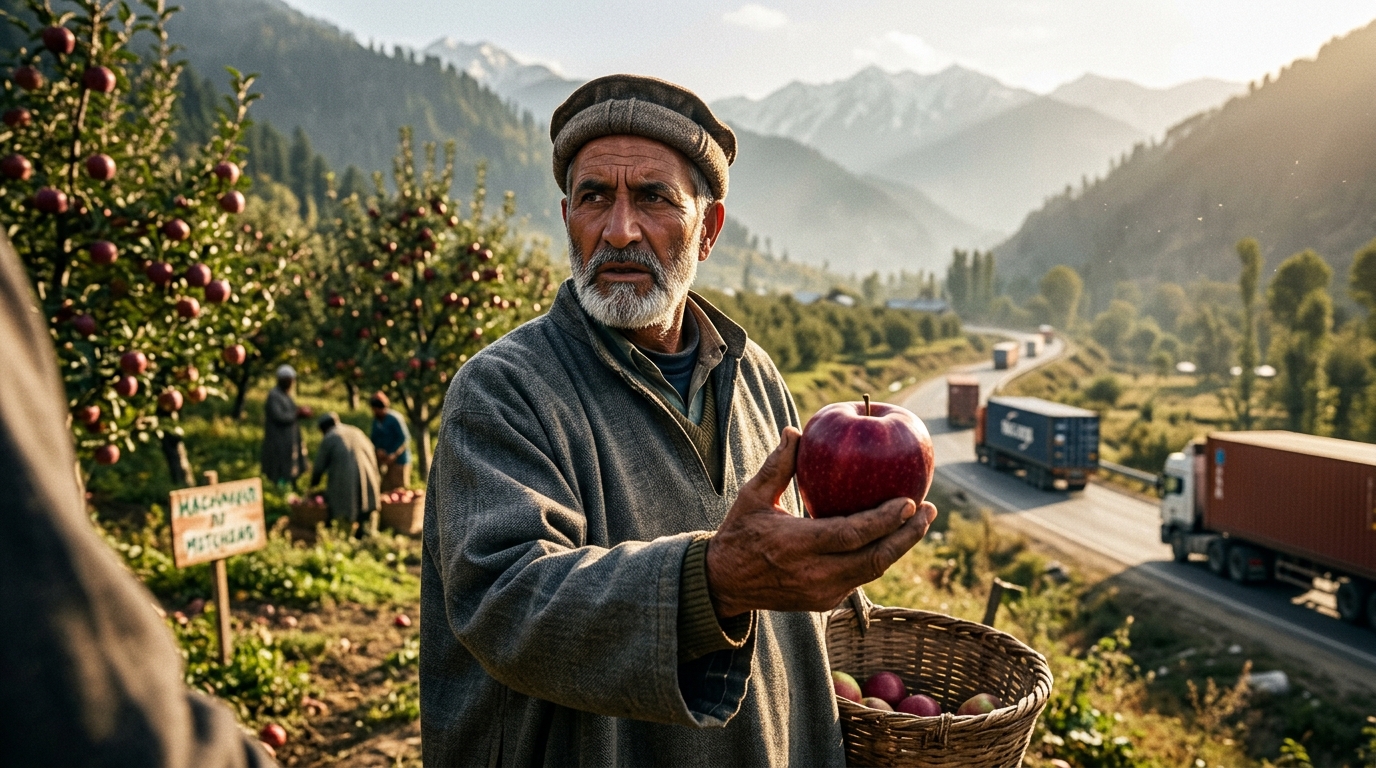
On 20 February 2026, former Jammu and Kashmir Chief Minister and PDP president Mehbooba Mufti appealed to Prime Minister Narendra Modi to omit apples from the pending India‑U.S. trade agreement. She warned that a zero‑duty regime on American apples would deliver a “death blow” to Kashmir’s orchard economy, which sustains over seven lakh families dependent on horticulture for livelihood, education and health.
Key Developments
- Demand for exclusion: Mufti urged the Centre to keep at least a 50% import duty on U.S. apples, enforce Minimum Import Price (MIP) mechanisms, and provide targeted subsidies, easy credit and infrastructure support to Kashmiri growers.
- Existing market distress: The Kashmiri horticulture sector is already suffering from low‑priced Iranian apple imports entering through the South Asian Free Trade Area (SAFTA), which have depressed local prices and weakened demand.
- Risk of a price war: Introduction of heavily subsidised American apples could trigger a price war that Kashmiri producers cannot win due to climate uncertainty, weak supply chains and high transportation costs, contrasted with massive subsidies enjoyed by U.S. farmers.
Important Facts
- Family dependence: Over 7,00,000 families rely on horticulture in Kashmir, making it a backbone of the region’s economy.
- Trade proposal timeline: The India‑U.S. trade deal discussions are at an advanced stage in early 2026, with tariff negotiations on agricultural products, including apples, slated for finalisation before the fiscal year ends.
Exam Relevance
This issue intersects with multiple sections of the UPSC syllabus. In GS Paper II (Polity & Governance), it touches upon federal‑state relations, agricultural policy formulation and the role of Union ministries. GS Paper III (Economics) covers trade policy, tariff structures, Minimum Import Price mechanisms and the impact of subsidies on domestic industries. GS Paper IV (Ethics) offers a perspective on balancing regional interests with national trade objectives. Potential question angles include: the implications of agricultural tariffs on regional economies, the constitutional dimensions of state‑level agricultural grievances, and the ethics of protectionism versus free trade.
Way Forward
Policymakers need to calibrate the India‑U.S. trade agenda to safeguard vulnerable regional sectors while honoring broader liberalisation goals. A differentiated tariff schedule for apples, coupled with a robust MIP and a targeted support package for Kashmiri growers, could avert a price collapse. Strengthening cold‑chain infrastructure and improving market access for domestic produce would enhance competitiveness, ensuring that trade liberalisation does not translate into regional distress.