Loading page, please wait…
HomeCurrent AffairsEditorialsGovt SchemesLearning ResourcesUPSC SyllabusPricingAboutBest UPSC AIUPSC AI ToolAI for UPSCUPSC ChatGPT

© 2026 Vaidra. All rights reserved.

PrivacyTerms
Vaidra Logo
Vaidra

Top 4 items + smart groups

UPSC GPT
New
Current Affairs
Daily Solutions
Daily Puzzle
Mains Evaluator

Version 2.0.0 • Built with ❤️ for UPSC aspirants

Ministry of Mines Recognizes Two more Centres of Excellence under the National Critical Mineral Mission — UPSC Current Affairs | October 25, 2025
Ministry of Mines Recognizes Two more Centres of Excellence under the National Critical Mineral Mission
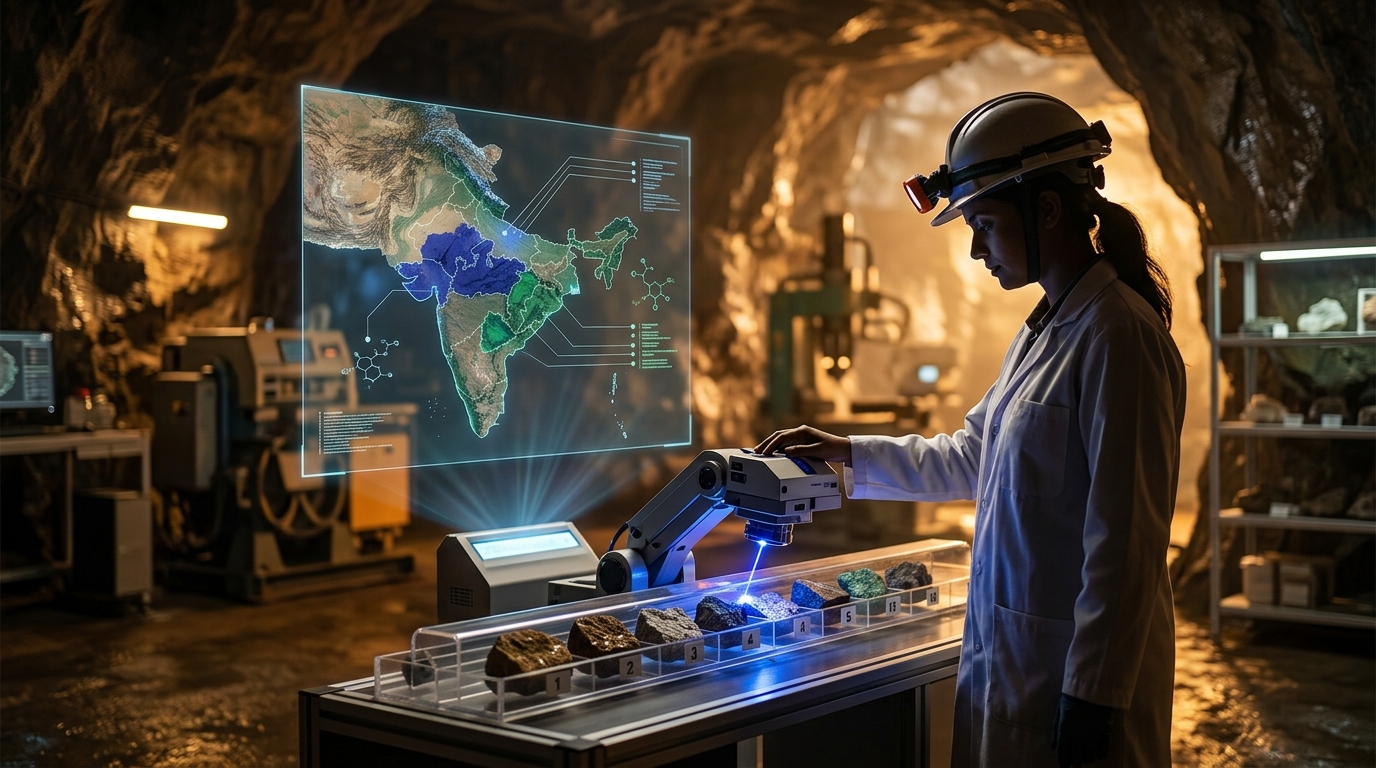
The Ministry of Mines has recognized two additional Centres of Excellence under the National Critical Mineral Mission, aiming to boost R&D in critical mineral value chains. This initiative is crucial for securing resources for strategic sectors and promoting indigenous technology development, aligning with UPSC syllabus topics on science and technology and infrastructure development.
Overview The Ministry of Mines has expanded the National Critical Mineral Mission (NCMM) by recognizing two additional institutes as Centres of Excellence (CoE) . These are the Indian Institute of Science (IISc), Bangalore , and the Centre for Materials for Electronics Technology (C-MET), Hyderabad . This decision, following the approval of the Project Approval and Advisory Committee (PAAC) on October 24, 2025 , aims to bolster research and development in the critical mineral value chain. Key Developments Recognition of New Centres of Excellence New Additions: IISc Bangalore and C-MET Hyderabad join the existing network of 7 recognized institutes. Approval Authority: The PAAC , co-chaired by Shri Piyush Goyal , Secretary, Ministry of Mines, and Prof. Abhay Karandikar , Secretary, Department of Science & Technology, granted the approval. Objectives of the Centres of Excellence R&D Promotion: The CoEs will focus on promoting research and development in the critical mineral value chain. Technology Advancement: Aim to develop, demonstrate, and deploy technologies, reaching Technology Readiness Levels (TRL) of 7/8 , including pilot plant and pre-commercial demonstration. Innovative Research: Undertake innovative and transformational research to strengthen the nation’s science and technology capability in critical minerals. Operational Model Hub & Spoke Model: Each CoE will operate as a consortium, using a Hub & Spoke model to leverage R&D and pool core competencies. Partnerships: Each CoE (Hub Institute) is mandated to include at least two industry partners and two R&D/academic partners in the consortium. Network Size: The 9 recognized CoEs have collectively brought in around 90 industry and academic/R&D spokes. UPSC Relevance This initiative is highly relevant for the UPSC Civil Services Exam , particularly under GS Paper III (Science and Technology, Infrastructure) and GS Paper II (Government Policies and Interventions) . It highlights the government's focus on securing critical resources for strategic sectors and promoting indigenous technology development. Potential Exam Questions Discuss the significance of the National Critical Mineral Mission in securing India's resource needs for strategic sectors. Analyze the role of Centres of Excellence in promoting indigenous R&D in critical minerals and reducing import dependence. Evaluate the Hub & Spoke model adopted by the CoEs and its effectiveness in fostering collaboration between industry and academia. Important Facts Mission: National Critical Mineral Mission (NCMM) New CoEs: IISc Bangalore and C-MET Hyderabad Approval Date: October 24, 2025 Operational Model: Hub & Spoke Industry/Academia Spokes: Approximately 90
  1. Home
  2. Prepare
  3. Current Affairs
  4. Ministry of Mines Recognizes Two more Centres of Excellence under the National Critical Mineral Mission
Login to bookmark articles
Login to mark articles as complete

Overview

Full Article

Read Original

Analysis

Prelims Facts (Factual Knowledge)

  1. The National Critical Mineral Mission aims to promote R&D in the critical mineral value chain.
  2. IISc Bangalore and C-MET Hyderabad are the two newly recognized CoEs.
  3. The PAAC approved the recognition of the CoEs on 24.10.2025.
  4. Critical raw materials are crucial for clean energy, mobility transition, and strategic sectors.
  5. CoEs aim to achieve Technology Readiness Levels (TRL) of 7/8.
  6. Each CoE operates on a Hub & Spoke model.

Mains Angles (Analytical Discussion)

  1. Discuss the significance of the National Critical Mineral Mission in securing India's resource needs for strategic sectors.
  2. Analyze the role of Centres of Excellence in promoting indigenous R&D in critical minerals and reducing import dependence.
  3. Evaluate the Hub & Spoke model adopted by the CoEs and its effectiveness in fostering collaboration between industry and academia.
  4. Assess the importance of achieving higher Technology Readiness Levels (TRL) in the context of critical mineral development.

Essay Themes (Critical Thinking)

India's quest for self-reliance in critical minerals: Opportunities and challenges

The role of R&D in achieving sustainable development goals: A focus on critical minerals

Related:Daily•Weekly

Loading related articles...

Loading related articles...

Tip: Click articles above to read more from the same date, or use the back button to see all articles.

Explore:Current Affairs·Editorial Analysis·Govt Schemes·Study Materials·Previous Year Questions·UPSC GPT