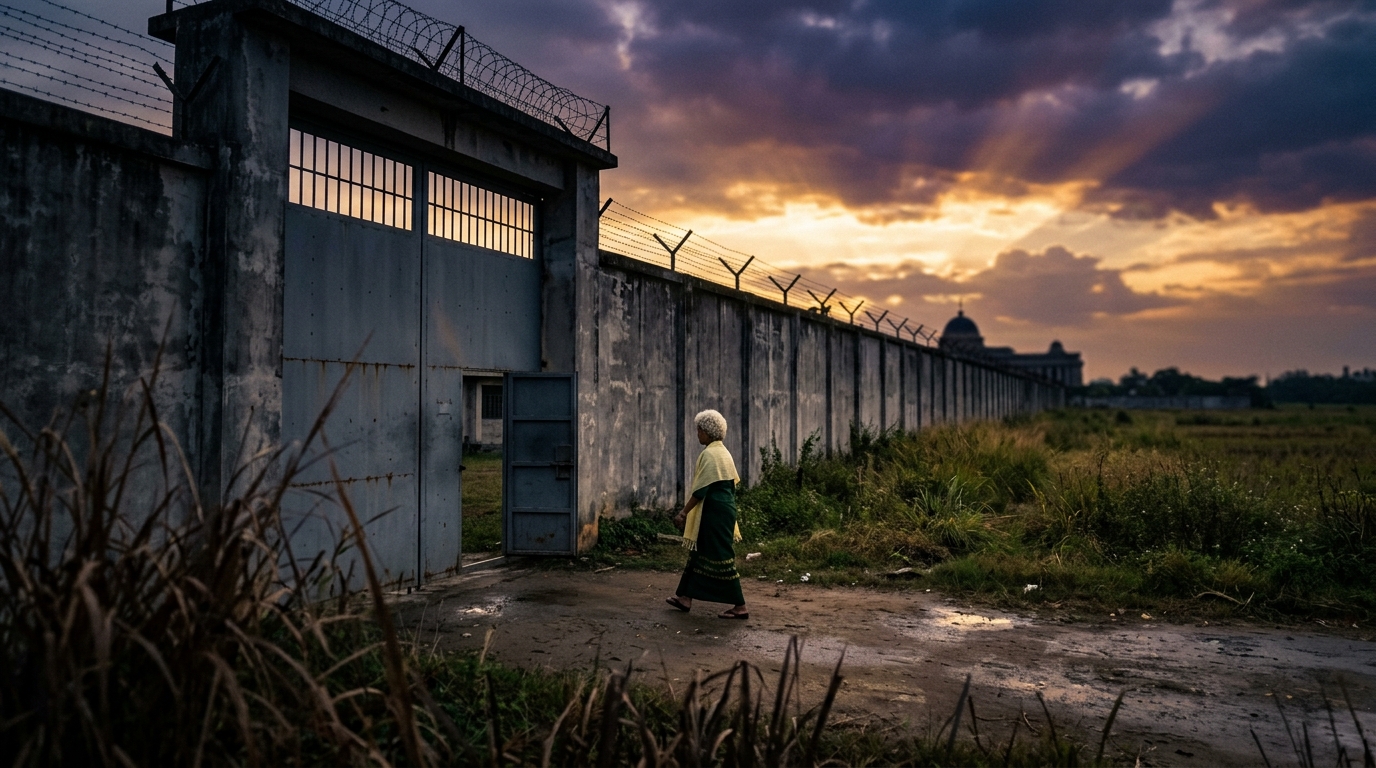
On Friday, 17 April 2026, the military government of Myanmar announced a reduction in the prison term of the detained democratic icon Aung San Suu Kyi. The move is part of a broader mass amnesty declared by the head of the military junta led by Min Aung Hlaing.
Key Developments
- The new‑year amnesty trims the remaining portion of sentences that are under 40 years by one‑sixth.
- The reduction explicitly applies to Aung San Suu Kyi, though the exact new term length was not disclosed.
- The information comes from an anonymous source close to her legal team, reported by AFP.
Important Facts
The amnesty covers all prisoners whose remaining sentences are less than four decades, reflecting a uniform policy rather than a case‑by‑case clemency. By cutting the remaining term by one‑sixth, a sentence of 30 years would be reduced by five years, for example. The move is framed as a humanitarian gesture for the new year, but analysts view it as a strategic attempt by the junta to mitigate international criticism.
Exam Relevance
This development touches upon several UPSC syllabus areas. It illustrates the dynamics of civil‑military relations (GS2: Polity) and the use of legal instruments such as amnesties and sentence reductions to manage political legitimacy. The case also raises questions about human rights and the role of international pressure on authoritarian regimes, linking to topics in GS3: International Relations and GS4: Ethics.
Way Forward
Future monitoring will focus on whether the amnesty leads to any substantive political concessions from the junta, such as the release of other political prisoners or a genuine dialogue with opposition forces. For policymakers, the episode underscores the need for calibrated diplomatic engagement that balances pressure on human‑rights violations with incentives for incremental reforms.