Loading page, please wait…
HomeCurrent AffairsEditorialsGovt SchemesLearning ResourcesUPSC SyllabusPricingAboutBest UPSC AIUPSC AI ToolAI for UPSCUPSC ChatGPT

© 2026 Vaidra. All rights reserved.

PrivacyTerms
Vaidra Logo
Vaidra

Top 4 items + smart groups

UPSC GPT
New
Current Affairs
Daily Solutions
Daily Puzzle
Mains Evaluator

Version 2.0.0 • Built with ❤️ for UPSC aspirants

Philippines accuses China of poisoning disputed waters | GS2 UPSC Current Affairs April 2026
Philippines accuses China of poisoning disputed waters
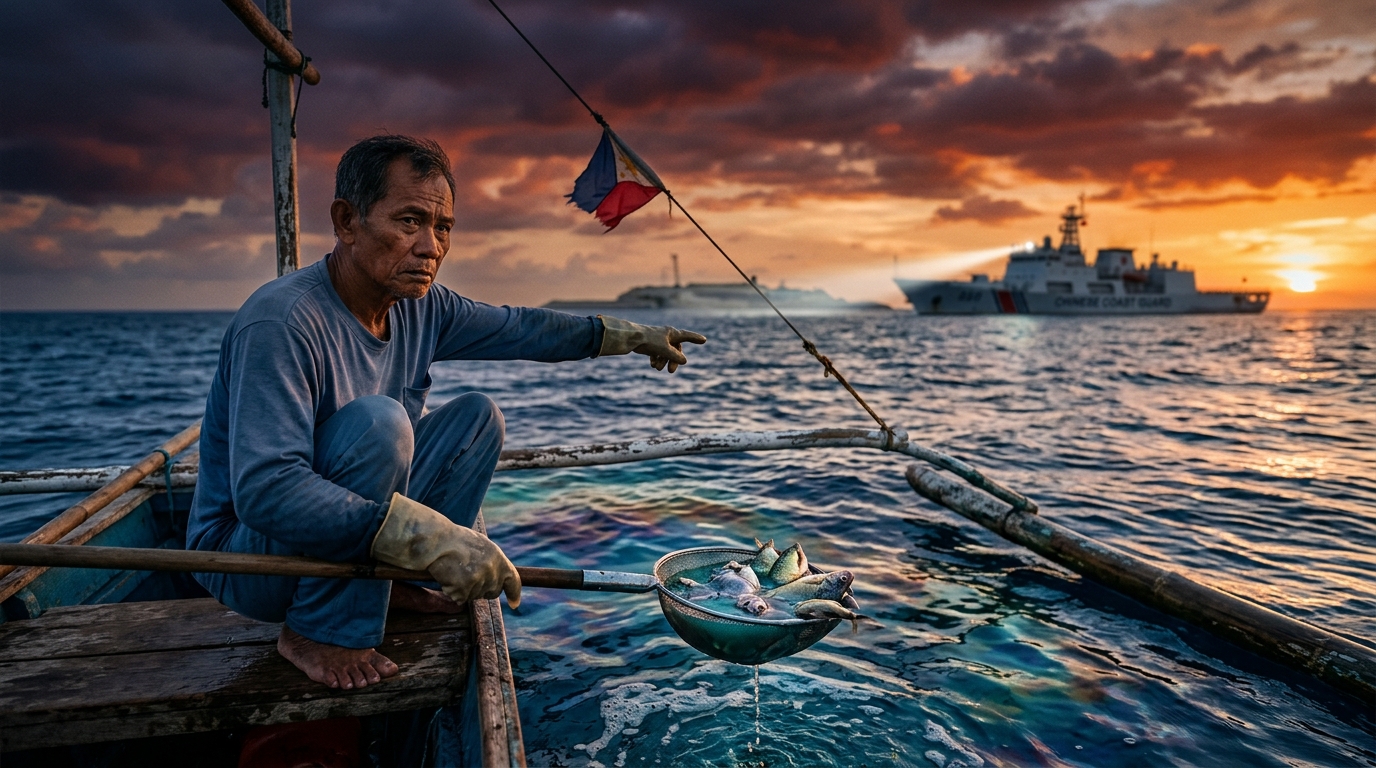
The Philippines accuses Chinese fishermen of using cyanide to poison waters around the Spratly Islands, escalating environmental and territorial tensions in the South China Sea.
The Philippines accused Chinese fishermen on Monday (April 13, 2026) of pouring cyanide in waters in the Spratly Islands, a flashpoint in the disputed South China Sea that has been the site of violent confrontations with Chinese vessels. Beijing claims the strategic South China Sea in nearly its entirety, despite an international ruling that its assertion has no legal basis. The Philippines' National Security Council (NSC) alleged the poisoning began last year around Second Thomas Shoal in the Spratly chain, which sits near vital shipping lanes and is reputedly rich in minerals.
  1. Home
  2. Prepare
  3. Current Affairs
  4. Philippines accuses China of poisoning disputed waters
Must Review
Login to bookmark articles
Login to mark articles as complete

Overview

gs.gs280% UPSC Relevance

Cyanide fishing by Chinese vessels heightens South China Sea security and environmental stakes.

Key Facts

  1. Date of allegation: 13 April 2026, by the Philippines' National Security Council.
  2. Accused parties: Chinese fishermen operating from vessels linked to mainland China.
  3. Method alleged: Use of cyanide to stun fish, contaminating waters around Second Thomas Shoal in the Spratly Islands.
  4. Timeline of poisoning: Began in 2025 and continued into 2026.
  5. Strategic significance: Spratly Islands lie on major shipping lanes and are rich in minerals; part of the broader South China Sea dispute.
  6. Legal backdrop: 2016 Permanent Court of Arbitration (PCA) ruling under UNCLOS declared China's "nine‑dash line" claim null and void.
  7. Environmental impact: Cyanide fishing causes massive marine mortality, coral damage, and threatens biodiversity in the region.

Background & Context

The incident underscores the intersection of maritime security, environmental degradation, and contested sovereignty in the South China Sea—a key topic under GS‑II (International Relations) and GS‑III (Environment & Ecology). It also tests the efficacy of international law (UNCLOS, PCA ruling) in curbing illegal fishing and protecting marine ecosystems.

Mains Answer Angle

GS‑II/Mains: Discuss how illegal cyanide fishing by Chinese vessels escalates geopolitical tensions and environmental risks in the South China Sea, and evaluate the role of international legal mechanisms in addressing such challenges.
Full Article

<p>The Philippines accused Chinese fishermen on Monday (April 13, 2026) of pouring cyanide in waters in the Spratly Islands, a flashpoint in the disputed South China Sea that has been the site of violent confrontations with Chinese vessels.</p><p>Beijing claims the strategic South China Sea in nearly its entirety, despite an international ruling that its assertion has no legal basis. The Philippines' National Security Council (NSC) alleged the poisoning began last year around Second Thomas Shoal in the Spratly chain, which sits near vital shipping lanes and is reputedly rich in minerals.</p>
Read Original on hindu

Analysis

Practice Questions

GS2
Easy
Prelims MCQ

Marine pollution and illegal fishing practices

1 marks
3 keywords
GS2
Medium
Mains Short Answer

International law and maritime disputes

5 marks
5 keywords
GS2
Hard
Mains Essay

International law, environmental governance, and security in the South China Sea

20 marks
7 keywords
Related:Daily•Weekly

Loading related articles...

Loading related articles...

Tip: Click articles above to read more from the same date, or use the back button to see all articles.

Quick Reference

Key Insight

Cyanide fishing by Chinese vessels heightens South China Sea security and environmental stakes.

Key Facts

  1. Date of allegation: 13 April 2026, by the Philippines' National Security Council.
  2. Accused parties: Chinese fishermen operating from vessels linked to mainland China.
  3. Method alleged: Use of cyanide to stun fish, contaminating waters around Second Thomas Shoal in the Spratly Islands.
  4. Timeline of poisoning: Began in 2025 and continued into 2026.
  5. Strategic significance: Spratly Islands lie on major shipping lanes and are rich in minerals; part of the broader South China Sea dispute.
  6. Legal backdrop: 2016 Permanent Court of Arbitration (PCA) ruling under UNCLOS declared China's "nine‑dash line" claim null and void.
  7. Environmental impact: Cyanide fishing causes massive marine mortality, coral damage, and threatens biodiversity in the region.

Background

The incident underscores the intersection of maritime security, environmental degradation, and contested sovereignty in the South China Sea—a key topic under GS‑II (International Relations) and GS‑III (Environment & Ecology). It also tests the efficacy of international law (UNCLOS, PCA ruling) in curbing illegal fishing and protecting marine ecosystems.

Mains Angle

GS‑II/Mains: Discuss how illegal cyanide fishing by Chinese vessels escalates geopolitical tensions and environmental risks in the South China Sea, and evaluate the role of international legal mechanisms in addressing such challenges.

Explore:Current Affairs·Editorial Analysis·Govt Schemes·Study Materials·Previous Year Questions·UPSC GPT