<h2>Overview</h2>
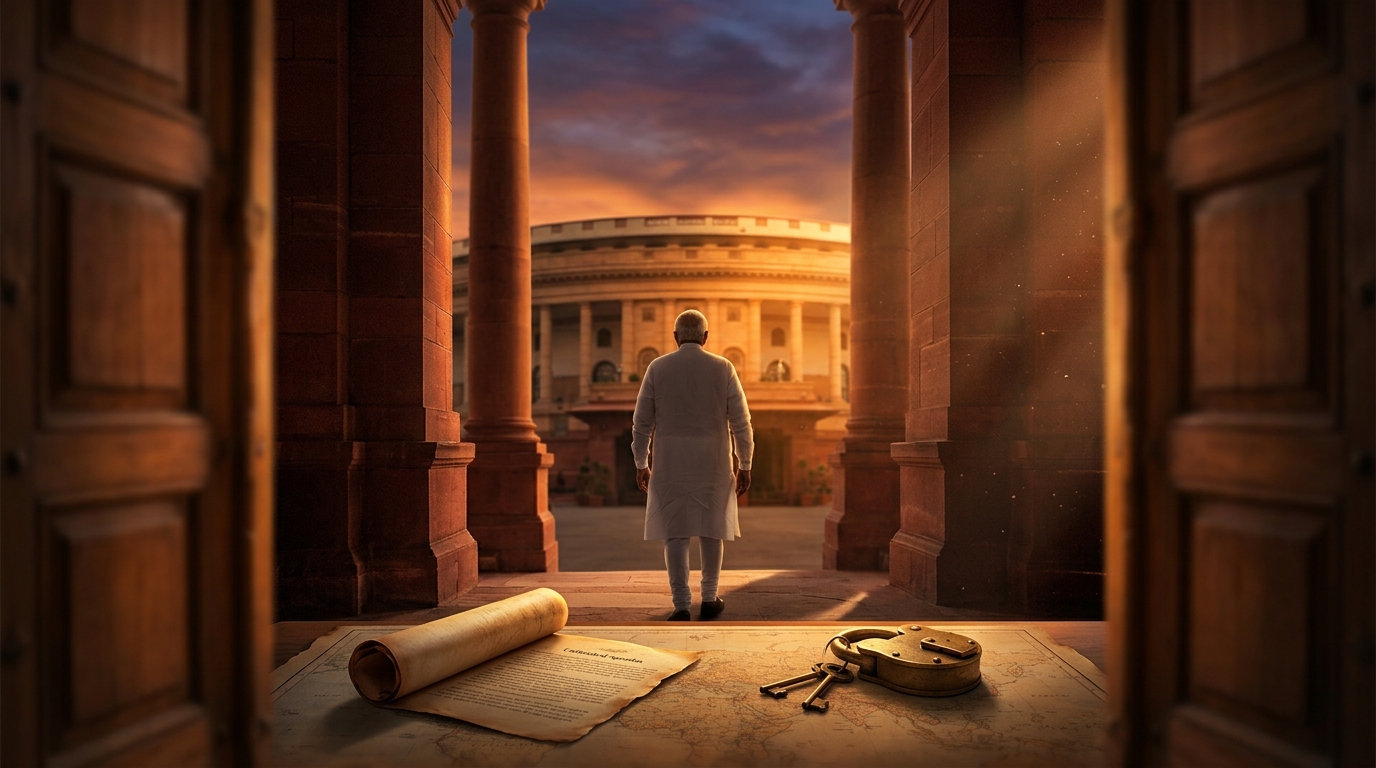
<p>On <strong>6 April 2026</strong>, Prime Minister <strong>Narendra Modi</strong> used the BJP’s foundation‑day event to reiterate two long‑standing policy goals of the party – the <span class="key-term" data-definition="Uniform Civil Code – a single set of personal laws governing marriage, divorce, inheritance, and adoption for all citizens, irrespective of religion (GS2: Polity)">Uniform Civil Code</span> (UCC) and <span class="key-term" data-definition="One Nation One Election – a proposal to synchronize elections to the State Legislative Assemblies and the Lok Sabha so that the entire country votes on the same day (GS2: Polity)">One Nation One Election</span> (ONOE). He framed these as “unfinished agendas” and said serious, positive discussions are under way.</p>
<h3>Key Developments</h3>
<ul>
<li>Modi highlighted that the BJP is actively pursuing the <span class="key-term" data-definition="Uniform Civil Code – a single set of personal laws governing marriage, divorce, inheritance, and adoption for all citizens, irrespective of religion (GS2: Polity)">UCC</span> and the synchronization of assembly and parliamentary polls under the <span class="key-term" data-definition="One Nation One Election – a proposal to synchronize elections to the State Legislative Assemblies and the Lok Sabha so that the entire country votes on the same day (GS2: Polity)">ONOE</span> framework.</li>
<li>He contrasted the BJP’s commitment with the Congress, recalling hardships faced by BJP workers during the Emergency and in states such as West Bengal and Kerala.</li>
<li>The Prime Minister listed several flagship achievements of the BJP: removal of colonial‑era “black laws”, construction of a new Parliament building, 10% reservation for the poor in the general category, ban on <span class="key-term" data-definition="Triple Talaq – a practice of instant divorce by pronouncing ‘talaq’ three times, declared illegal in 2019 (GS2: Polity)">triple talaq</span>, the <span class="key-term" data-definition="Citizenship Amendment Act – legislation that fast‑tracks citizenship for non‑Muslim minorities from neighboring countries, passed in 2019 (GS2: Polity)">Citizenship Amendment Act</span>, and the completion of the <span class="key-term" data-definition="Ram Temple – a Hindu temple under construction at the disputed Ayodhya site, symbolising the BJP’s cultural agenda (GS2: Polity)">Ram Temple in Ayodhya</span>.</li>
<li>Modi emphasized the emotional bond between party workers and the <span class="key-term" data-definition="Bharatiya Janata Party – the ruling national party in India, founded in 1980, with a platform of cultural nationalism and development (GS2: Polity)">BJP</span>, describing the foundation day as a “gratitude” occasion rather than a mere political rally.</li>
</ul>
<h3>Important Facts</h3>
<ul>
<li>UCC aims to replace the existing personal laws that differ for Hindus, Muslims, Christians, and other communities.</li>
<li>ONOE would require constitutional and electoral‑law amendments to align the five‑year cycles of State Assemblies with the Lok Sabha.</li>
<li>The BJP’s recent legislative record includes the <span class="key-term" data-definition="Triple Talaq – a practice of instant divorce by pronouncing ‘talaq’ three times, declared illegal in 2019 (GS2: Polity)">triple talaq ban</span> (2019) and the <span class="key-term" data-definition="Citizenship Amendment Act – legislation that fast‑tracks citizenship for non‑Muslim minorities from neighboring countries, passed in 2019 (GS2: Polity)">CAA</span> (2019).</li>
<li>Reservation for economically weaker sections (EWS) in the general category has been set at 10%.</li>
</ul>
<h3>UPSC Relevance</h3>
<p>Both <span class="key-term" data-definition="Uniform Civil Code – a single set of personal laws governing marriage, divorce, inheritance, and adoption for all citizens, irrespective of religion (GS2: Polity)">UCC</span> and <span class="key-term" data-definition="One Nation One Election – a proposal to synchronize elections to the State Legislative Assemblies and the Lok Sabha so that the entire country votes on the same day (GS2: Polity)">ONOE</span> are recurring topics in GS‑2 (Polity) and GS‑1 (Historical evolution of personal law). Understanding the political narrative, constitutional challenges, and federal implications is essential for answer writing in essay and optional papers.</p>
<h3>Way Forward</h3>
<ul>
<li>Stakeholder consultations – civil society, religious groups, and state governments – must be institutionalised to address concerns over personal‑law uniformity.</li>
<li>Legislative roadmap – a phased approach, possibly starting with marriage and divorce provisions, can mitigate resistance.</li>
<li>For ONOE, a detailed impact assessment on election‑management costs, voter fatigue, and federal autonomy is required before any constitutional amendment.</li>
<li>Political parties should articulate clear timelines and consensus‑building mechanisms to translate “serious discussions” into actionable policy.</li>
</ul>
<p>In sum, the Prime Minister’s remarks signal a renewed push on two flagship reforms that will shape India’s legal‑political landscape in the coming years.</p>