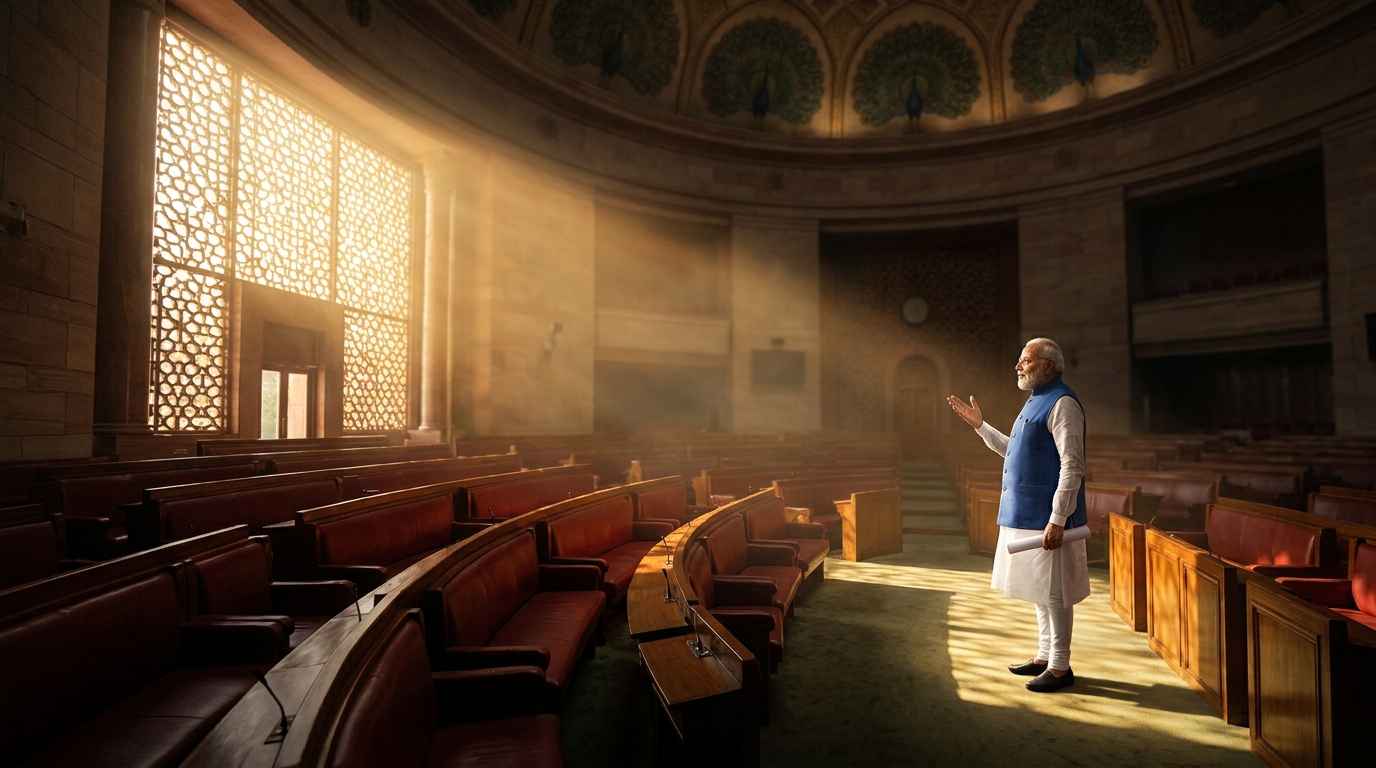
On April 17, 2026, Prime Minister Narendra Modi ने अपने आधिकारिक X अकाउंट का उपयोग करके सभी Lok Sabha MPs से pending Women’s Reservation Act संशोधनों के पक्ष में मतदान करने का अनुरोध किया। Prime Minister ने इस मतदान को एक नैतिक कर्तव्य के रूप में प्रस्तुत किया, विधायकों से अपने परिवारों में महिलाओं के बारे में सोचने का आग्रह किया।
मुख्य विकास
- Prime Minister Modi ने X पर पोस्ट किया: “कृपया अपने विवेक पर विचार करें, अपने परिवारों में महिलाओं को याद रखें। विधायी निकायों में women’s reservation को सुनिश्चित करने वाला legislation हमारे राष्ट्र की महिलाओं के प्रति न्याय करने का एक महत्वपूर्ण अवसर है।”
- यह अपील महत्वपूर्ण मतदान से पहले आती है, जो amendments पर है, जो Bill को आरक्षण कोटा को कार्यान्वित करने के लिए संशोधित करेगा।
- सभी दलों से कहा गया है कि वे political calculations को किनारे रखकर women’s representation को बढ़ाने के लिए इस उपाय का समर्थन करें।
महत्वपूर्ण तथ्य
मूल Women’s Reservation Act 2023 में पारित हुआ था, लेकिन इसकी कार्यान्वयन procedural delays और opposition concerns के कारण रुकी हुई है। वर्तमान amendment reservation प्रतिशत को स्पष्ट करने, कार्यान्वयन की समयसीमा निर्धारित करने, और procedural ambiguities को दूर करने का प्रयास करता है।
प्रस्तावित ढाँचे के तहत, 33% of seats दोनों Lok Sabha और राज्य विधायी सभाओं में महिलाओं के लिए आरक्षित होंगे, जिससे India को gender parity पर वैश्विक सर्वोत्तम प्रथाओं के साथ संरेखित किया जाएगा।
UPSC प्रासंगिकता
यह मुद्दा कई UPSC पाठ्यक्रम बिंदुओं को छूता है: constitutional amendments (GS2), gender equity और social justice (GS1 & GS4), तथा parliamentary procedures (GS2) का कार्य। आरक्षण बहस के पीछे के राजनीतिक गतिशीलता को समझना aspirants को policy intent और legislative bottlenecks के बीच की अंतःक्रिया का विश्लेषण करने में मदद करता है।
आगे का रास्ता
Fo