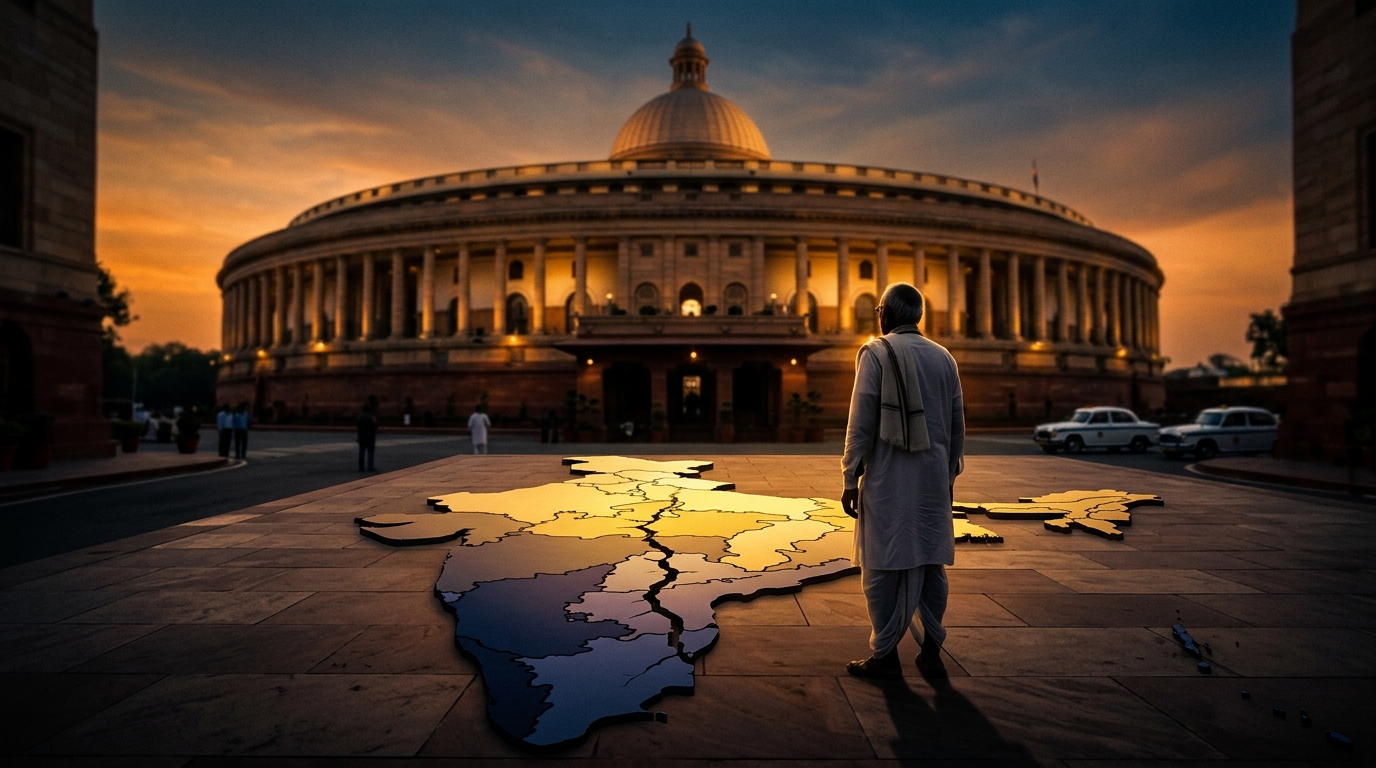
Congress Flags Federal Imbalance in Proposed Lok Sabha Expansion
The Indian National Congress on 30 March 2026 warned that the Modi government is preparing a bill to increase the size of the Lok Sabha and state legislatures by 50 per cent. According to Congress general secretary Jairam Ramesh, a uniform increase would widen the representation gap between larger northern states and smaller southern, northeastern and western states.
Key Developments
- Congress alleges the bill will raise Uttar Pradesh’s seats from 80 to 120 while Tamil Nadu’s will rise only from 39 to 59.
- Southern states would gain 66 seats in total, whereas northern states would gain 200 seats.
- Telangana Chief Minister A. Revanth Reddy has reportedly raised concerns; other state leaders may follow.
- The proposal is being discussed alongside attempts to implement the women’s reservation law without completing the delimitation and census exercises.
- Union Home Minister Amit Shah has consulted some NDA partners and opposition leaders, but not the Congress or Trinamool Congress (TMC).
Important Facts
The women’s reservation bill, formally known as the Nari Vandan Adhiniyam, 2023, was passed in September 2023 and received presidential assent as the Constitution (106th Amendment) Act. Its implementation was slated to follow the completion of delimitation and the 2026 census, but the government is reportedly seeking a shortcut via a special two‑day parliamentary session.
Exam Relevance
Understanding this issue touches upon several GS papers:
- GS 2 – Polity & Governance: Federal structure, representation, the role of delimitation, and the constitutional amendment process.
- GS 3 – Economy & Development: Demographic data from the census influences resource allocation and planning.
- GS 4 – Ethics & Integrity: Debates on political maneuvering, use of legislation as a diversion, and the principle of equitable representation.
Way Forward
For a balanced federal system, any increase in parliamentary strength should be accompanied by a fresh delimitation exercise after the 2026 census. This would prevent disproportionate gains for already dominant states. Moreover, the government must engage all major political parties, including the Congress and TMC, before amending the women’s reservation law, ensuring transparency and adherence to democratic norms.
Until a consensus is reached, the controversy is likely to remain a focal point in the political discourse, influencing electoral strategies and public opinion ahead of the next general elections.