Loading page, please wait…
HomeCurrent AffairsEditorialsGovt SchemesLearning ResourcesUPSC SyllabusPricingAboutBest UPSC AIUPSC AI ToolAI for UPSCUPSC ChatGPT

© 2026 Vaidra. All rights reserved.

PrivacyTerms
Vaidra Logo
Vaidra

Top 4 items + smart groups

UPSC GPT
New
Current Affairs
Daily Solutions
Daily Puzzle
Mains Evaluator

Version 2.0.0 • Built with ❤️ for UPSC aspirants

Rural Mental Health Gap in India: NMHS Findings, DMHP & Tele‑MANAS – Policy Challenges and Way Forward — UPSC Current Affairs | March 18, 2026
Rural Mental Health Gap in India: NMHS Findings, DMHP & Tele‑MANAS – Policy Challenges and Way Forward
India’s National Mental Health Survey reveals a 10.6% adult prevalence of mental disorders and a 70‑92% treatment gap, especially acute in rural areas due to low psychiatrist density and structural stressors. Strengthening primary‑care screening, task‑sharing, and effective use of DMHP and Tele‑MANAS are essential to bridge the gap and support rural development, a key UPSC GS‑3 and GS‑4 concern.
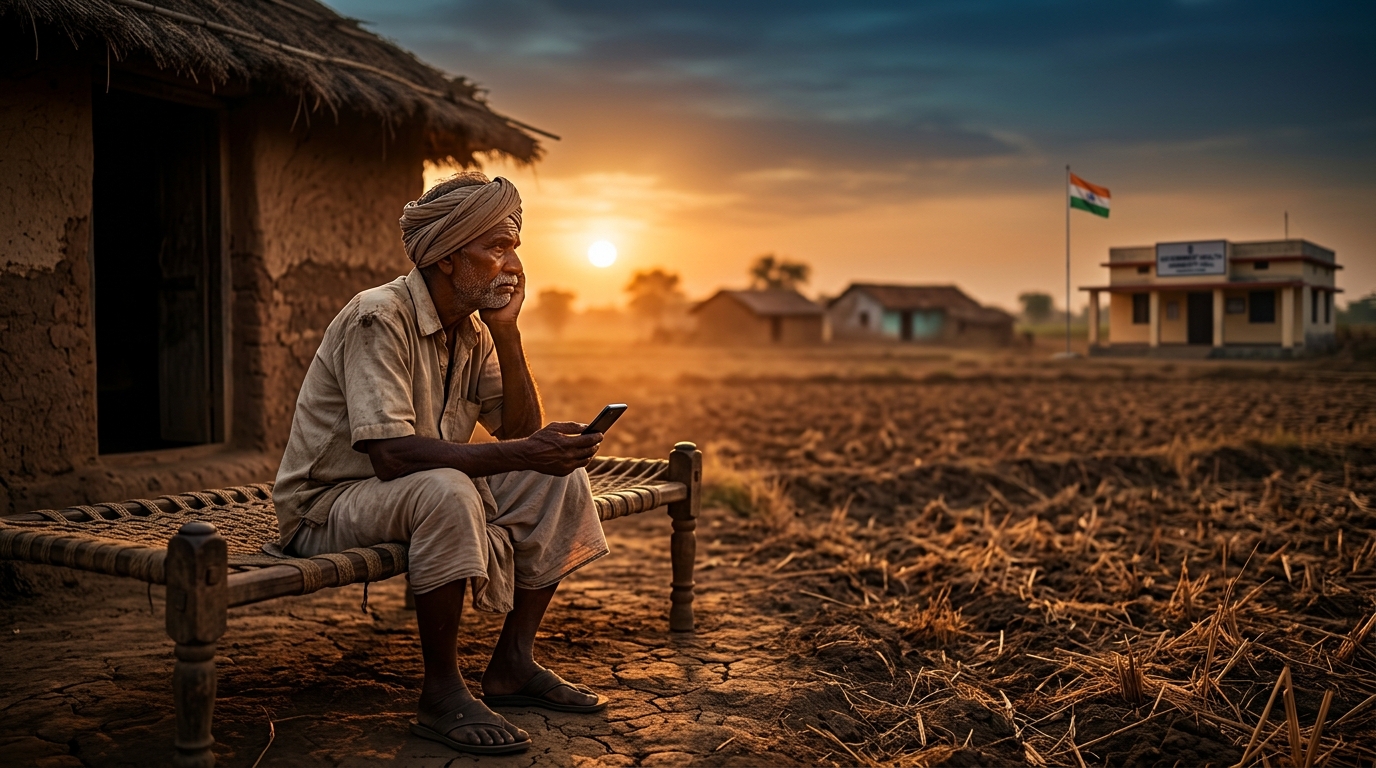
Overview India’s mental health scenario appears to be improving on paper – more helplines, awareness drives and a growing lexicon of stress‑related terms. In reality, especially in rural areas, the gap between need and care remains stark. A woman with chronic insomnia, a farmer battling debt‑induced hopelessness, or a youth turning to alcohol after crop loss often never receive a mental‑health diagnosis, let alone treatment. Key Developments The National Mental Health Survey (NMHS) reports a current adult prevalence of 10.6% and a lifetime prevalence of 13.7% . Rural prevalence appears lower ( 6.9% ) than urban ( 13.5% ), a likely artefact of under‑detection. The estimated treatment gap ranges from 70% to 92% across disorders. Psychiatrist density stands at 0.75 per 100,000 population, far below the benchmark of 3 per 100,000 . Government initiatives include the District Mental Health Programme (DMHP) covering 767 districts, inclusion of mental‑health services in Ayushman Arogya packages, and the national tele‑mental health helpline Tele‑MANAS which has handled over 1.81 million calls. Important Facts Rural distress is driven by structural factors: agricultural income volatility, climate shocks, caste‑based exclusion, gendered burdens, and migration‑induced isolation. These translate into anxiety, depression, harmful alcohol use and, in extreme cases, suicide . In 2023, India recorded 171,418 suicides . Barriers to care include: (i) non‑recognition of mental symptoms (often presented as somatic complaints), (ii) high stigma affecting marriage prospects and family reputation, (iii) travel time and loss of daily wages, especially for women, and (iv) fragmented follow‑up leading to premature discontinuation of medicines. UPSC Relevance Understanding the rural mental‑health gap is essential for GS‑3 (Health, Poverty, and Social Justice) and GS‑4 (Ethics, Social Issues). The data illustrate how health outcomes intersect with agriculture, climate change, gender equity and economic productivity – all core themes of the UPSC syllabus. Questions may ask to evaluate policy effectiveness, suggest integrative solutions, or analyse the impact of mental health on rural development indicators. Way Forward Primary‑care anchoring: Train PHC teams to routinely screen for depression, anxiety and substance use, initiate basic treatment and ensure follow‑up under DMHP supervision. Task‑sharing: Deploy evidence‑based brief interventions (problem‑solving, behavioural activation, motivational interviewing) through trained non‑specialists, with regular specialist oversight. Suicide prevention as a systems goal: Community identification of high‑risk individuals, rapid linkage to care, and use of district‑level data to target hotspots. Digital integration: Leverage Tele‑MANAS for early contact and anonymity, but ensure referral to local providers for continuity. Workforce expansion: Increase psychiatrist numbers and, crucially, redistribute them through incentives for rural postings and tele‑consultation support. A robust rural mental‑health strategy must move beyond “more psychiatrists” to a redesign of service delivery that is community‑trusted, culturally sensitive and logistically feasible. Only then can mental health become a pillar of rural resilience and overall development.
  1. Home
  2. Prepare
  3. Current Affairs
  4. Rural Mental Health Gap in India: NMHS Findings, DMHP & Tele‑MANAS – Policy Challenges and Way Forward
Login to bookmark articles
Login to mark articles as complete

Overview

Rural mental‑health treatment gap hampers agricultural productivity and inclusive development

Key Facts

  1. National Mental Health Survey (2015‑16) reported adult prevalence of mental disorders at 10.6% and lifetime prevalence at 13.7% in India.
  2. Rural prevalence is 6.9% versus 13.5% in urban areas, indicating probable under‑detection in villages.
  3. Treatment gap for mental disorders ranges between 70% and 92% across the country.
  4. Psychiatrist density stands at 0.75 per 100,000 population, far below the WHO benchmark of 3 per 100,000.
  5. District Mental Health Programme (DMHP) is functional in 767 districts, covering roughly 70% of the population.
  6. Tele‑MANAS, the national tele‑mental health helpline, has fielded over 1.81 million calls since its inception.
  7. India recorded 171,418 suicides in 2023, a significant proportion linked to agrarian distress.

Background & Context

Mental health is a critical component of GS‑3 (Health, Poverty & Social Justice). The rural treatment gap intertwines with agriculture‑related income volatility, climate shocks, gender inequities and migration, affecting human development indices and economic productivity.

UPSC Syllabus Connections

GS2•Government policies and interventions for developmentEssay•Economy, Development and InequalityEssay•Youth, Health and WelfarePrelims_GS•National Current AffairsPrelims_GS•Demographics and Social SectorGS2•Issues relating to Health, Education, Human ResourcesGS1•Poverty and Developmental IssuesPrelims_GS•Panchayati Raj and Local GovernanceGS1•Role of Women and Women's OrganizationEssay•International Relations and Geopolitics

Mains Answer Angle

GS‑3: Evaluate the effectiveness of the District Mental Health Programme and Tele‑MANAS in narrowing the rural mental‑health treatment gap and propose actionable reforms.

Full Article

Read Original on hindu

Analysis

Practice Questions

GS1
Easy
Prelims MCQ

Mental health treatment gap

1 marks
3 keywords
GS3
Medium
Mains Short Answer

DMHP structure

5 marks
3 keywords
GS3
Hard
Mains Essay

Integrated rural mental‑health and development policies

250 marks
7 keywords
Related:Daily•Weekly

Loading related articles...

Loading related articles...

Tip: Click articles above to read more from the same date, or use the back button to see all articles.

Explore:Current Affairs·Editorial Analysis·Govt Schemes·Study Materials·Previous Year Questions·UPSC GPT