Overview
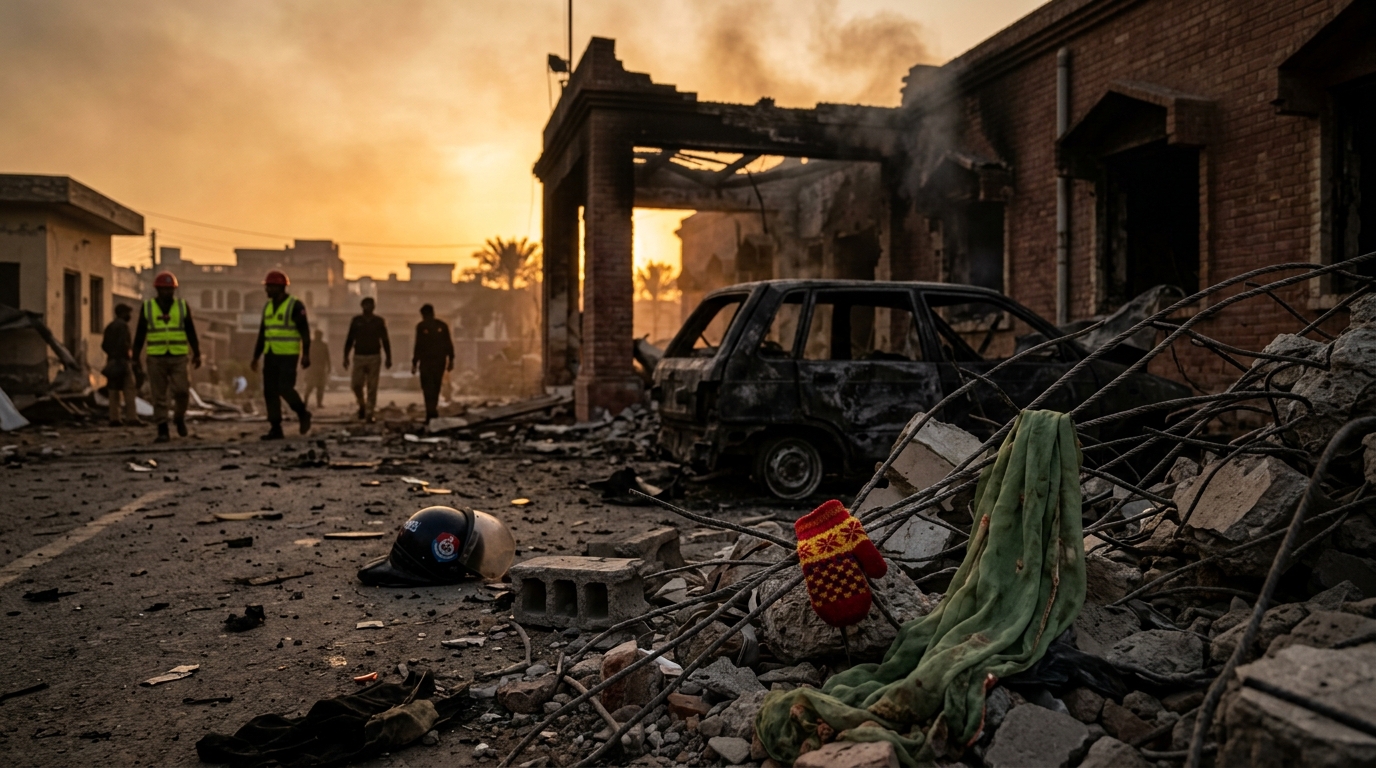
On April 2, 2026, a suicide car bomb detonated outside a police station in Domel tehsil, Bannu district, Khyber Pakhtunkhwa. The blast killed five people – three women, a child and a male civilian – and injured at least four police personnel. Nearby houses suffered damage, and gunfire was reported immediately after the explosion.
Key Developments
- The explosion was heard from a considerable distance, indicating a high‑order charge.
- Emergency services and rescue teams recovered five bodies, including three women and a child.
- At least four police officers were injured and are receiving medical care.
- Gunfire erupted post‑blast, suggesting a possible follow‑up attack or security response.
- Preliminary investigations point to the police station being the primary target.
Important Facts
- Date & Time: Late night, April 2, 2026.
- Location: Police station, Domel tehsil, Bannu district, KPK.
- Casualties: 5 dead (including 3 women, 1 child), 4 police injured.
- Property Damage: Several adjacent residential houses damaged.
- Security Response: Ongoing rescue operations and preliminary forensic examination.
Exam Relevance
The incident underscores several themes that frequently appear in the UPSC syllabus:
- Internal Security: The use of counter‑terrorism operations in KPK, a province with a history of insurgency, highlights challenges in maintaining law and order.
- Federal‑Provincial Coordination: Managing the aftermath requires cooperation between provincial police, the federal Ministry of Interior, and local administration.
- Impact on Civilian Life: Casualties among women and a child illustrate the broader humanitarian cost of terrorism, a topic relevant to GS4 (Ethics & Human Security).
- Administrative Structure: Understanding the role of a tehsil and district apparatus aids in answering questions on governance and disaster management.
Way Forward
To mitigate similar threats, the following measures are recommended:
- Strengthen intelligence sharing between federal and provincial agencies, especially in border provinces.
- Enhance surveillance infrastructure around police installations and critical public facilities.
- Implement community‑engagement programmes to encourage local reporting of suspicious activities.
- Provide rapid medical and psychological support to victims and families, aligning with the government’s disaster‑relief framework.
- Review and upgrade standard operating procedures for counter‑terrorism operations in high‑risk districts.
These steps aim to reduce the frequency of such attacks and improve the resilience of both security forces and civilian populations.