<h3>Overview</h3>
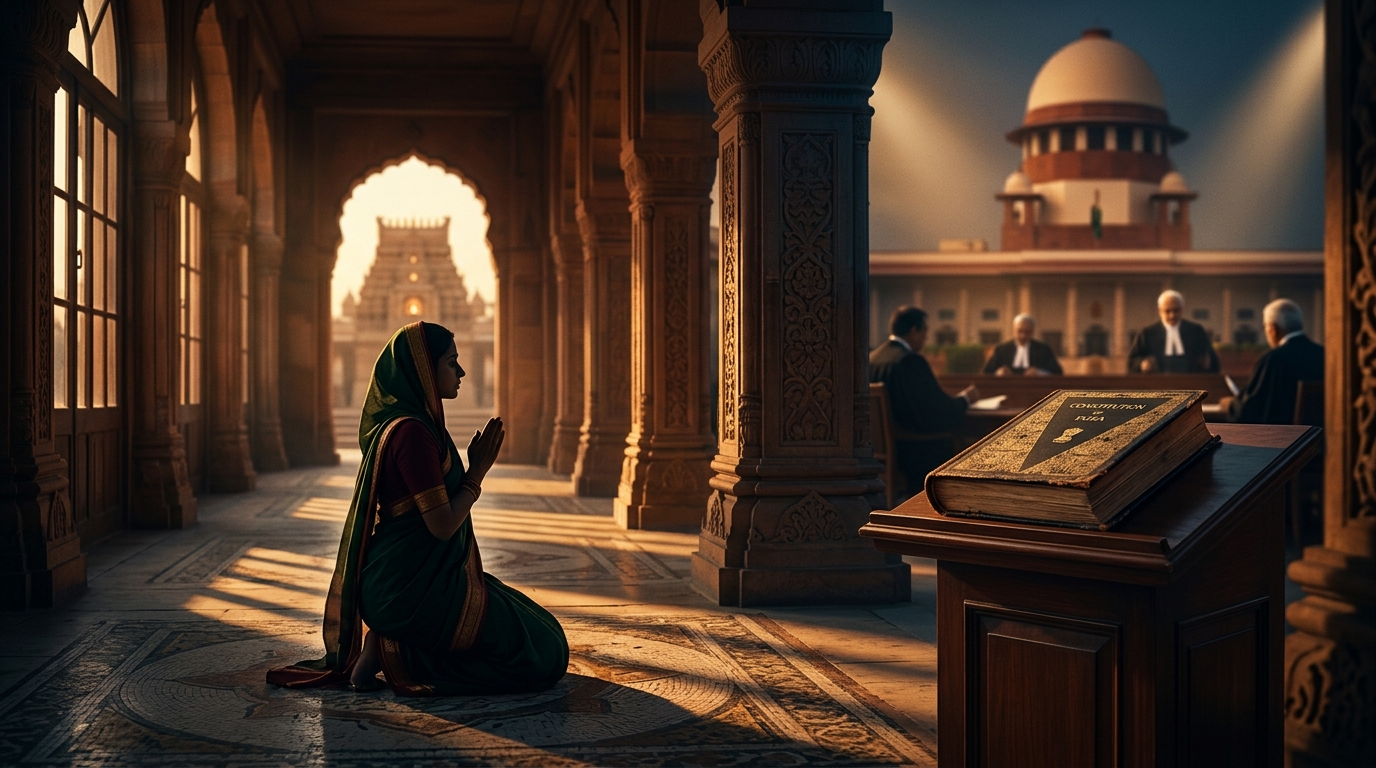
<p>15 April 2026 को, <span class="key-term" data-definition="Supreme Court of India — the apex judicial body that interprets the Constitution and settles disputes between the Union, states and other entities (GS2: Polity)">Supreme Court</span> ने कहा कि राज्य का सामाजिक कल्याण का लक्ष्य धर्म को "खाली" नहीं कर सकता। यह टिप्पणी Sabarimala संदर्भ की चौथी सुनवाई के दिन दी गई। बेंच, जिसका नेतृत्व <span class="key-term" data-definition="Chief Justice of India Surya Kant — the senior-most judge of the Supreme Court, responsible for constituting benches and allocating cases (GS2: Polity)">CJI Surya Kant</span> ने किया, ने <span class="key-term" data-definition="Article 25(2)(b) of the Constitution — permits the State to make laws for social welfare or reform concerning religious institutions of public character (GS2: Polity)">Article 25(2)(b)</span> और <span class="key-term" data-definition="Article 26(b) of the Constitution — guarantees a religious denomination the right to manage its own affairs, including rituals (GS2: Polity)">Article 26(b)</span> के बीच परस्पर संबंध की जांच की।</p>
<h3>Key Developments</h3>
<ul>
<li>Justice <span class="key-term" data-definition="Justice B.V. Nagarathna — a senior judge on the nine‑judge bench hearing the Sabarimala case (GS2: Polity)">BV Nagarathna</span> ने चेतावनी दी कि सामाजिक‑कल्याण legislation धर्म की मूल पहचान को मिटा नहीं सकता।</li>
<li>Senior Advocate <span class="key-term" data-definition="Dr Abhishek Manu Singhvi — senior counsel representing the Travancore Devaswom Board, known for arguing constitutional matters (GS2: Polity)">Dr Abhishek Manu Singhvi</span> ने तर्क दिया कि Article 25(2)(b) को किसी भी हिंदू संप्रदाय द्वारा सार्वजनिक मंदिरों में प्रवेश के लिए invoked किया जा सकता है, जबकि Article 26(b) एक संप्रदाय के अनुष्ठानों पर नियंत्रण की रक्षा करता है।</li>
<li>Singhvi ने <i>Sardar Syedna judgment</i> (जिसने Bombay Prevention of Ex‑communication Act को निरस्त किया) का हवाला देते हुए कहा कि Article 25(2)(b) का उद्देश्य "धर्म को अस्तित्व से बाहर करना" नहीं है।</li>
<li>Justice <span class="key-term" data-definition="Justice M.M. Sundresh — member of the bench, known for probing the wording of constitutional provisions (GS2: Polity)">MM Sundresh</span> ने पूछा कि Constitution "social reform" शब्द क्यों उपयोग करता है, "public order, morality or health" के बजाय। उन्होंने सुझाव दिया कि Hindu Succession Act जैसे statutes सामाजिक सुधार के अनुमत उदाहरण हैं।</li>
<li>बेंच ने रेखांकित किया कि "essential religious practices" सिद्धांत को Article 25(2)(b) की सीमा को सीमित करने के लिए उपयोग नहीं किया जाना चाहिए।</li>
</ul>
<h3>Important Facts</h3>
<ul>
<li>सुनवाई CJI Surya Kant, Justices BV Nagarathna, MM Sundresh, Ahsanuddin Amanullah, Aravind Kumar, Augustine George Masih, Prasanna B Varale, R Mahadevan और Joymalya Bagchi सहित नौ‑जज बेंच द्वारा की जा रही है।</li>
</ul>
Headline: Supreme Court चेतावनी देता है कि सामाजिक‑सुधार कानून Sabarimala मामले में धर्म की मूल पहचान को क्षीण नहीं कर सकते
AI Summary: 15 April 2026 को, Supreme Court ने चेतावनी दी कि सामाजिक‑सुधार कानून धर्म की मूल पहचान को मिटा नहीं सकते जबकि Sabarimala मामले की सुनवाई हो रही थी। यह Articles 25(2)(b) और 26(b) के बीच तनाव को उजागर करता है, जो UPSC aspirants के लिए धार्मिक स्वतंत्रता, लैंगिक न्याय और संवैधानिक व्याख्या का अध्ययन करने में महत्वपूर्ण है।
Context: Sabarimala संदर्भ संवैधानिक गारंटी (Arts 25‑26) को लैंगिक‑समानता और सामाजिक‑सुधार आवश्यकताओं के खिलाफ रखता है। यह व्यक्तिगत अधिकारों और धार्मिक संप्रदायों की स्वायत्तता के बीच संतुलन की परीक्षा है, जो UPSC के Polity और Governance के लिए एक मुख्य विषय है।
Mains angle: GS 2 – Polity: Articles 25(2)(b) और 26(b) के परस्पर संबंध पर चर्चा करें, यह मूल्यांकन करें कि न्यायालय सामाजिक‑सुधार उद्देश्यों को धार्मिक स्वायत्तता के साथ कैसे संतुलित करता है। संभावित प्रश्न: "महिलाओं के मंदिर प्रवेश को विनियमित करने में संवैधानिक चुनौतियों का विश्लेषण करें"।