Overview
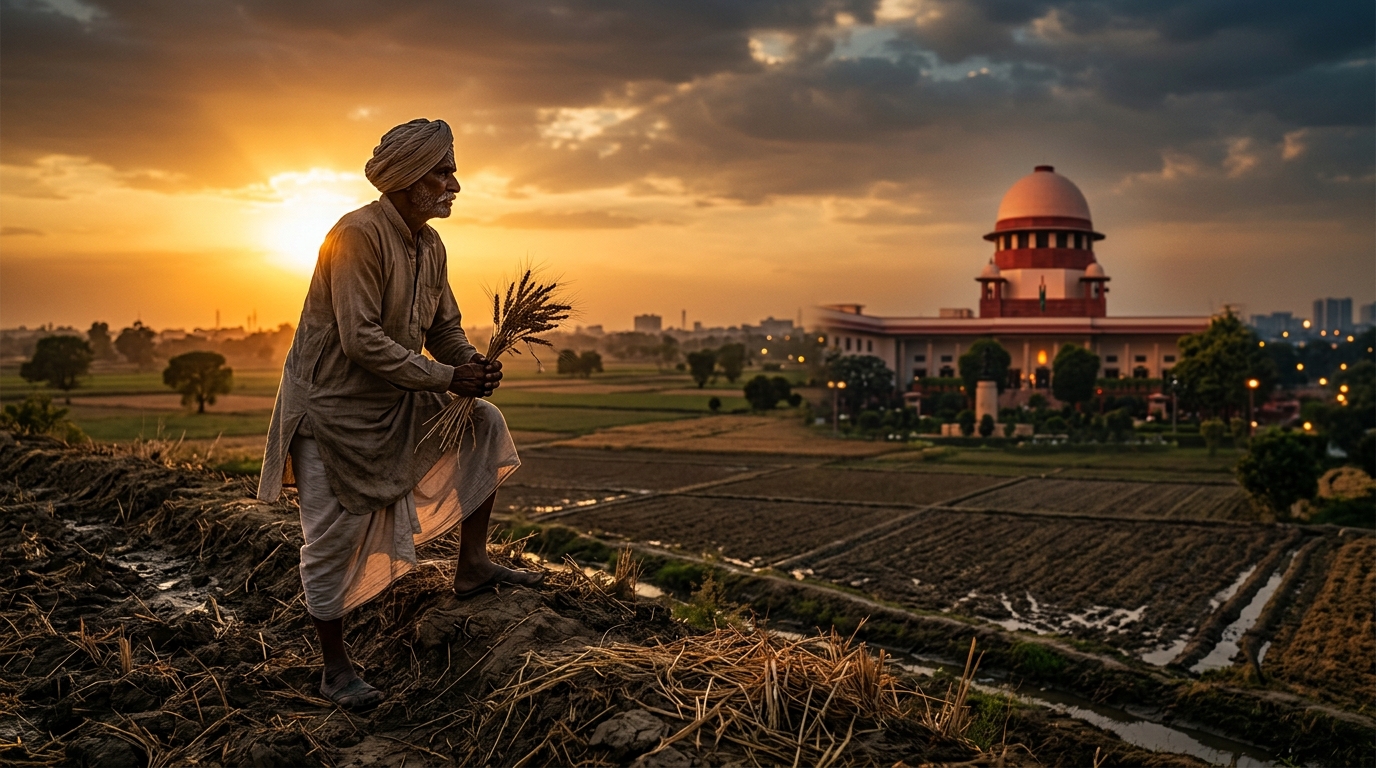
The Supreme Court on 13 April 2026 ordered a detailed hearing of a petition demanding that the government fix a Minimum Support Price (MSP) at least equal to the Weighted Average Cost of Production (WACOP) and procure crops at that rate. The petition seeks to protect farmer incomes by aligning MSP with actual production costs.
Key Developments
- The Court will examine the petition’s claim that the current MSP mechanism does not reflect the true cost of cultivation.
- Chief Justice of India Surya Kant raised concerns about a "uniform policy for all farmers," noting that large landholders could benefit disproportionately.
- The hearing could compel the Ministry of Agriculture to revise the MSP calculation methodology and procurement norms.
Important Facts
1. CJI Surya Kant highlighted the disparity between small and large farmers under a one‑size‑fits‑all MSP.
2. The petition argues for a procurement system that mirrors the WACOP, thereby guaranteeing remunerative prices.
3. The issue touches upon the broader debate on agricultural reforms, price stabilization, and farmer welfare.
Exam Relevance
Understanding this case is crucial for multiple sections of the UPSC syllabus:
- GS2 – Polity: Role of the judiciary in policy oversight; powers of the Supreme Court to direct executive action.
- GS3 – Economy: Mechanism of MSP, its impact on agricultural markets, and the concept of WACOP.
- GS4 – Ethics: Equity concerns in policy design; balancing interests of marginal versus large farmers.
Way Forward
While the Court deliberates, the government may consider:
- Revising the MSP formula to incorporate WACOP for each crop.
- Introducing a tiered procurement mechanism that offers higher rates to small and marginal farmers.
- Strengthening data collection on input costs to ensure transparent MSP calculations.
- Engaging stakeholders—farmers’ unions, agribusinesses, and state governments—to design a more inclusive price support system.
The outcome will shape future agricultural policy, influence farmer‑government relations, and set a judicial precedent on economic rights.