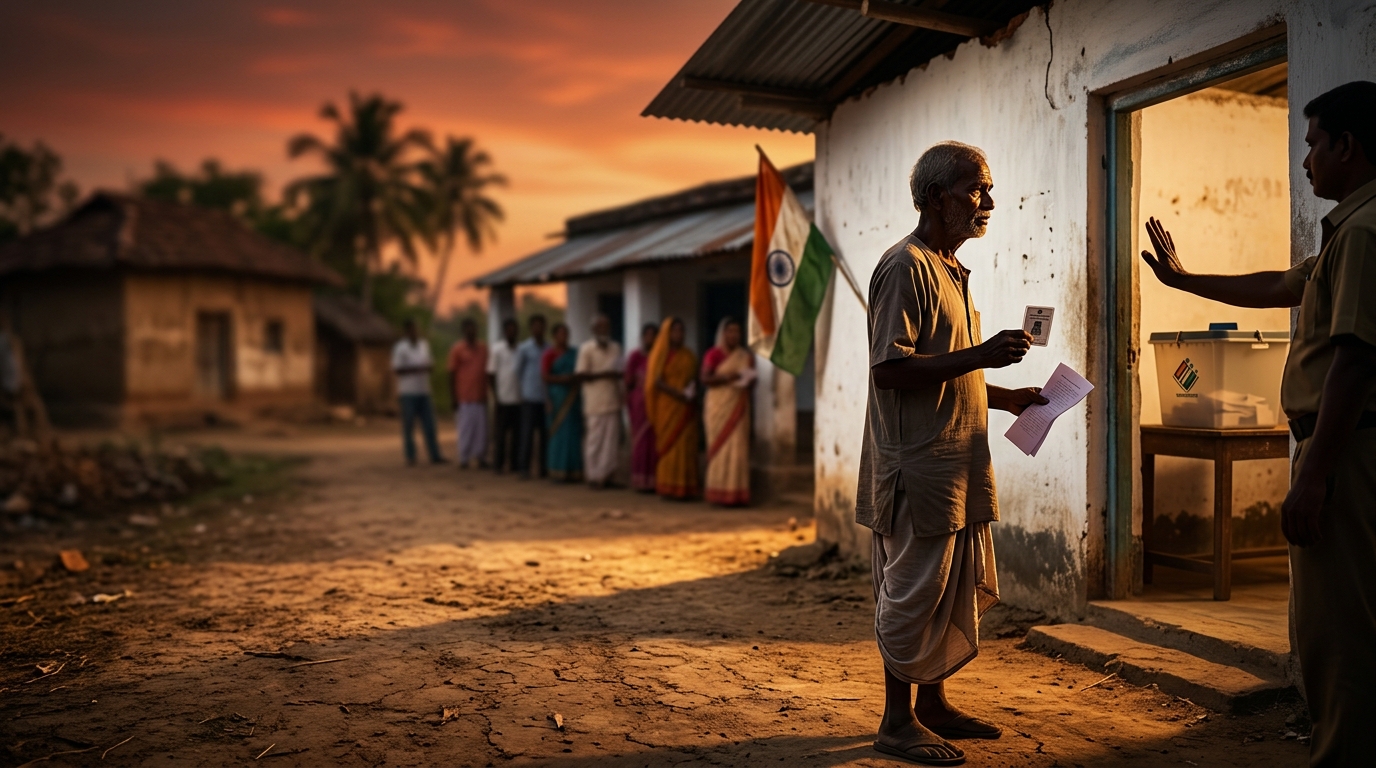
The Supreme Court on 13 April 2026 expressed reluctance to let voters whose names have been deleted from the electoral roll cast ballots in the upcoming West Bengal Assembly Elections while their appeals are pending before the Appellate Tribunals. The bench, headed by Chief Justice of India Surya Kant and Justice Joymalya Bagchi, was briefed that more than 34.35 lakh appeals have been filed.
Key Developments
- The Court ruled that persons excluded from the rolls cannot vote until their appeals are finally decided.
- It hinted at a possible interim order to publish a SIR that would incorporate appeals allowed before the election dates of 23 and 29 April.
- Justice Bagchi clarified that if a constituency’s roll was frozen on 9 April and the appeal was decided before that date, the affected voters may vote on 23 April.
- Senior Advocate Kalyan Bandhopadhyay warned that the 19 tribunals cannot clear lakhs of appeals before the poll, urging interim relief for the appellants.
- Senior Advocate Shyam Divan, representing the West Bengal Chief Minister, cited the proviso to Representation of the People Act, 1950 that the existing roll should be used if the SIR process is ongoing.
- Justice Bagchi referred to Rule 23(3) and 23(5) of the Registration of Electors Rules, 1960, stating that an appeal’s allowance mandates immediate amendment of the roll.
- The Court emphasized that granting interim inclusion would obligate a similar interim exclusion for opposite cases, maintaining procedural parity.
Important Facts
• Over 34.35 lakh appeals filed as on 11 April 2026.
• Elections scheduled in two phases: 23 April and 29 April 2026.
• 19 appellate tribunals a