Loading page, please wait…
HomeCurrent AffairsEditorialsGovt SchemesLearning ResourcesUPSC SyllabusPricingAboutBest UPSC AIUPSC AI ToolAI for UPSCUPSC ChatGPT

© 2026 Vaidra. All rights reserved.

PrivacyTerms
Vaidra Logo
Vaidra

Top 4 items + smart groups

UPSC GPT
New
Current Affairs
Daily Solutions
Daily Puzzle
Mains Evaluator

Version 2.0.0 • Built with ❤️ for UPSC aspirants

TDB (DST) Grants to Casey Aviation for India‑UK Hybrid Propulsion R&D on Unmanned Aircraft | GS3 UPSC Current Affairs April 2026
TDB (DST) Grants to Casey Aviation for India‑UK Hybrid Propulsion R&D on Unmanned Aircraft
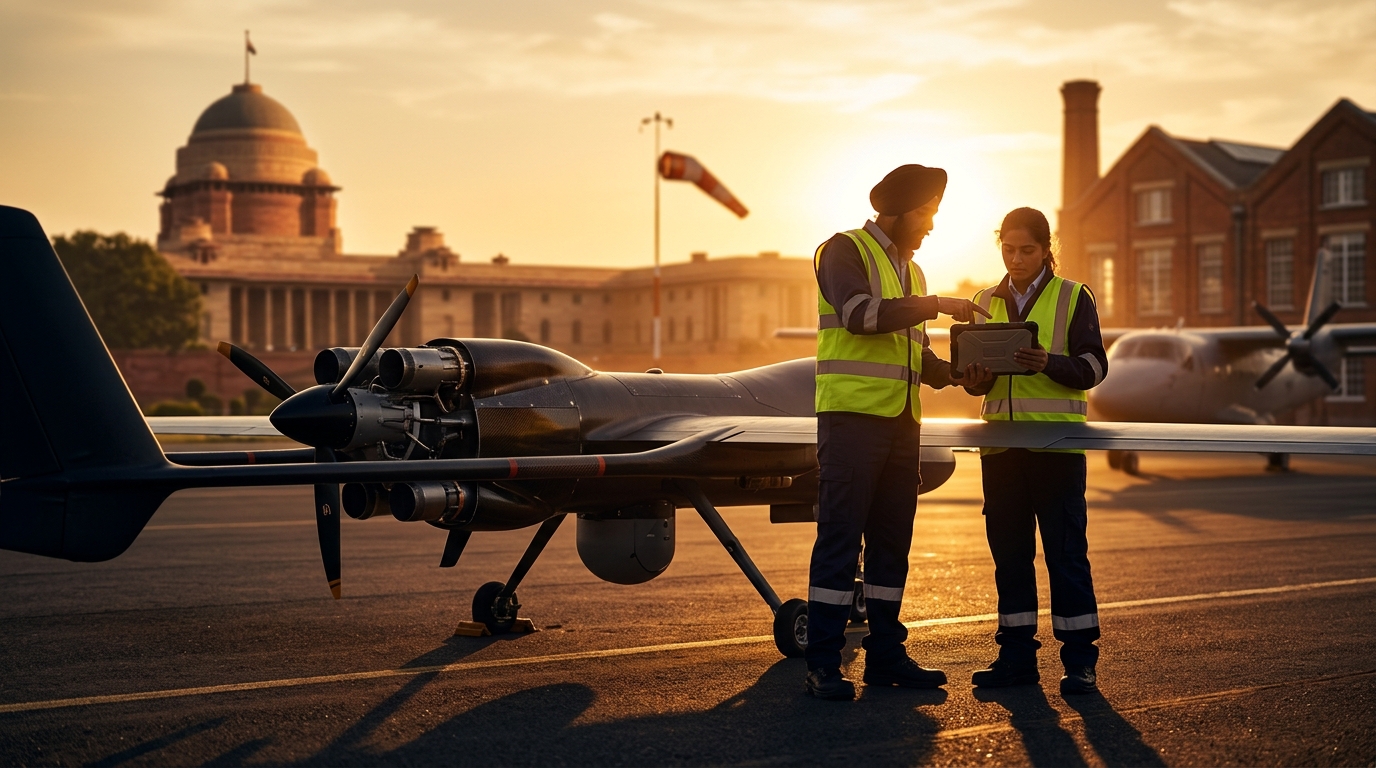
The Ministry of Science & Technology, via the Technology Development Board, has granted funding to Casey Aviation for the BE‑JTO project under the India‑UK Collaborative R&D Programme. The initiative aims to develop hybrid propulsion and Jump Take‑Off technology for unmanned aircraft, establishing a test facility in North India to boost regional air mobility and support the broader aerospace ecosystem.
The Ministry of Science & Technology has approved a conditional grant to Casey Aviation Private Limited of Gurugram for a project titled “Boost Electric Jump Take‑Off (BE‑JTO)”. The funding comes under the India–UK Collaborative R&D Programme and is administered by the TDB in partnership with the UK‑based ARC Aerosystems Ltd . Key Developments Creation of a dedicated test bench in North India for hybrid propulsion validation. Development of an advanced hybrid propulsion based JTO system for unmanned and light aircraft. Potential applications in regional connectivity, disaster relief, medical evacuation, logistics and surveillance, especially in remote areas. Provision of testing services to startups and developers, fostering an ecosystem for advanced aerial mobility. Important Facts The project is a joint effort between Casey Aviation and ARC Aerosystems Ltd , leveraging expertise from industry, academia and research institutions. The grant is conditional, meaning compliance with milestones and reporting is required. The envisioned test bench will be one of the first of its kind in North India, offering a platform for real‑world validation of propulsion technologies. Casey Aviation, a newly established aerospace venture, focuses on designing small aircraft and specialised aviation solutions. Its team comprises professionals from the aerospace sector, universities and research labs, aligning with the government's push for indigenous technology development. UPSC Relevance Understanding the role of the DST and its agencies like the TDB is essential for questions on India’s innovation ecosystem. The collaboration exemplifies how bilateral R&D programmes can accelerate technology transfer, a topic often asked in GS3 (Science & Technology) and GS4 (International Relations). Hybrid propulsion and JTO concepts intersect with discussions on sustainable aviation, green technology and strategic autonomy – key themes in the UPSC syllabus. Way Forward Successful validation of the hybrid JTO system could lead to commercialisation of compact, low‑cost aircraft for regional air mobility. The test bench is expected to attract multiple startups, creating a hub for innovation in North India. Continued monitoring of milestones, timely disbursement of funds, and integration with other government schemes such as the Make in India initiative will be crucial to maximise the project's impact on the aviation sector.
  1. Home
  2. Prepare
  3. Current Affairs
  4. TDB (DST) Grants to Casey Aviation for India‑UK Hybrid Propulsion R&D on Unmanned Aircraft
Login to bookmark articles
Login to mark articles as complete

Overview

gs.gs377% UPSC Relevance

India‑UK hybrid‑propulsion R&D, funded by DST’s TDB, boosts indigenous green aviation.

Key Facts

  1. In 2026, the DST, via the Technology Development Board (TDB), approved a conditional grant to Casey Aviation Pvt. Ltd. for the ‘Boost Electric Jump Take‑Off (BE‑JTO)’ project.
  2. The project is part of the India–UK Collaborative R&D Programme, a bilateral initiative for sustainable technology development.
  3. The grant funds creation of a hybrid‑propulsion test‑bench in North India to validate Jump Take‑Off (JTO) systems for UAVs and light aircraft.
  4. Partnering UK firm: ARC Aerosystems Ltd.; the collaboration leverages industry, academia and research institutions.
  5. Hybrid propulsion combines electric and conventional power, aiming to cut emissions and enable short‑runway/vertical take‑off for regional connectivity, disaster relief and logistics.
  6. TDB operates under the Department of Science & Technology (DST) and provides financial assistance for innovative technology projects as per the Technology Development Board Act, 1995.
  7. The project aligns with ‘Make in India’, aims to create a testing ecosystem for startups, and could boost indigenous aerospace capabilities.

Background & Context

India's push for indigenous, green aerospace technology is being accelerated through bilateral R&D programmes and statutory funding bodies like DST and TDB. Such collaborations address strategic autonomy, sustainable aviation, and the development of a domestic innovation ecosystem, all core to GS‑3 and GS‑4 syllabi.

UPSC Syllabus Connections

Essay•Economy, Development and InequalityEssay•Science, Technology and SocietyGS3•Developments in science and technology and their applicationsGS3•Environmental Impact AssessmentGS2•Bilateral, regional and global groupings involving India

Mains Answer Angle

In a Mains answer, discuss how India‑UK collaborative R&D and TDB funding foster strategic autonomy in aerospace, linking it to the broader themes of technology self‑reliance, green innovation and international cooperation (GS‑3, GS‑4).

Full Article

<p>The <strong>Ministry of Science &amp; Technology</strong> has approved a conditional grant to <strong>Casey Aviation Private Limited</strong> of Gurugram for a project titled “Boost Electric Jump Take‑Off (BE‑JTO)”. The funding comes under the <span class="key-term" data-definition="India–UK Collaborative R&amp;D Programme for Industrial Sustainability – a bilateral research initiative aimed at joint development of sustainable technologies; relevant to GS3 (Science &amp; Technology) and GS4 (International Relations). ">India–UK Collaborative R&amp;D Programme</span> and is administered by the <span class="key-term" data-definition="Technology Development Board – a statutory body under the Department of Science &amp; Technology that provides financial assistance for innovative technology projects; GS3: Science &amp; Technology. ">TDB</span> in partnership with the UK‑based <strong>ARC Aerosystems Ltd</strong>.</p> <h3>Key Developments</h3> <ul> <li>Creation of a dedicated <span class="key-term" data-definition="Test bench facility – a controlled environment where propulsion systems are evaluated for performance, safety and reliability; important for GS3 (Science &amp; Technology) and GS4 (Infrastructure). ">test bench</span> in North India for hybrid propulsion validation.</li> <li>Development of an advanced <span class="key-term" data-definition="Hybrid propulsion – a system that combines electric and conventional power sources to improve efficiency and reduce emissions; GS3: Science &amp; Technology. ">hybrid propulsion</span> based <span class="key-term" data-definition="Jump Take‑Off (JTO) – a take‑off technique that enables short or near‑vertical lift without long runways, useful for rotorcraft and UAVs; GS3: Science &amp; Technology. ">JTO</span> system for unmanned and light aircraft.</li> <li>Potential applications in regional connectivity, disaster relief, medical evacuation, logistics and surveillance, especially in remote areas.</li> <li>Provision of testing services to startups and developers, fostering an ecosystem for advanced aerial mobility.</li> </ul> <h3>Important Facts</h3> <p>The project is a joint effort between <strong>Casey Aviation</strong> and <strong>ARC Aerosystems Ltd</strong>, leveraging expertise from industry, academia and research institutions. The grant is conditional, meaning compliance with milestones and reporting is required. The envisioned test bench will be one of the first of its kind in North India, offering a platform for real‑world validation of propulsion technologies.</p> <p>Casey Aviation, a newly established aerospace venture, focuses on designing small aircraft and specialised aviation solutions. Its team comprises professionals from the aerospace sector, universities and research labs, aligning with the government's push for indigenous technology development.</p> <h3>UPSC Relevance</h3> <p>Understanding the role of the <span class="key-term" data-definition="Department of Science &amp; Technology – the central ministry responsible for formulation and implementation of science policy, funding research and development; GS3: Science &amp; Technology. ">DST</span> and its agencies like the <span class="key-term" data-definition="Technology Development Board – a statutory body under the Department of Science &amp; Technology that provides financial assistance for innovative technology projects; GS3: Science &amp; Technology. ">TDB</span> is essential for questions on India’s innovation ecosystem. The collaboration exemplifies how bilateral R&amp;D programmes can accelerate technology transfer, a topic often asked in GS3 (Science &amp; Technology) and GS4 (International Relations). Hybrid propulsion and JTO concepts intersect with discussions on sustainable aviation, green technology and strategic autonomy – key themes in the UPSC syllabus.</p> <h3>Way Forward</h3> <p>Successful validation of the hybrid <span class="key-term" data-definition="Jump Take‑Off (JTO) – a take‑off technique that enables short or near‑vertical lift without long runways, useful for rotorcraft and UAVs; GS3: Science &amp; Technology. ">JTO</span> system could lead to commercialisation of compact, low‑cost aircraft for regional air mobility. The test bench is expected to attract multiple startups, creating a hub for innovation in North India. Continued monitoring of milestones, timely disbursement of funds, and integration with other government schemes such as the <strong>Make in India</strong> initiative will be crucial to maximise the project's impact on the aviation sector.
Read Original on pib

Analysis

Practice Questions

GS3
Easy
Prelims MCQ

Statutory bodies – Technology Development Board

1 marks
4 keywords
GS3
Medium
Mains Short Answer

Bilateral R&D collaborations and strategic autonomy

10 marks
5 keywords
GS3
Hard
Mains Essay

Science & Technology – International collaborations and sustainable aviation

25 marks
8 keywords
Related:Daily•Weekly

Loading related articles...

Loading related articles...

Tip: Click articles above to read more from the same date, or use the back button to see all articles.

Quick Reference

Key Insight

India‑UK hybrid‑propulsion R&D, funded by DST’s TDB, boosts indigenous green aviation.

Key Facts

  1. In 2026, the DST, via the Technology Development Board (TDB), approved a conditional grant to Casey Aviation Pvt. Ltd. for the ‘Boost Electric Jump Take‑Off (BE‑JTO)’ project.
  2. The project is part of the India–UK Collaborative R&D Programme, a bilateral initiative for sustainable technology development.
  3. The grant funds creation of a hybrid‑propulsion test‑bench in North India to validate Jump Take‑Off (JTO) systems for UAVs and light aircraft.
  4. Partnering UK firm: ARC Aerosystems Ltd.; the collaboration leverages industry, academia and research institutions.
  5. Hybrid propulsion combines electric and conventional power, aiming to cut emissions and enable short‑runway/vertical take‑off for regional connectivity, disaster relief and logistics.
  6. TDB operates under the Department of Science & Technology (DST) and provides financial assistance for innovative technology projects as per the Technology Development Board Act, 1995.
  7. The project aligns with ‘Make in India’, aims to create a testing ecosystem for startups, and could boost indigenous aerospace capabilities.

Background

India's push for indigenous, green aerospace technology is being accelerated through bilateral R&D programmes and statutory funding bodies like DST and TDB. Such collaborations address strategic autonomy, sustainable aviation, and the development of a domestic innovation ecosystem, all core to GS‑3 and GS‑4 syllabi.

UPSC Syllabus

  • Essay — Economy, Development and Inequality
  • Essay — Science, Technology and Society
  • GS3 — Developments in science and technology and their applications
  • GS3 — Environmental Impact Assessment
  • GS2 — Bilateral, regional and global groupings involving India

Mains Angle

In a Mains answer, discuss how India‑UK collaborative R&D and TDB funding foster strategic autonomy in aerospace, linking it to the broader themes of technology self‑reliance, green innovation and international cooperation (GS‑3, GS‑4).

Explore:Current Affairs·Editorial Analysis·Govt Schemes·Study Materials·Previous Year Questions·UPSC GPT