Loading page, please wait…
HomeCurrent AffairsEditorialsGovt SchemesLearning ResourcesUPSC SyllabusPricingAboutBest UPSC AIUPSC AI ToolAI for UPSCUPSC ChatGPT

© 2026 Vaidra. All rights reserved.

PrivacyTerms
Vaidra Logo
Vaidra

Top 4 items + smart groups

UPSC GPT
New
Current Affairs
Daily Solutions
Daily Puzzle
Mains Evaluator

Version 2.0.0 • Built with ❤️ for UPSC aspirants

Union Power Minister Manohar Lal Calls for Energy Security and Releases DISCOM Performance Reports at Bharat Electricity Summit 2026 — UPSC Current Affairs | March 20, 2026
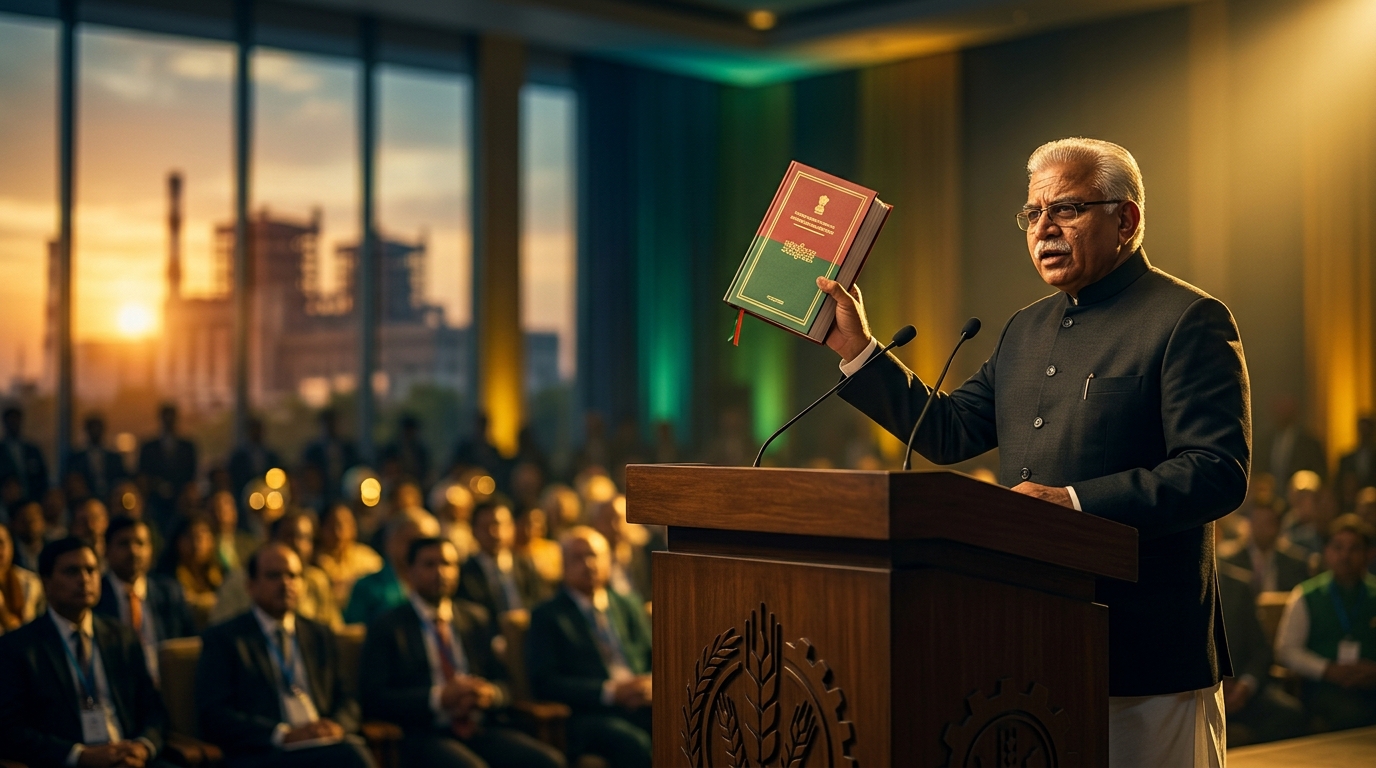
Union Power Minister Manohar Lal Calls for Energy Security and Releases DISCOM Performance Reports at Bharat Electricity Summit 2026
On 20 March 2026, Union Power Minister <strong>Manohar Lal</strong> stressed energy security at the <strong>Bharat Electricity Summit 2026</strong>, urging Centre‑State coordination to boost renewable and nuclear power and announced the CSRD and DUR reports assessing DISCOM performance for FY 2024‑25. The statements highlight key policy shifts relevant to UPSC GS‑3 (Economy) and GS‑2 (Polity).
Union Power Minister Manohar Lal Emphasises Energy Security at Bharat Electricity Summit 2026 On 20 March 2026 , Manohar Lal highlighted the need for robust energy security amid heightened geopolitical tensions. Speaking at the Bharat Electricity Summit 2026 , he urged coordinated action between the Centre and States to make power generation, transmission and distribution both affordable and efficient. Key Developments Call for a joint Centre‑State strategy to boost per‑capita energy consumption and accelerate the shift to renewable energy . Recognition of nuclear energy as a clean‑energy option. Labelled the SHANTI Act as a significant policy step. Release of the CSRD and the DUR reports for FY 2024‑25. Important Facts The DISCOMs were assessed on two fronts: CSRD focuses on consumer‑service standards such as accurate metering, timely billing, effective grievance redressal and transparent tariff setting. DUR adopts a broader framework, examining institutional capability, financial sustainability, operational efficiency and overall service delivery outcomes. UPSC Relevance Understanding the power sector’s policy direction is vital for GS‑3 (Economy) and GS‑2 (Polity) questions. The emphasis on energy security , renewable and nuclear mix, and the regulatory mechanisms (CSRD, DUR) illustrate how the government balances growth, sustainability and consumer welfare. The role of the Union Power Minister and the coordination with State governments also touch upon Centre‑State relations, a core GS‑2 theme. Way Forward To translate the summit’s vision into action, aspirants should monitor: Implementation of the SHANTI Act and its impact on renewable project pipelines. Progress in increasing per‑capita electricity consumption without compromising affordability. Performance trends of DISCOMs in subsequent CSRD and DUR editions, especially regarding financial health and consumer grievance mechanisms. Policy measures to integrate nuclear power safely into the national grid. These developments will shape India’s energy landscape and are likely to feature in future UPSC examinations.
  1. Home
  2. Prepare
  3. Current Affairs
  4. Union Power Minister Manohar Lal Calls for Energy Security and Releases DISCOM Performance Reports at Bharat Electricity Summit 2026
Login to bookmark articles
Login to mark articles as complete

Overview

Energy security drive and DISCOM rankings mark a policy shift—key for UPSC GS‑3

Key Facts

  1. 20 March 2026: Union Power Minister Manohar Lal addressed the Bharat Electricity Summit 2026.
  2. Minister highlighted energy security amid heightened global geopolitical tensions.
  3. CSRD (Consumer Service Ratings of DISCOMs) and DUR (Distributing Utilities Ranking) reports for FY 2024‑25 were released.
  4. SHANTI Act was presented as a landmark legislation to promote clean and sustainable energy projects.
  5. A joint Centre‑State strategy was urged to boost per‑capita electricity consumption and accelerate renewable and nuclear energy adoption.
  6. Renewable energy (solar, wind, hydro, biomass) and nuclear energy were identified as clean‑energy options.
  7. CSRD assesses metering, billing, grievance redressal, tariff transparency; DUR evaluates institutional capability, financial health, operational efficiency, service outcomes.

Background & Context

Energy security is a core component of India’s economic growth and environmental sustainability, linking GS‑3 (economy) with GS‑2 (centre‑state relations). The new performance metrics (CSRD, DUR) and the SHANTI Act reflect the government's push for accountability, consumer welfare, and a clean‑energy transition in the power sector.

UPSC Syllabus Connections

GS3•Infrastructure - Energy, Ports, Roads, Airports, RailwaysEssay•Environment and SustainabilityPrelims_GS•Physics and Chemistry in Everyday Life

Mains Answer Angle

In GS‑3, candidates can discuss how centre‑state coordination, regulatory reforms (CSRD/DUR) and legislative measures (SHANTI Act) together address energy security, renewable integration and DISCOM financial health.

Full Article

Read Original on hindu

Analysis

Practice Questions

Prelims
Easy
Prelims MCQ

Power sector performance assessment

1 marks
4 keywords
GS3
Medium
Mains Short Answer

Legislative measures for clean energy

10 marks
4 keywords
GS3
Hard
Mains Essay

Energy security, centre‑state relations, power sector reforms

250 marks
6 keywords
Related:Daily•Weekly

Loading related articles...

Loading related articles...

Tip: Click articles above to read more from the same date, or use the back button to see all articles.

Explore:Current Affairs·Editorial Analysis·Govt Schemes·Study Materials·Previous Year Questions·UPSC GPT