Loading page, please wait…
HomeCurrent AffairsEditorialsGovt SchemesLearning ResourcesUPSC SyllabusPricingAboutBest UPSC AIUPSC AI ToolAI for UPSCUPSC ChatGPT

© 2026 Vaidra. All rights reserved.

PrivacyTerms
Vaidra Logo
Vaidra

Top 4 items + smart groups

UPSC GPT
New
Current Affairs
Daily Solutions
Daily Puzzle
Mains Evaluator

Version 2.0.0 • Built with ❤️ for UPSC aspirants

US‑Philippines Joint Combat Drills Expand to Include Japan, France, Canada — Signalling Deterrence in Asia
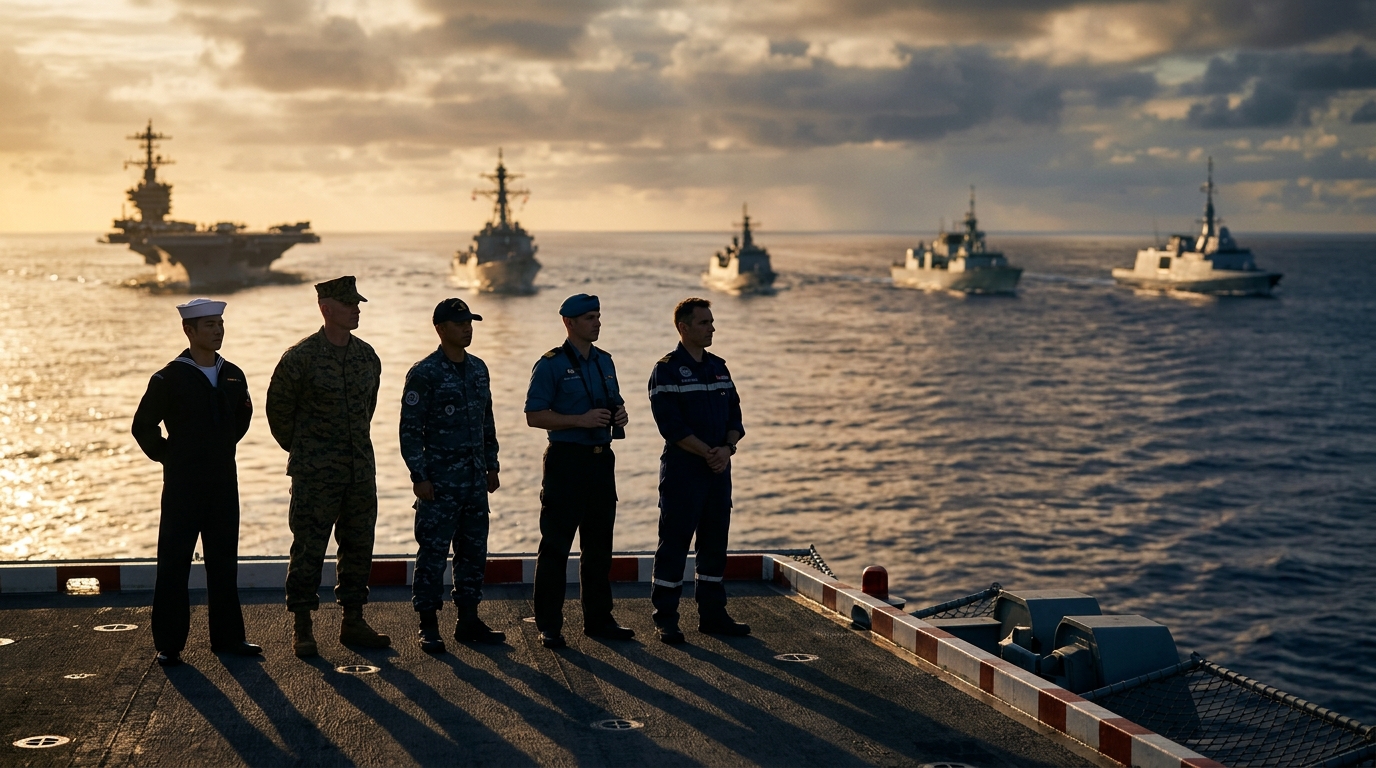
On 20 April 2026, the United States and the Philippines began their largest joint combat drills, now joined by Japan, France and Canada under existing Visiting Forces Agreements. The exercise aims to bolster allied deterrence in Asia amid the ongoing West Asia conflict, highlighting the strategic importance of US‑Philippine security cooperation for UPSC aspirants.
Overview On 20 April 2026 , the United States and the Philippines launched one of their largest combat exercises to showcase allied strength and deter potential aggression in the Indo‑Pacific region. Key Developments Annual drill expands to involve forces from Japan, France and Canada , all of which have signed a Visiting Forces Agreement with Manila. The exercise underscores deterrence objectives amid the ongoing West Asia conflict . Joint operations include live‑fire drills, amphibious landings, and air‑defence simulations, enhancing interoperability among participating navies and air forces. Important Facts Participating forces: U.S. Pacific Command , Philippine Armed Forces , Japan Self‑Defense Forces , French Armed Forces , and Canadian Armed Forces . Location: Primarily conducted in the Sulu Sea and surrounding maritime zones of the Philippines. Duration: A week‑long series of drills scheduled from 20 to 27 April 2026 . Strategic intent: Reinforce the allied military cooperation framework and reassure regional partners of a collective security posture. UPSC Relevance The drill touches upon several UPSC syllabus areas: GS2 (International Relations) – the dynamics of US‑Asia security architecture, the role of bilateral agreements like the VFA, and the impact of the West Asia conflict on strategic priorities; GS3 (Defence) – concepts of joint exercises, force interoperability, and deterrence strategy; and GS1 (Geography) – the strategic importance of the Indo‑Pacific maritime corridors. Way Forward Analysts suggest that continued expansion of such exercises will cement the Philippines’ position as a pivotal security hub, encourage further participation from Indo‑Pacific allies, and provide a counter‑balance to any coercive moves by regional powers. For policymakers, maintaining transparent communication about the objectives of these drills will be crucial to avoid escalation while reinforcing the credibility of the US‑led security umbrella in Asia.
  1. Home
  2. Prepare
  3. Current Affairs
  4. US‑Philippines Joint Combat Drills Expand to Include Japan, France, Canada — Signalling Deterrence in Asia
Login to bookmark articles
Login to mark articles as complete

Overview

gs.gs278% UPSC Relevance

Expanded US‑Philippines drills with Japan, France, Canada signal collective deterrence in the Indo‑Pacific

Key Facts

  1. The US‑Philippines joint combat drills were held from 20 to 27 April 2026, a week‑long exercise.
  2. Participating forces: US Pacific Command, Philippine Armed Forces, Japan Self‑Defense Forces, French Armed Forces and Canadian Armed Forces.
  3. The drills were conducted primarily in the Sulu Sea and adjacent maritime zones of the Philippines.
  4. Japan, France and Canada joined the exercise after signing Visiting Forces Agreements (VFA) with Manila.
  5. The exercise featured live‑fire drills, amphibious landings and air‑defence simulations to boost interoperability.
  6. The expansion underscores a deterrence posture amid the ongoing West Asia conflict and rising tensions in the Indo‑Pacific.
  7. It reinforces the US‑led security umbrella and positions the Philippines as a pivotal hub for allied cooperation.

Background & Context

The drills reflect the deepening US‑Asia security architecture, where bilateral VFAs enable foreign troops to operate on Philippine soil, enhancing collective defence. In the backdrop of the West Asia war, allies are expanding joint exercises to project power, assure partners and counterbalance coercive moves by regional powers in the Indo‑Pacific maritime corridor.

Mains Answer Angle

GS2 – International Relations: Discuss the role of multilateral defence cooperation, such as the expanded US‑Philippines‑Japan‑France‑Canada drills, in shaping the Indo‑Pacific security architecture and its implications for India's foreign policy.

Full Article

<h3>Overview</h3> <p>On <strong>20 April 2026</strong>, the <span class="key-term" data-definition="United States — The federal government of the USA, a major global power with extensive defence capabilities; relevant to GS2: International Relations and GS3: Defence.">United States</span> and the <span class="key-term" data-definition="Philippines — Southeast Asian archipelagic nation, a US treaty ally under the Visiting Forces Agreement; relevant to GS2: International Relations.">Philippines</span> launched one of their largest <span class="key-term" data-definition="Combat exercises — Coordinated military drills involving live‑fire and tactical maneuvers to improve interoperability; GS3: Defence.">combat exercises</span> to showcase allied strength and deter potential aggression in the Indo‑Pacific region.</p> <h3>Key Developments</h3> <ul> <li>Annual drill expands to involve forces from <strong>Japan, France and Canada</strong>, all of which have signed a <span class="key-term" data-definition="Visiting Forces Agreement (VFA) — Bilateral pact allowing foreign troops to operate in a host country, facilitating joint training and operations; GS2: International Relations.">Visiting Forces Agreement</span> with Manila.</li> <li>The exercise underscores <span class="key-term" data-definition="Deterrence — Strategy of preventing aggression by showcasing credible military capability; GS3: Defence and GS2: International Relations.">deterrence</span> objectives amid the ongoing <span class="key-term" data-definition="West Asia conflict — Ongoing war in the Middle East region, drawing US strategic attention; GS2: International Relations.">West Asia conflict</span>.</li> <li>Joint operations include live‑fire drills, amphibious landings, and air‑defence simulations, enhancing interoperability among participating navies and air forces.</li> </ul> <h3>Important Facts</h3> <ul> <li>Participating forces: <strong>U.S. Pacific Command</strong>, <strong>Philippine Armed Forces</strong>, <strong>Japan Self‑Defense Forces</strong>, <strong>French Armed Forces</strong>, and <strong>Canadian Armed Forces</strong>.</li> <li>Location: Primarily conducted in the <strong>Sulu Sea and surrounding maritime zones</strong> of the Philippines.</li> <li>Duration: A week‑long series of drills scheduled from <strong>20 to 27 April 2026</strong>.</li> <li>Strategic intent: Reinforce the <span class="key-term" data-definition="Allied military cooperation — Joint actions by friendly nations to enhance security and share resources; GS2: International Relations.">allied military cooperation</span> framework and reassure regional partners of a collective security posture.</li> </ul> <h3>UPSC Relevance</h3> <p>The drill touches upon several UPSC syllabus areas: <strong>GS2 (International Relations)</strong> – the dynamics of US‑Asia security architecture, the role of bilateral agreements like the VFA, and the impact of the West Asia conflict on strategic priorities; <strong>GS3 (Defence)</strong> – concepts of joint exercises, force interoperability, and deterrence strategy; and <strong>GS1 (Geography)</strong> – the strategic importance of the Indo‑Pacific maritime corridors.</p> <h3>Way Forward</h3> <p>Analysts suggest that continued expansion of such exercises will cement the Philippines’ position as a pivotal security hub, encourage further participation from Indo‑Pacific allies, and provide a counter‑balance to any coercive moves by regional powers. For policymakers, maintaining transparent communication about the objectives of these drills will be crucial to avoid escalation while reinforcing the credibility of the US‑led security umbrella in Asia.</p>
Read Original on hindu

Analysis

Practice Questions

GS2
Easy
Prelims MCQ

Expansion of joint military exercises

1 marks
4 keywords
GS2
Medium
Mains Short Answer

Visiting Forces Agreements and regional security

10 marks
5 keywords
GS2
Hard
Mains Essay

Deterrence through multilateral defence cooperation

25 marks
6 keywords
Related:Daily•Weekly

Loading related articles...

Loading related articles...

Tip: Click articles above to read more from the same date, or use the back button to see all articles.

Quick Reference

Key Insight

Expanded US‑Philippines drills with Japan, France, Canada signal collective deterrence in the Indo‑Pacific

Key Facts

  1. The US‑Philippines joint combat drills were held from 20 to 27 April 2026, a week‑long exercise.
  2. Participating forces: US Pacific Command, Philippine Armed Forces, Japan Self‑Defense Forces, French Armed Forces and Canadian Armed Forces.
  3. The drills were conducted primarily in the Sulu Sea and adjacent maritime zones of the Philippines.
  4. Japan, France and Canada joined the exercise after signing Visiting Forces Agreements (VFA) with Manila.
  5. The exercise featured live‑fire drills, amphibious landings and air‑defence simulations to boost interoperability.
  6. The expansion underscores a deterrence posture amid the ongoing West Asia conflict and rising tensions in the Indo‑Pacific.
  7. It reinforces the US‑led security umbrella and positions the Philippines as a pivotal hub for allied cooperation.

Background

The drills reflect the deepening US‑Asia security architecture, where bilateral VFAs enable foreign troops to operate on Philippine soil, enhancing collective defence. In the backdrop of the West Asia war, allies are expanding joint exercises to project power, assure partners and counterbalance coercive moves by regional powers in the Indo‑Pacific maritime corridor.

Mains Angle

GS2 – International Relations: Discuss the role of multilateral defence cooperation, such as the expanded US‑Philippines‑Japan‑France‑Canada drills, in shaping the Indo‑Pacific security architecture and its implications for India's foreign policy.

Explore:Current Affairs·Editorial Analysis·Govt Schemes·Study Materials·Previous Year Questions·UPSC GPT
US‑Philippines Joint Combat Drills Expand to Include Japan, France, Canada — Signalling Deterrence in Asia | UPSC Current Affairs