Loading page, please wait…
Radioactive Discharges from Indian Nuclear Plants - UPSC Environment And Ecology
What is Radioactive Discharges from Indian Nuclear Plants in UPSC Environment And Ecology?
Radioactive Discharges from Indian Nuclear Plants is a key topic under Environment And Ecology for UPSC Civil Services Examination. Key points include: BARC study (2000-2020) found minimal radioactive discharges from 6 Indian nuclear plants.. "Minimal" means discharges are well within safety limits, posing no significant threat to health or environment.. Radioactive discharge is the release of radioactive substances from human activities, primarily nuclear facilities.. Understanding this topic is essential for both UPSC Prelims and Mains preparation.
Why is Radioactive Discharges from Indian Nuclear Plants important for UPSC exam?
Radioactive Discharges from Indian Nuclear Plants is a Medium-level topic in UPSC Environment And Ecology. It is tested in both Prelims (factual MCQs) and Mains (analytical answer writing). Previous year UPSC questions have frequently covered aspects of Radioactive Discharges from Indian Nuclear Plants, making it essential for comprehensive IAS preparation.
How to prepare Radioactive Discharges from Indian Nuclear Plants for UPSC?
To prepare Radioactive Discharges from Indian Nuclear Plants for UPSC: (1) Study the comprehensive notes covering all key concepts on Vaidra. (2) Practice previous year questions on this topic. (3) Connect it with current affairs using daily updates. (4) Revise using key takeaways and mind maps available for Environment And Ecology. (5) Write practice answers linking Radioactive Discharges from Indian Nuclear Plants to related GS Paper topics.
Key takeaways of Radioactive Discharges from Indian Nuclear Plants for UPSC
- BARC study (2000-2020) found minimal radioactive discharges from 6 Indian nuclear plants.
- "Minimal" means discharges are well within safety limits, posing no significant threat to health or environment.
- Radioactive discharge is the release of radioactive substances from human activities, primarily nuclear facilities.
- The findings reinforce confidence in India's nuclear safety protocols and operational standards.
- This supports nuclear energy as a clean, viable option for India's energy security and climate goals.
Radioactive Discharges from Indian Nuclear Plants
Medium⏱️ 6 min read
environment and ecology
📖 Introduction
Recent Findings on Nuclear Plant Discharges
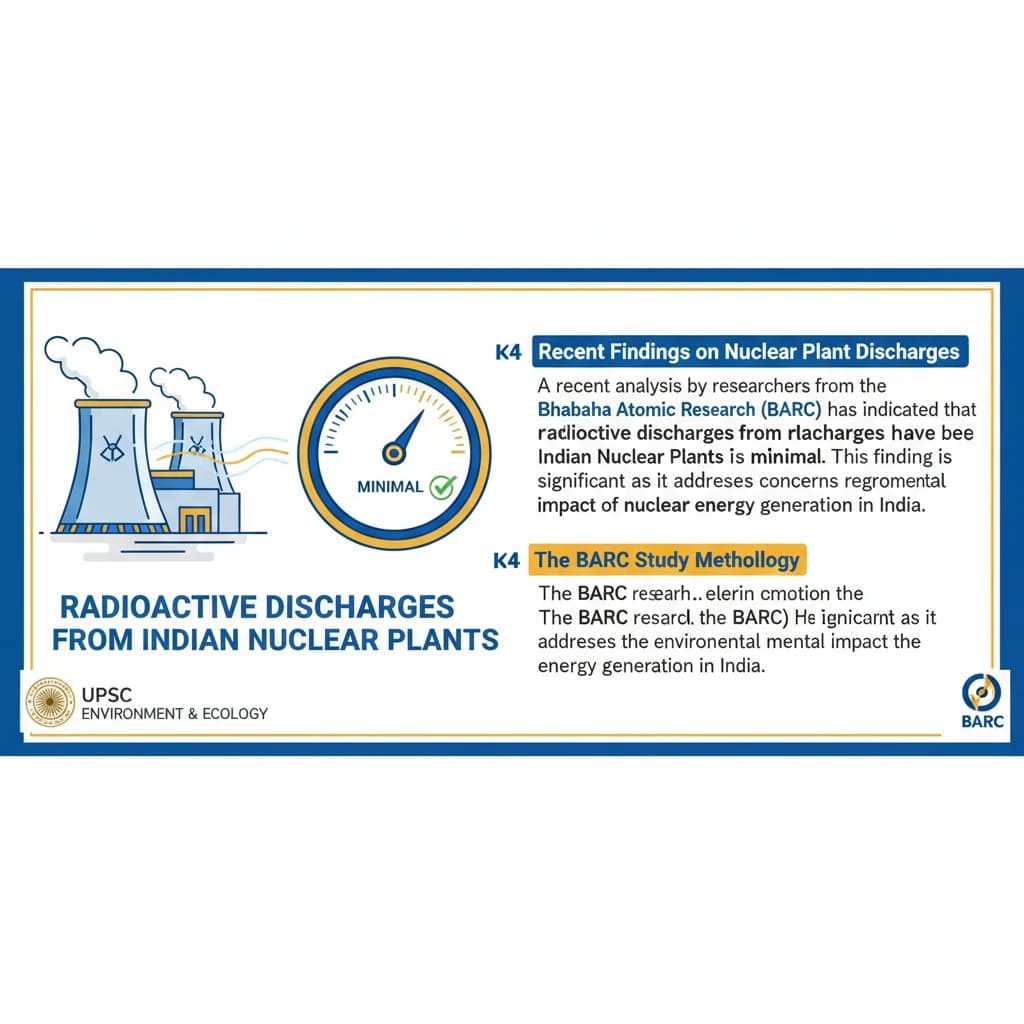
A recent analysis by researchers from the Bhabha Atomic Research Centre (BARC) has indicated that radioactive discharges from Indian Nuclear Plants have been consistently minimal.
This finding is significant as it addresses concerns regarding the environmental impact of nuclear energy generation in India.
The BARC Study Methodology
The BARC researchers conducted a comprehensive analysis of radiological data collected over a substantial period.
The study spanned 20 years, from 2000 to 2020, providing a long-term perspective on discharge levels.
Data was gathered from six nuclear power plants across India, ensuring a representative sample.
Understanding Radioactive Discharge
Radioactive discharge refers to the release of radioactive substances into the environment.
These releases typically originate from human activities, particularly from nuclear facilities such as nuclear power plants, research reactors, or other industrial processes involving radioactive materials.
The term "minimal" in the context of radioactive discharges implies that the levels are well within prescribed safety limits and pose no significant threat to public health or the environment.
Implications for India's Nuclear Program
These findings reinforce confidence in the safety protocols and operational standards of Indian nuclear facilities.
It supports India's continued reliance on nuclear energy as a clean and sustainable power source, crucial for meeting growing energy demands.
For UPSC Mains (GS Paper 3 - Environment & Ecology, Science & Technology), understanding the safety aspects of nuclear energy is crucial. This study provides data points to argue for the safety of India's nuclear program.
💡 Key Takeaways
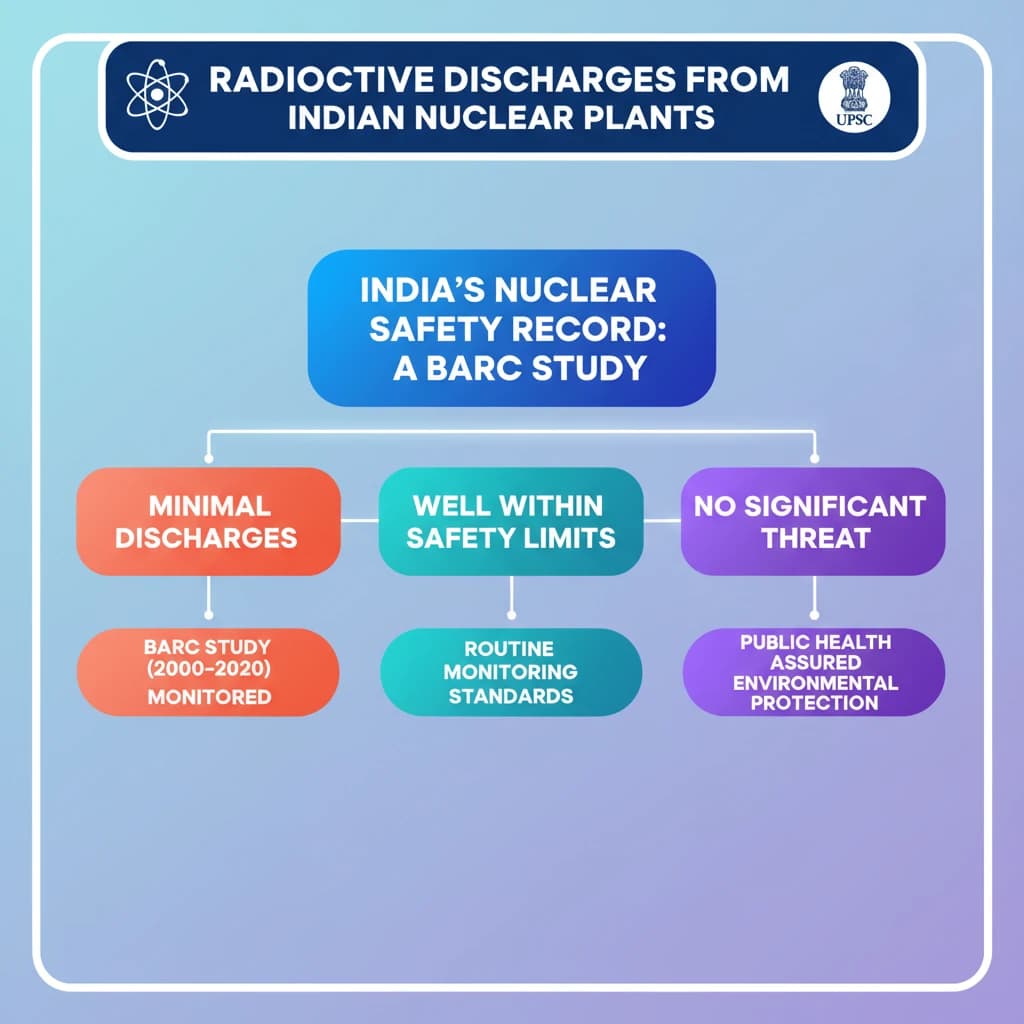
- •BARC study (2000-2020) found minimal radioactive discharges from 6 Indian nuclear plants.
- •"Minimal" means discharges are well within safety limits, posing no significant threat to health or environment.
- •Radioactive discharge is the release of radioactive substances from human activities, primarily nuclear facilities.
- •The findings reinforce confidence in India's nuclear safety protocols and operational standards.
- •This supports nuclear energy as a clean, viable option for India's energy security and climate goals.
🧠 Memory Techniques

95% Verified Content
📚 Reference Sources
•Bhabha Atomic Research Centre (BARC) analysis (as cited by Drishti IAS)