Loading page, please wait…
Sundarbans: Flora, Fauna, and Biodiversity - UPSC Environment And Ecology
What is Sundarbans: Flora, Fauna, and Biodiversity in UPSC Environment And Ecology?
Sundarbans: Flora, Fauna, and Biodiversity is a key topic under Environment And Ecology for UPSC Civil Services Examination. Key points include: Sundarban is a globally significant estuarine ecosystem with immense flora and fauna diversity.. It hosts 84 flora species (26 mangroves) and 453 fauna species (120 fish, 290 birds, 42 mammals, 35 reptiles, 8 amphibians).. Crucial habitat for rare and threatened species like Estuarine Crocodile, Gangetic Dolphin, and Olive Ridley Turtle.. Understanding this topic is essential for both UPSC Prelims and Mains preparation.
Why is Sundarbans: Flora, Fauna, and Biodiversity important for UPSC exam?
Sundarbans: Flora, Fauna, and Biodiversity is a Medium-level topic in UPSC Environment And Ecology. It is tested in both Prelims (factual MCQs) and Mains (analytical answer writing). Previous year UPSC questions have frequently covered aspects of Sundarbans: Flora, Fauna, and Biodiversity, making it essential for comprehensive IAS preparation.
How to prepare Sundarbans: Flora, Fauna, and Biodiversity for UPSC?
To prepare Sundarbans: Flora, Fauna, and Biodiversity for UPSC: (1) Study the comprehensive notes covering all key concepts on Vaidra. (2) Practice previous year questions on this topic. (3) Connect it with current affairs using daily updates. (4) Revise using key takeaways and mind maps available for Environment And Ecology. (5) Write practice answers linking Sundarbans: Flora, Fauna, and Biodiversity to related GS Paper topics.
Key takeaways of Sundarbans: Flora, Fauna, and Biodiversity for UPSC
- Sundarban is a globally significant estuarine ecosystem with immense flora and fauna diversity.
- It hosts 84 flora species (26 mangroves) and 453 fauna species (120 fish, 290 birds, 42 mammals, 35 reptiles, 8 amphibians).
- Crucial habitat for rare and threatened species like Estuarine Crocodile, Gangetic Dolphin, and Olive Ridley Turtle.
- Over 12 million people (4.5M India, 7.5M Bangladesh) depend on this ecosystem.
- Mangroves provide vital ecosystem services, including coastal protection and carbon sequestration.
Sundarbans: Flora, Fauna, and Biodiversity
Medium⏱️ 8 min read
environment and ecology
📖 Introduction
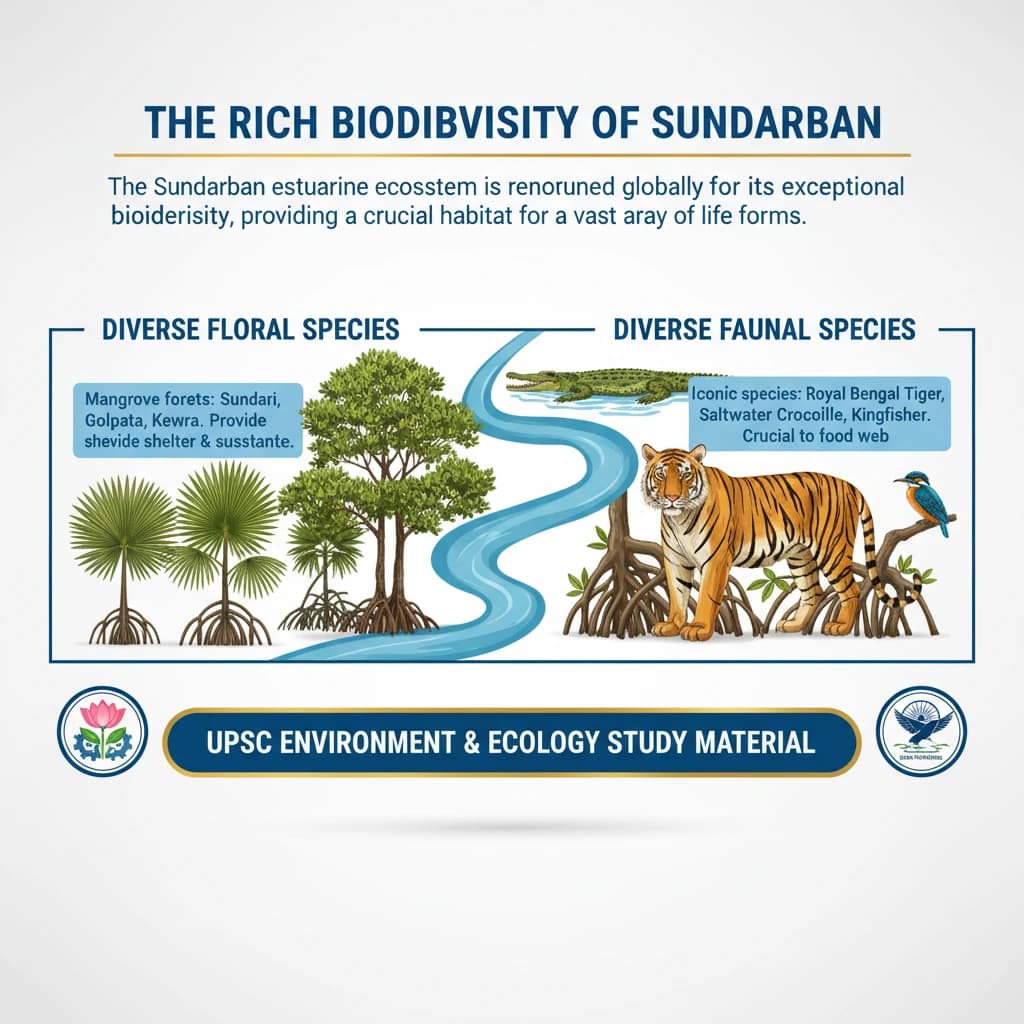
The Rich Biodiversity of Sundarban
The Sundarban estuarine ecosystem is renowned globally for its exceptional biodiversity, providing a crucial habitat for a vast array of life forms. It serves as a natural sanctuary for numerous species, playing a vital role in regional ecology.
Diverse Floral Species
The Sundarban region is a haven for plant life, particularly its unique mangrove forests. This ecosystem provides shelter and sustenance for a remarkable number of floral species.
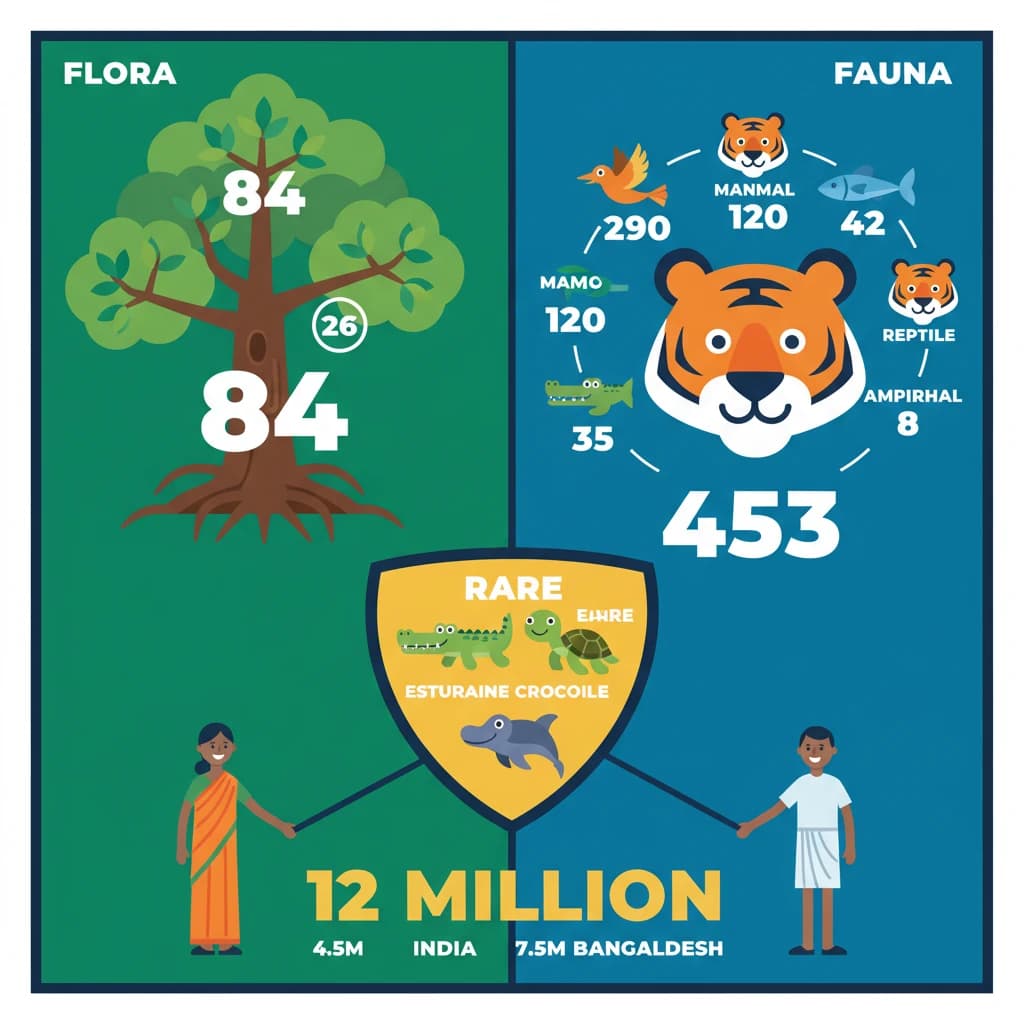
The area supports 84 species of flora. Among these, a significant proportion comprises 26 distinct mangrove species, highlighting the specialized nature of this estuarine environment.
Abundant Faunal Diversity
Beyond its rich flora, Sundarban is a vibrant hub for animal life. It hosts a diverse range of faunal groups, with many species relying on this ecosystem for their entire life cycle.
- Total Fauna Species: 453 species
- Fish Species: 120 species
- Bird Species: 290 species
- Mammal Species: 42 species
- Reptile Species: 35 species
- Amphibian Species: 8 species
Ecosystem Services and Shelter
The Sundarban ecosystem is more than just a habitat; it is a critical feeding, breeding, and sheltering ground. Many animal groups depend entirely on its unique environment for survival and reproduction.
The Sundarban acts as a natural abode, offering essential resources and protection that foster high biodiversity. Its complex network of waterways and dense mangroves creates ideal conditions for various species.
Home to Globally Threatened Wildlife
Significantly, the Sundarban is a refuge for several rare and globally threatened wildlife species. Its undisturbed areas provide critical habitats for these vulnerable populations.
- Estuarine Crocodile: A top predator in the estuarine food web.
- Water Monitor Lizard: An important scavenger and predator.
- Gangetic Dolphin: An endangered freshwater dolphin found in its rivers.
- Olive Ridley Turtle: A migratory sea turtle, often nesting in coastal areas.
Human-Ecosystem Interdependence
The Sundarban estuarine ecosystem also supports a large human population, demonstrating a close interdependence between nature and human livelihoods. Millions rely on its resources for their daily existence.
More than 12 million people live within this ecosystem, with approximately 4.5 million in India and 7.5 million in Bangladesh, highlighting the significant socio-ecological dimension.
💡 Key Takeaways
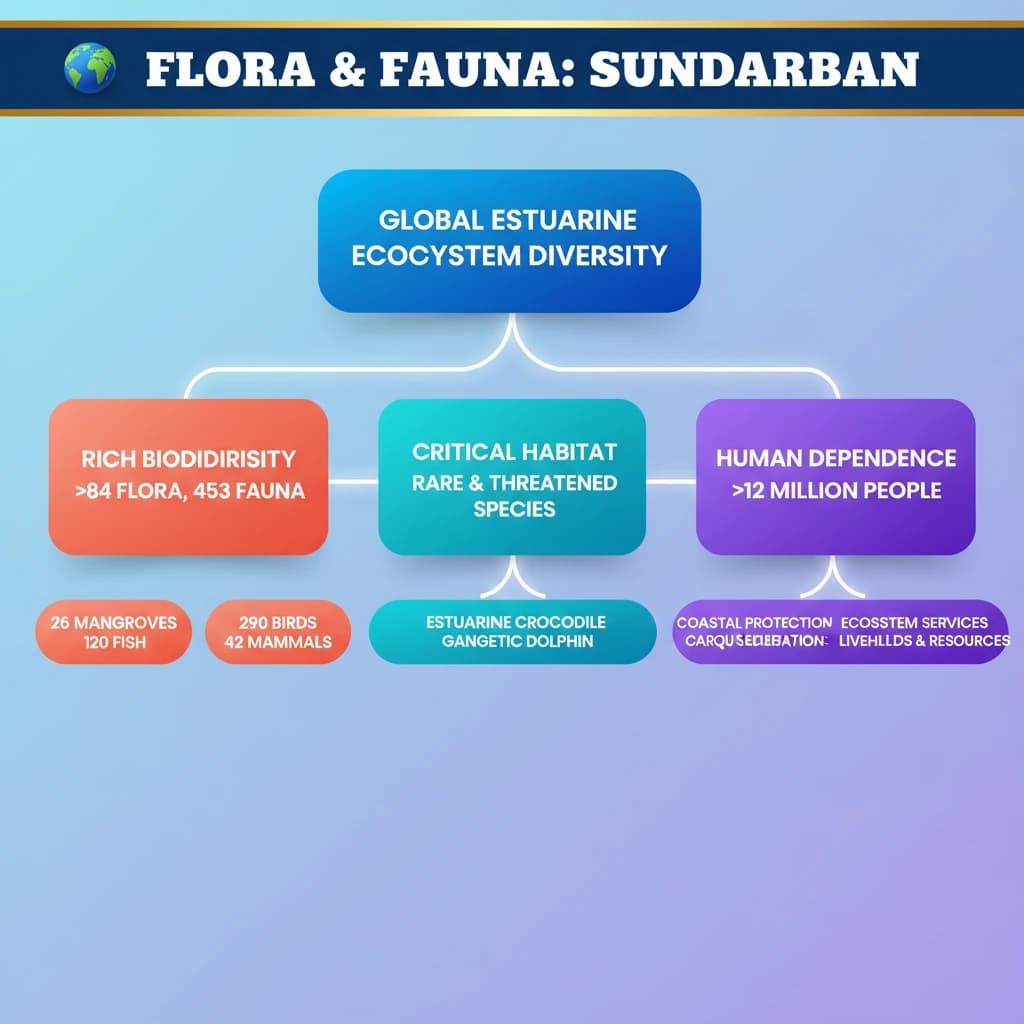
- •Sundarban is a globally significant estuarine ecosystem with immense flora and fauna diversity.
- •It hosts 84 flora species (26 mangroves) and 453 fauna species (120 fish, 290 birds, 42 mammals, 35 reptiles, 8 amphibians).
- •Crucial habitat for rare and threatened species like Estuarine Crocodile, Gangetic Dolphin, and Olive Ridley Turtle.
- •Over 12 million people (4.5M India, 7.5M Bangladesh) depend on this ecosystem.
- •Mangroves provide vital ecosystem services, including coastal protection and carbon sequestration.
🧠 Memory Techniques
95% Verified Content
📚 Reference Sources
•UNESCO World Heritage Centre
•IUCN Red List Database
•Ministry of Environment, Forest and Climate Change (MoEFCC), Government of India