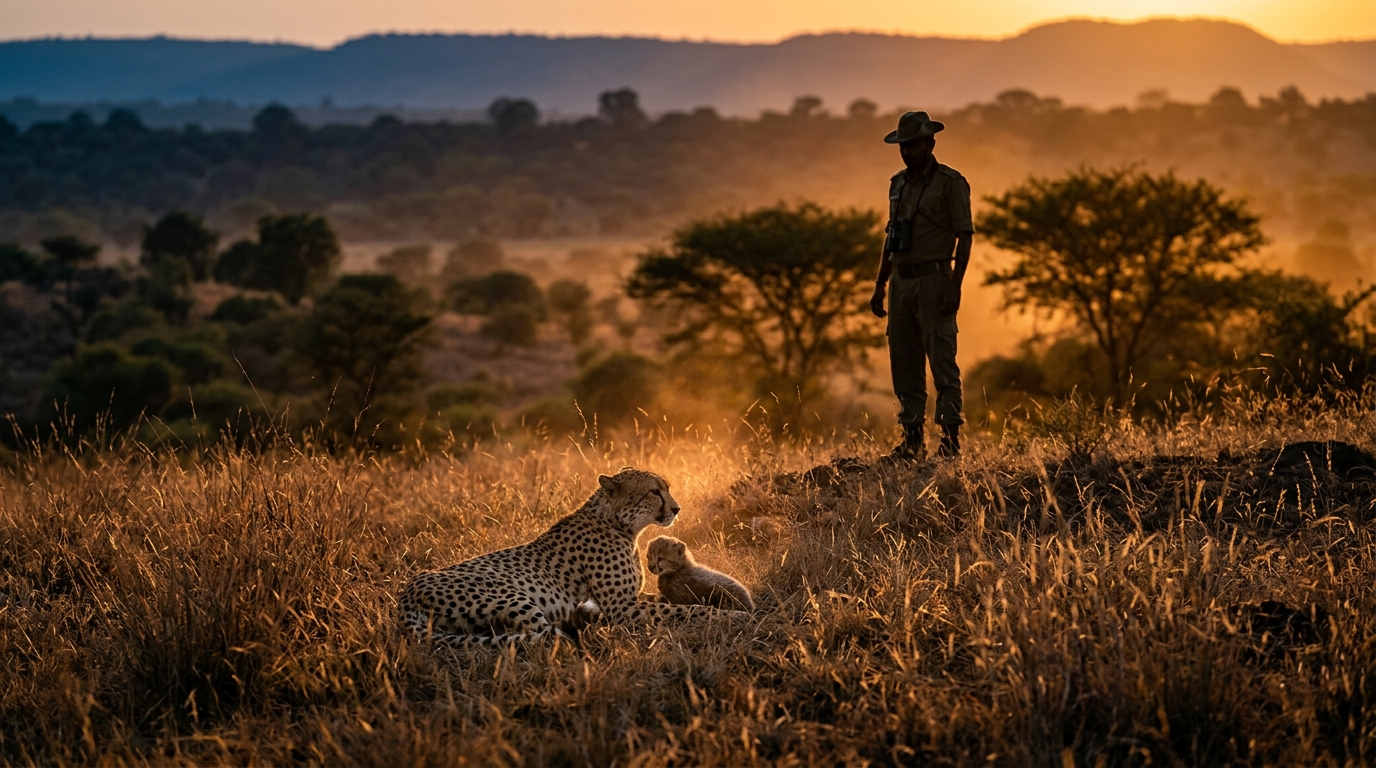
On 11 April 2026, the Ministry of Environment, Forest and Climate Change announced that an Indian‑born female cheetah of the Gamini – KGP12 line, now 25 months old, gave birth to four cubs in the wild at Kuno National Park, Madhya Pradesh. This marks the first recorded wild birth since the cheetah reintroduction programme began, and the first involving an Indian‑born female.
Key Developments
- Historic wild birth: Four cubs were born under natural conditions, confirming successful adaptation of the species.
- First Indian‑born female success: The mother, released over a year ago, is the first home‑bred cheetah to reproduce in the wild.
- Ministerial acknowledgment: Union Minister for Environment, Forest and Climate Change Shri Bhupender Yadav
- Project milestone: The event fulfills a core objective of the reintroduction project – ensuring survival and breeding of cheetahs in Indian ecosystems.
Important Facts
- Location: Kuno National Park, Madhya Pradesh, a 1,100 sq km reserve earmarked for large‑carnivore reintroduction.
- Mother: Gamini – KGP12, second cub of Gamini’s first litter, aged 25 months.
- Birth count: Four cubs – the first wild litter recorded since 2022.
- Program start: 2022 – the year the cheetah reintroduction programme was launched.
- Stakeholders: wildlife managers, veterinarians, field staff, and the Ministry’s scientific team.
Exam Relevance
The episode illustrates several themes relevant to the UPSC syllabus:
- Environmental governance: Role of the MoEFCC and its minister in policy implementation and wildlife management.
- Conservation policy: The cheetah reintroduction programme reflects India’s commitment to biodiversity under the Convention on Biological Diversity and the National Biodiversity Action Plan.
- Ecological adaptation: Success of an Indian‑born female cheetah indicates effective habitat suitability assessments and scientific monitoring.
- Inter‑agency coordination: Collaboration between forest officials, veterinarians, and research institutions showcases the multi‑disciplinary approach required for large‑scale wildlife projects.
Way Forward
- Strengthen post‑release monitoring to track cub survival and health.
- Expand suitable habitats and prey base within and around Kuno to support a larger cheetah population.
- Promote community participation in surrounding villages to mitigate human‑wildlife conflict.
- Document lessons learned for future reintroduction efforts of other threatened species.
- Ensure sustained funding and scientific research to maintain momentum of the conservation programme.